
About Mykhailo Drahomanov
Lived 1841 – 1895 (aged 53). Mykhailo Drahomanov was a Russian and Ukrainian anthropologist, historian, philosopher, professor, literary critic and politician.
Mykhailo Petrovych Drahomanov (; 18 September 1841 – 2 July 1895) was a Ukrainian intellectual and public figure. As an academic, Drahomanov was an economist, historian, philosopher, and ethnographer, while as a public intellectual he was a political theorist with socialist leanings, perhaps best known as one of the first proponents of Ukrainian nationalism. For Drahomanov, ethnographic studies had a deep influence on his political ideas, and his politics in turn motivated study of particular areas of Ukrainian folk literature.
Biography Early life in Poltava (1841-1859) Mykhailo Drahomanov was born on , into a Zaporozhian Cossack minor noble family of Greek ancestry in Hadiach, a town in the Poltava Governorate of the Russian Empire. The family descended from a Greek dragoman who served in the chancellery of Hetman Bohdan Khmelnytsky.
Political thought In his political journalism, Drahomanov was both fiercely critical of the Ukrainian national movement while writing in the Ukrainian language and ardently defended Ukrainian self-determination while writing in the Russian language. As a result, he was denounced respectively as a socialist internationalist and as a bourgeois nationalist by both sides of the debate. His system of thought was based in an opposition to dogmatism, which led him to reject more rigid political philosophy that claimed to have solutions to all social issues. This resulted in his own political philosophy becoming syncretic, drawing from both liberalism and socialism; patriotism and cosmopolitanism; and Slavophilia and Westernism.
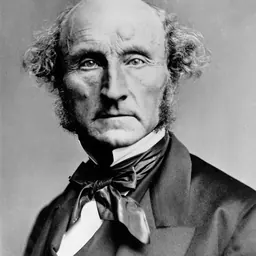
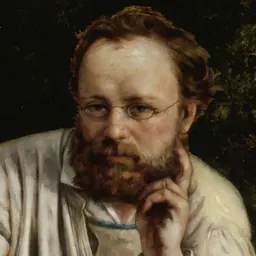
Drahomanov's politics centered freedom and dignity, concerning itself mainly with strengthening human rights and defending those rights from the State, as Drahomanov believed the expansion of liberty resulted from the limiting of government power by way of political revolution. He therefore considered the goal of mankind to be movement towards anarchy, a society based on free association and mutual aid. He was influenced directly by Pierre-Joseph Proudhon, who had formulated anarchism in opposition to the dominant theories of authoritarianism and centralism, in developing his own ideas on federalism. His other influences included Francesc Pi i Margall, John Stuart Mill, Édouard René de Laboulaye, Odilon Barrot, and Benjamin Constant.
Drahomanov believed that true freedom could be accomplished through a federation of equal and autonomous individuals, groups and communities. In terms of state forms, he was intrigued most by the federative democracy in Switzerland and the constitutionalism in the United Kingdom. He had a negative opinion of the French Republic, as he believed the centralising tendency of the Jacobins had been counterrevolutionary and had ultimately resulted in the suppression of workers' rights to freedom of association. He was opposed to the concept of popular sovereignty, what he called the "autocracy of the people", represented in Jean-Jacques Rousseau's theory of the social contract. He believed that the idea of the "popular will" was diametrically opposed to political freedom, as the will of the people could be used to justify majority rule or even dictatorship, which endangered both individual and group rights.
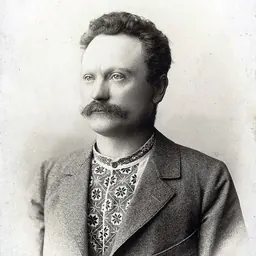
Legacy Bust of Drahomanov outside the National Pedagogical Drahomanov University. Drahomanov was influential on the development of technical vocabulary in Ukrainian prose, particularly that of political terminology, for which he attempted to create uniquely Ukrainian neologisms, independent from both international terminology. Drahomanov also tried to popularize his own orthographic reform of the Ukrainian language, based on a simplified and rationalised version of Panteleimon Kulish's phonetic orthography, which was adopted by the writers Ivan Franko and Lesya Ukrainka.
Drahomanov spearheaded the development of independent Ukrainian political organisations in Galicia, the first of which was established in 1875 by his followers, but this was quickly suppressed by the imperial authorities. In October 1890, a coalition of Drahomanovite intellectuals and grass-roots peasant activists in Lviv established the first Ukrainian political party: the Ukrainian Radical Party, which defended Drahomanov's ethical socialism and declared its aim to be the independence of Ukraine. In 1899, moderates left the party and merged into the National Democratic Party, which represented the more liberal aspect of Drahomanov's thought. These two parties formed the basis of a two-party system in Galician Ukrainian politics, going on to lead the establishment of the West Ukrainian People's Republic after the dissolution of Austria-Hungary.
Drahomanov was not as influential in Dnieper Ukraine, which only attained freedom of association after the 1905 Revolution. Two eastern Ukrainian parties that adopted Drahomanov's program were the Socialist-Federalist Party and the Socialist-Revolutionary Party, which came to hold a strong influence in Ukraine following the 1917 Revolution. Drahomanov's ideas on multiculturalism influenced the constitution of the Ukrainian People's Republic (UPR) by the Central Council, which extended autonomy and self-governance to national minorities when it declared the independence of Ukraine. As it grew, the Ukrainian government used Drahomanov's federal model to guarantee regional autonomy, even proposing the reorganization of the entirety of Eastern Europe into a confederation of independent nations.
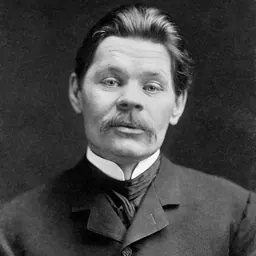
Following the collapse of the UPR, exiled Ukrainian nationalists shifted towards the far-right, with some directly blaming Drahomanov's ideas for their defeat in the Ukrainian War of Independence. In the Ukrainian Soviet Socialist Republic, Drahomanov was denounced as a liberal and a nationalist during the Stalinist period, but his ideas found a renewed interest following de-Stalinization and especially after the independence of Ukraine. In 1991, the former Kyiv Pedagogical Instituted named after Maxim Gorky was renamed as the Kyiv Pedagogical Drahomanov Institute. In 1997, the institute was granted "National University" status, being subsequently designated National Pedagogical Drahomanov University.
Don’t just read it —
keep it.
Full-length biographies made to live with: read them, listen on the way to work, watch them tonight.
- E-book
- Audio
- Video
Instant download · yours to keep · every purchase keeps this site free
Important facts
Family & relationships
People in Mykhailo Drahomanov's life
Named in this biography and alive at the same time



Related people
Same field, nearest in time



Contemporaries
People whose lives overlapped Mykhailo Drahomanov's


Frequently asked questions
Who was Mykhailo Drahomanov?
Ukrainian academic (1841–1895)
When was Mykhailo Drahomanov born?
Mykhailo Drahomanov was born on 18 September 1841 in Hadiach.
When did Mykhailo Drahomanov die?
Mykhailo Drahomanov died on 2 July 1895 in Sofia.
What was Mykhailo Drahomanov's occupation?
Mykhailo Drahomanov was an anthropologist, historian, philosopher, professor, literary critic and politician.
What nationality was Mykhailo Drahomanov?
Mykhailo Drahomanov was Russian and Ukrainian.
Sources & further reading
· Wikipedia: Mykhailo Drahomanov
· DBpedia: Mykhailo Drahomanov
Cite this page
APA: Biography.guide. (2026). Mykhailo Drahomanov. https://biography.guide/mykhailo-drahomanov/
MLA: "Mykhailo Drahomanov." Biography.guide, https://biography.guide/mykhailo-drahomanov/.
Chicago: "Mykhailo Drahomanov." Biography.guide. https://biography.guide/mykhailo-drahomanov/.
Data last updated: 2026-09-20 · Spot an error? Report a correction.
Page generated 2026-09-27 05:28 UTC