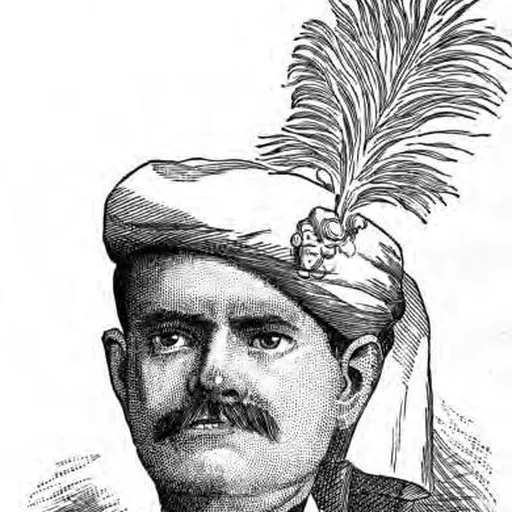
About Sourindro Mohun Tagore
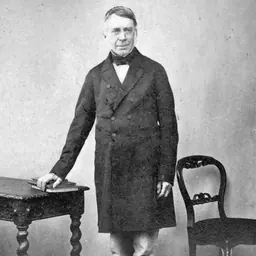
Lived 1840 – 1914 (aged 73–74). Sourindro Mohun Tagore was an Indian musicologist, translator and playwright.
Raja Sir Sourindra Mohun Tagore or Sourindro Mohun Tagore CIE (1840, Pathuriaghata - 5 June 1914, Calcutta) was a Bengali musicologist who came from an upper-class family from Bengal region of the Indian subcontinent; that also later produced Rabindranath Tagore. He studied both Indian and western music theory and published extensively on the topics. He founded the Bengal Music School and Bengal Academy of Music. A staunch supporter of the British Empire and its agencies in India, he was commissioned to set Indian translations of God Save the Queen to Indian tunes.
Biography Sourindro was the son of Hara Kumar Tagore and a younger brother of Jotindro Mohun Tagore belonging to the Pathuriaghata branch of the Tagore family. His family owned extensive lands including the battleground of Plassey and the pilgrimage site Ganga Sagar.
Music and writings In 1877 the declaration of Queen Victoria as Empress of India led to the creation of the national anthem of "God Save the Queen". In 1882 a National Anthem Committee was created at the suggestion of Francis Harford. In 1883 he wrote On the Good That May Result to England and India from the Establishment of "God Save the Queen" as a National Anthem in Her Majesty's Eastern Empire. A translation of the wording of the anthem was made by Mirza Mohammed Bakir Khan of Bishop's College, Calcutta into Arabic and Persian. These were then further translated into many other Indian languages. The problem of singing the anthem in a style that would suit Indian musical taste was however vexing and the committee chose the foremost authority on Indian music to help- "a letter will immediately be forwarded to Dr. Sourindro Mohan Tagore, of Calcutta, the principal authority upon Hindu music, requesting him to secure the services of the best native composer, and a melody which shall at once suit Oriental taste and the measure of the translated hymn." The idea was supported by others like Sir Henry Rawlinson. Sourindra Mohun produced no less than twelve different variations of the anthem based on lum jhijhiti, behag and nagara kirtana styles. In one variant he chose rag sahana which he claimed was the "favourite melody of the Mahomedan Emperors of India." Tagore also claimed that Indians always supported rule by Kings and he published a book, Hindu Loyalty, with extracts from old Sanskrit sources on the need for rule by Kings. He dedicated the book to Augustus Rivers Thompson and supported the ideas of Canon Harford that the anthem would help earn loyalty. It has been noted that a major motivation for Sourindra Mohun to work with the National Anthem Committee was to align his family and social group with that of the colonial rulers. He also set some poems by Lord Lytton to Indian tunes in A Few Lyrics Of Owen Meredith Set to Hindu Music, with Added Words and Signs Noting the Two-Part Form of the Tune in Hindustani Music and a Tal Pattern. He also published on The Caste System of the Hindus (1884) and noted its antiquity and justified its role in Indian society.
Among Sourindra's published works was a translation of Kalidasa's Malavikagnimitra. He founded the Bengal Music School in 1871 and the Bengal Academy of Music in 1881. He was made Fellow of the University of Calcutta and a Companion of the Most Eminent Order of the Indian Empire in 1880 apart from being given the title of Raja. He was decorated Knight Commander of the Royal Order of the Crown of Italy and several other Royal recognitions from Sweden, Netherlands, Wurtemberg and Austria.
In 1877, he made an initiative to renew musical ties with Japan by sending three musical instruments to the Emperor Mutsuhito of the Meiji Era to help bring the musical traditions of two nations together.
In 1884, in order to promote the interest in and study of Indian music in other countries, he donated numerous collections of Indian instruments to institutions in North America and Europe including the Royal College of Music, London. Tagore worked to establish an annual award at the college, the Tagore Gold Medal, which is still given to "the most generally deserving pupil(s)".
He was awarded a knighthood by Queen Victoria in 1884.
Foreign Honours Order of Prince Danilo I, Montenegro Companion of Order of the Indian Empire, British India Knight Commander of the Royal Order of the Crown of Italy, Italy Most Exalted Order of Francis Joseph, Austria Order of Albert, Saxony, First Class Friedrich Order, Kingdom of Wurtemberg Order of Leopold, Belgium Order of Dannebrog, Denmark Royal Order of Vasa, Sweden Order of Gorkha Dakshina Bahu, Nepal Imperial Order of the Dragon of Annam, Annam Royal Order of Kapiolani, Hawaiian Kingdom Military Order of Christ, Portuguese Empire Order of the Netherlands Lion, Netherlands Second Class of Order of the Lion and the Sun, Persia Grand Cordon of the Order of the Liberator, Venezuela
Family tree
Don’t just read it —
keep it.
Full-length biographies made to live with: read them, listen on the way to work, watch them tonight.
- E-book
- Audio
- Video
Instant download · yours to keep · every purchase keeps this site free
Important facts
People in Sourindro Mohun Tagore's life
Named in this biography and alive at the same time


Related people
Same field, nearest in time



Contemporaries
People whose lives overlapped Sourindro Mohun Tagore's


Frequently asked questions
Who was Sourindro Mohun Tagore?
Bengali musicologist
When was Sourindro Mohun Tagore born?
Sourindro Mohun Tagore was born in 1840 in Kolkata, Pathuriaghata.
When did Sourindro Mohun Tagore die?
Sourindro Mohun Tagore died on 5 June 1914 in Kolkata.
What was Sourindro Mohun Tagore's occupation?
Sourindro Mohun Tagore was a musicologist, translator and playwright.
What nationality was Sourindro Mohun Tagore?
Sourindro Mohun Tagore was Indian.
Sources & further reading
· Wikipedia: Sourindro Mohun Tagore
· DBpedia: Sourindra Mohun Tagore
Cite this page
APA: Biography.guide. (2026). Sourindro Mohun Tagore. https://biography.guide/sourindro-mohun-tagore/
MLA: "Sourindro Mohun Tagore." Biography.guide, https://biography.guide/sourindro-mohun-tagore/.
Chicago: "Sourindro Mohun Tagore." Biography.guide. https://biography.guide/sourindro-mohun-tagore/.
Data last updated: 2026-09-22 · Spot an error? Report a correction.
Portrait: Wikimedia Commons · author & licence
Page generated 2026-09-27 05:01 UTC