
Soraya Parlika
Afghan women’s rights activist and politician
About Soraya Parlika
Lived 1944 – 2019 (aged 74–75). Soraya Parlika was an Afghan politician and women's rights activist.
Soraya Parlika (1944-2019) was an Afghan women's rights activist and politician (People's Democratic Party of Afghanistan). She served as Chairperson of the Democratic Women's Organisation of Afghanistan (DOAW) in 1978 and in 1979–1981. She served as head of Afghanistan's Red Crescent Society in 1986–1992.
Life Early life and education She was born in a well-to-do Pashtun family from the village Kamari in the Bagrami district southeast of Kabul. She was the daughter of Muhammad Harif, the head of the construction department of the Ministry of Public Works. She was the sister of Abdul Wakil, who was foreign minister in the government of Najibullah from 1986 to 1992.
She studied at the Zarghuna High School in central Kabul, and obtained a bachelor's degree from the University of Kabul in 1966. She then worked at Kabul city's housing department and at the international relations department of the Kabul University.
Early activism She became a member of the People's Democratic Party of Afghanistan (PDPA) after its foundation on 1 January 1965, and the same year, she became one of the co-founders of the Democratic Women's Organisation of Afghanistan (DOAW).
As member of the DOAW, she participated in mobilising women to take part in the 1965 parliamentary election, and in teaching rural women how to read and write. She also participated in the demonstrations against a draft law proposed by conservative Islamic members to ban girls and women from studying abroad, a month of protests which included an occupation of the parliament, until the bill was dropped.
Communist regime In 1978, the PDPA took power in Afghanistan and the DOAW was legalised. She temporarily served as chairman of the DOAW when Anahita Ratebzad was appointed cabinet minister. When the Khalqis-fraction took power, however she, as a member of the Parcham-fraction, was imprisoned in the Pul-e Charkhi jail in Kabul until the Soviet invasion in 1979, when the Parcham-fraction returned to power.
She served as Chairman of the DOAW in 1979–1981, and was the deputy of Anahita Ratebzad in 1981–1986.
She successfully worked for extended maternity leave to 90 days, with 180 days of possible additional unpaid leave; retirement at the age of 55 and the establishment of nursery schools and kindergartens in workplaces, which was formally introduced by the PDPA after the advocacy of her and the DOAW.
She served as head of Afghanistan's Red Crescent Society in 1986–1992. She was removed from the post after the fall of the Communist regime in April 1992.
Mujahideen and Taliban regime She founded the Ettehadiya-ye Sarasari-ye Zanan-e Afghanistan (All-Afghanistan Women's Union, AAWU; in some sources ‘Association’ and AAWA), which worked under cower during the Taliban regime to provide women with home schooling and underground home training courses.
Later career After the fall of the Taleban regime in 2001, she planned a women's march in Kabul, but was persuaded to abandon the plans.
She started a campaign for women's rights: among other things, she demanded that women's equality to be included in the future Afghan constitution, and mandatory education for girls through secondary school.
In 2001, Time magazine selected her as one of its global ‘people of the year’.
She was appointed to the 21-member Preparatory Commission for the 2002 Emergency Loya Jirga. In 2003 she was elected as one of the two deputy heads of the Hezb-e Muttahed-e Melli-ye Afghanistan (the National United Party of Afghanistan, NUPA).
In 2004 she was elected a delegate to the 2004 Constitutional Loya Jirga. In 2005, she failed to gain a seat in the Parliament.
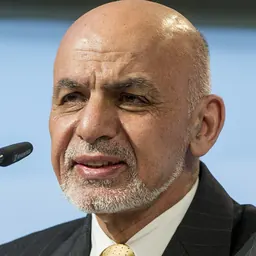
Legacy After her death in 2019, President Ashraf Ghani and Chief Executive Abdullah Abdullah issued a statements of commemoration.
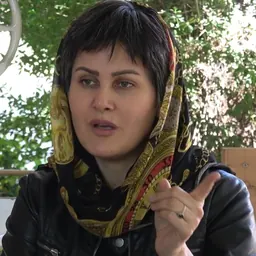
She was the subject of a documentary by Sahraa Karimi.
Don’t just read it —
keep it.
Full-length biographies made to live with: read them, listen on the way to work, watch them tonight.
- E-book
- Audio
- Video
Instant download · yours to keep · every purchase keeps this site free
Important facts
People in Soraya Parlika's life
Named in this biography and alive at the same time

Related people
Same field, nearest in time





Contemporaries
People whose lives overlapped Soraya Parlika's


Frequently asked questions
Who was Soraya Parlika?
Afghan women’s rights activist and politician (1944–2019)
When was Soraya Parlika born?
Soraya Parlika was born in 1944.
When did Soraya Parlika die?
Soraya Parlika died in 2019.
What was Soraya Parlika's occupation?
Soraya Parlika was a politician and women's rights activist.
What nationality was Soraya Parlika?
Soraya Parlika was Afghan.
Sources & further reading
Cite this page
APA: Biography.guide. (2026). Soraya Parlika. https://biography.guide/soraya-parlika/
MLA: "Soraya Parlika." Biography.guide, https://biography.guide/soraya-parlika/.
Chicago: "Soraya Parlika." Biography.guide. https://biography.guide/soraya-parlika/.
Data last updated: 2026-09-20 · Spot an error? Report a correction.
Page generated 2026-09-27 05:24 UTC