
About Abdullah Abdullah
Born 1960. Abdullah Abdullah is an Afghan politician, ophthalmologist, diplomat and physician.
Abdullah Abdullah (Pashto; Dari: , born Abdullah; 10 February 1960) is an Afghan politician who led the High Council for National Reconciliation (HCNR) from May 2020 until August 2021, when the Afghan government was overthrown by the Taliban. The council had been established to facilitate peace talks between the Islamic Republic of Afghanistan and the Taliban insurgents. Abdullah served as the Chief Executive of Afghanistan from September 2014 to March 2020, and as Minister of Foreign Affairs from December 2001 to April 2005. Prior to that, he was a senior member of the Northern Alliance, working as an adviser to Ahmad Shah Massoud. He worked as an ophthalmologist and medical doctor in the 1980s.
Abdullah ran against President Hamid Karzai in the 2009 Afghan presidential election, coming second with 30.5% of the total votes. In 2010, he created the Coalition for Change and Hope which became the National Coalition of Afghanistan in 2011 and is one of the leading democratic opposition movements in Afghanistan. He ran again in the 2014 presidential election and went to the second round with 45% the total vote. His closest rival, Ashraf Ghani, had secured 35% of the total vote. Despite the controversy regarding the results of the second round of elections, the final certified result by the Independent election commission of Afghanistan shows that Ashraf Ghani received 55.3% of the votes while Abdullah Abdullah secured 44.7% of the vote. After months of talks and US mediation, the two candidates established a national unity government in which Abdullah served as the Chief Executive of Afghanistan.
Following the collapse of the Islamic Republic of Afghanistan on 17 August 2021, leader of the Taliban-affiliated Hezb-e-Islami party Gulbuddin Hekmatyar met with Abdullah and Karzai in Doha, seeking to form a government. Reports emerged on 25 August that a 12-member council will be formed to govern the de facto newly reinstated Afghanistan. Reportedly 7 members were already agreed upon: Abdullah himself, Karzai, Hekmatyar, Abdul Ghani Baradar, Mullah Yaqoob, Khalil-ur-Rehman Haqqani, and Haneef Atmar. However, it was later announced that Abdullah Abdullah and Karzai had failed to secure roles in the new government.
Early life Abdullah was born in the second district of Kārte Parwān in Kabul, Afghanistan. He is the son of a Pashtun father, Ghulam Mahyyoddin Zmaryalay, Abdullah has seven sisters and two brothers. His nephew was journalist Muhammad Fahim Dashti, who served as the spokesman for the National Resistance Front (NRF) during the Republican insurgency in Afghanistan.
Until he became a government minister, Abdullah had only a first name; demands from Western newspaper editors for a family name led him to adopt the full name "Abdullah Abdullah". Abdullah is married, and has three daughters and a son.
Early political career In 1985, Abdullah returned to Afghanistan to join the resistance against the Soviet invasion of Afghanistan and made his way to Panjshir.
After the fall of the communist government in 1992, the Peshawar Accord established the Islamic State of Afghanistan with a provisional government led by Burhanuddin Rabbani. Abdullah was appointed chief of staff and spokesperson of the Ministry of Defense. Following the Taliban takeover of Kabul, the Northern Alliance, also called the United Islamic Front, was created under the leadership of Ahmad Shah Massoud. The Northern Alliance was supported by Russia, Iran and India. Abdullah became the United Front's Minister of Foreign Affairs. Islamic State of Afghanistan elements of the United Front, including the Defense Minister Ahmad Shah Massoud and the Foreign Minister Abdullah Abdullah, remained Afghanistan's internationally recognized government. The Taliban government was recognized by only three countries – Saudi Arabia, Pakistan, and the United Arab Emirates.
In early 2001, Abdullah traveled with Ahmad Shah Massoud to Brussels, where Massoud addressed the European Parliament asking the international community to provide humanitarian help to the people of Afghanistan. Abdullah translated when Massoud stated that the Taliban and al-Qaeda had introduced "a very wrong perception of Islam" and that without the support of Pakistan and Bin Laden, the Taliban would not be able to sustain their military campaign for up to a year.
Following the 2004 Afghan presidential election, Abdullah was one of the few people who kept their position from the Transitional Government and was re-appointed as Minister of Foreign Affairs for another year. In 2005 he resigned his position.
2009 presidential election
On 6 May 2009, Abdullah registered as an Independent candidate for the 2009 Afghan presidential election, running against incumbent president Hamid Karzai. Abdullah selected as his running mates Humayun Shah Asefi as his First Vice President and Dr. Cheragh Ali Cheragh (a surgeon from Kabul who is a practicing Shi'i Muslim) as Second Vice President. Afghanistan has an executive structure featuring two vice presidents, a First VP and a Second VP, to help ensure a stable government by attempting to provide ethnic and religious balance to senior government leadership positions. Unofficial and non-certified electoral results were announced during the day on 16 September 2009, showing that Abdullah was in second position with 27.8% of the total votes cast. President Karzai did not achieve the 50.01% vote majority required to avoid a runoff election. A large number of fraudulent ballots, mostly belonging to Karzai's camp, were disallowed by the Independent Afghan Electoral Commission. Karzai came under intense international political and diplomatic pressure from international leaders because of allegations of large-scale fraud. Hamid Karzai eventually agreed to participate in a designated head-to-head runoff election (held between the contenders with the two largest numbers of total votes in the first election) which was scheduled nationwide for 7 November 2009.
On 1 November 2009, Abdullah announced that he had decided to withdraw from the runoff election, citing his lack of faith in the President Karzai government's ability to hold a "fair and transparent" second election process. Subsequently, Hamid Karzai was declared the winner by the Afghan Electoral Commission (essentially winning by default).
National Coalition of Afghanistan
After the 2009 Afghan Presidential Elections, Abdullah created the Coalition for Change and Hope (CCH). The NCA presented the leading democratic opposition movement against the government of Hamid Karzai.
In December 2011, the National Coalition of Afghanistan, supported by dozens of Afghan political parties and led by Abdullah, was formed to challenge the government of President Hamid Karzai. Major figures associated with the coalition include Yunus Qanuni (the former head of the Afghan Parliament), Homayoon Shah-asefi (a former presidential candidate and leader of the monarchist party with ties to the family of former king Mohammed Zahir, Noorolhagh Oloumi (a senior political figure in the former Afghan communist government), Ahmad Wali Massoud (a younger brother of Ahmad Shah Massoud) and several current Members of Parliament. Abdullah and Ghani were then bound to compete in a run-off election in June 2014. The results of that election remained in dispute through until September 2014, with Abdullah claiming the government and the national electoral institutions manipulated the results. Pressure from the United States on the two candidates to resolve their differences, and to negotiate a power-sharing deal were initially agreed to, but Abdullah later remained defiant. A UN-led audit failed to sway Abdullah as he insisted the audit team could not explain a million extra votes counted in the run-off. Ghani supporters insisted they wanted to do a deal with Abdullah, and said they were leaving the door open to negotiations.
On 19 September, the Independent Election Commission (Afghanistan) announced Ghani the winner. Five hours later, Abdullah and Ghani signed a power-sharing agreement, with Ghani being named president and Abdullah taking on an important position in the government; the deal was signed in front of the presidential palace, with incumbent president Hamid Karzai in attendance. Serving as Chief Executive, Abdullah actively met with international business leaders and politicians alike, seeking foreign investment and support. He further sought to implement a number of ceasefires with the Taliban. Citing mistrust of the Taliban, Abdullah took a somewhat more hardline stance against the Taliban movement than his presidential counterpart Ashraf Ghani, noting a number of failed attempts at long-term peace.
2019 presidential election
Incumbent Chief Executive Abdullah Abdullah registered as a candidate for the 2019 presidential election. Abdullah selected Enayatullah Babur Farahmand as his First Vice President and Asadullah Sadati as Second Vice President.
After the election results showed that Ashraf Ghani was declared the winner, Abdullah declared himself the winner as well, sparking a political crisis and leading him to publicly state that he would form a parallel government. On 9 March 2020, both Abdullah and Ghani took the presidential oath of office at separate inauguration ceremonies. The United States pressured the Afghan government to come up with a solution by cutting $1 billion of aid. This, with mounting international pressure and the threat of the Taliban, forced officials to strike a deal between Abdullah and Ghani. The deal left President Ghani in charge of executive power and created the High Council of National Reconciliation. Mr. Abdullah is head of the council, where he will lead peace efforts with the Taliban.
High Council for National Reconciliation (2020–2021) U.S. President Joe Biden meeting with Afghan President Ashraf Ghani and Abdullah Abdullah, 25 June 2021, two months before the fall of Kabul On 17 May 2020, a deal was reached where Abdullah was to lead the country's High Council for National Reconciliation (HCNR) as a chairman. Moreover, HCNR was given the authority to handle and approve all affairs related to the Afghan peace process. The Council held its first meeting in December 2020, several months after its official creation, despite having incomplete membership and power struggles.
Following the collapse of the Republican government and Abdullah's meeting with Hekmatyar, the political fate of the HCNR remains unclear.
On 1 September 2021, Taliban representatives said that they had approached former president Hamid Karzai and Abdullah. The representatives said that the Taliban was "ready to recruit them" but said that Karzai was unlikely to be part of the government as they do not want "old horses". As for Abdullah, the Taliban showed a different approach saying that he was the "least controversial."
Taliban takeover and subsequent activities In February 2022, Abdullah was temporarily placed under house arrest by the Taliban in Afghanistan. On 4 May 2022 he was allowed to leave for India to be with his family during Eid al-Fitr. He returned to Afghanistan on 11 June.
Don’t just read it —
keep it.
Full-length biographies made to live with: read them, listen on the way to work, watch them tonight.
- E-book
- Audio
- Video
Instant download · yours to keep · every purchase keeps this site free
Important facts
People in Abdullah Abdullah's life
Named in this biography and alive at the same time




Related people
Same field, nearest in time


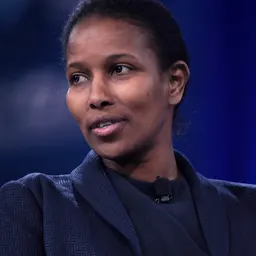


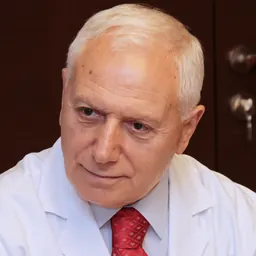
Contemporaries
People whose lives overlapped Abdullah Abdullah's

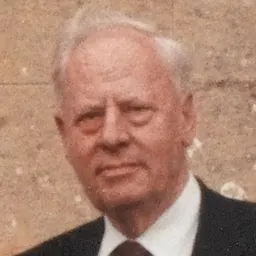
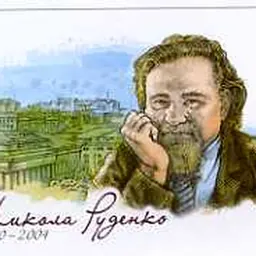

Frequently asked questions
Who is Abdullah Abdullah?
Afghan politician
When was Abdullah Abdullah born?
Abdullah Abdullah was born on 5 September 1960 in Kabul.
What is Abdullah Abdullah's occupation?
Abdullah Abdullah is a politician, ophthalmologist, diplomat and physician.
What nationality is Abdullah Abdullah?
Abdullah Abdullah is Afghan.
Sources & further reading
· Wikipedia: Abdullah Abdullah
Cite this page
APA: Biography.guide. (2026). Abdullah Abdullah. https://biography.guide/abdullah-abdullah/
MLA: "Abdullah Abdullah." Biography.guide, https://biography.guide/abdullah-abdullah/.
Chicago: "Abdullah Abdullah." Biography.guide. https://biography.guide/abdullah-abdullah/.
Data last updated: 2026-09-20 · Spot an error? Report a correction.
Page generated 2026-09-27 05:20 UTC