
Burhanuddin Rabbani
Afghanistan politician, former President of Afghanistan
About Burhanuddin Rabbani
Lived 1940 – 2011 (aged 71). Burhanuddin Rabbani was an Afghan politician, pedagogue, university teacher and islamicist.
Political career Rabbani returned to Afghanistan in 1968, where the High Council of Jamiat-e Islami gave him the duty of organizing the university students. Due to his knowledge, reputation, and active support for the cause of Islam, in 1972, a 15-member council selected him as head of Jamiat-e Islami of Afghanistan; the founder of Jamiat-e Islami of Afghanistan, Gholam Mohammad Niazi was also present. Jamiat-e Islami was primarily composed of Tajiks.
In the spring of 1974, the police came to Kabul University to arrest Rabbani for his pro-Islamic stance, but with the help of his students the police were unable to capture him, and he managed to escape to neighboring Pakistan.
When the Soviets intervened in 1979, Rabbani helped lead Jamiat-e Islami in resistance to the People's Democratic Party of Afghanistan regime. Rabbani's forces were the first Mujahideen elements to enter Kabul in 1992 when the PDPA government fell from power. He took over as president from 1992 in accordance to the Peshawar Accords. Rabbani was the third ethnic Tajik leader of modern Afghanistan after Habibullah Kalakani in 1929 and Abdul Qadir in 1978 (and possibly including Babrak Karmal, whose ethnicity was disputed). His rule was limited since the country was fractured by civil war between different sides. Rabbani was forced to flee following the Taliban's conquest of Kabul in 1996. Rabbani operated his government in exile, following the establishment of the Taliban rule of the Islamic Emirate of Afghanistan. In this period between 1996 and 2001, the Rabbani government of the Islamic State of Afghanistan remained the internationally recognized government, despite only controlling about 10% of Afghan territory. For the next five years, he and the Northern Alliance, commanded by Ahmad Shah Massoud and others, were fighting the Taliban until the 2001 US-led Operation Enduring Freedom toppled the Taliban government. Rabbani was head of Afghanistan's High Peace Council, which had been formed in 2010 to initiate peace talks with the Taliban and other groups in the insurgency, until his death.
Assassination
Rabbani was killed in a suicide bombing at his home in Kabul on 20 September 2011, his 71st birthday. Two men posing as Taliban representatives approached him to offer a hug and detonated their explosives. At least one of them had hidden the explosives in his turban. The suicide bomber claimed to be a Taliban commander, said he bore a "very important and positive message" from Taliban leaders in Pakistan, and said he wanted to "discuss peace" with Rabbani. Four other members of Afghanistan's High Peace Council were also killed in the blast.
Afghan officials blamed the Quetta Shura, which was the leadership of the Afghan Taliban allegedly hiding in the affluent Satellite Town of Quetta in Pakistan. The Pakistani government confirmed that Rabbani's assassination was linked to Afghan refugees in Pakistan. A senior Pakistani official stated that over 90% of terrorist attacks in Pakistan were traced back to Afghan elements and that their presence in the country was "an important issue for [peace in] Pakistan" and "a problem for Afghanistan". Pakistani foreign minister Hina Rabbani Khar stated that Pakistan was "not responsible if Afghan refugees crossed the border and entered Kabul, stayed in a guest house and attacked Professor Rabbani".
In 2011, just days before he died, Rabbani was trying to persuade Islamic scholars to issue a religious edict denouncing suicide bombings. The former president's 28-year-old daughter said in an interview that her father died shortly after he spoke at a conference on "Islamic Awakening" in Tehran. "Right before he was assassinated, he talked about the suicide bombing issue," Fatima Rabbani told Reuters. "He called on all Islamic scholars in the conference to release a fatwa" against the tactic.
Government minister Nematullah Shahrani said Rabbani is irreplaceable because "he had relations with all these tribes."
United States President Barack Obama and several NATO military leaders condemned the assassination. Japan also offered its condolences at the Sixty-sixth session of the United Nations General Assembly. Afghan President Hamid Karzai cut short his trip for the General debate of the sixty-sixth session of the United Nations General Assembly following Rabbani's assassination. Rabbani's son Salahuddin then took over chairmanship of the High Peace Council from his father.
Books and booklets Rabbi had written books and booklets in both Dari and Pashto, including:
The Birth of Light [Dari], Jamiat-i-Islami Afghanistan, Peshawar, 1988 (1367), 78 p. Destiny of Revolution behind the Conflicts [Dari], Jamiat-i-Islami Afghanistan, [Peshawar], 1988 (1367), 44 p. Message to Commanders and Countrymen [Dari], Jamiat-i-Islami Afghanistan, [Peshawar], 1988 (1367), 23 p. Mujahed Guide: address of Burhanuddin Rabbani on the occasion of Eid-e-Sayed Fiter [Pashtu], Jamiat-i-Islami Afghanistan, Peshawar, 1989 (1409), 38 p. Reconstruction of Afghanistan [Dari], Ministry of Reconstruction, [Peshawar], 1990 (1369), 47 p. Direction of the Jihad: collections of interviews of addresses by the leader of Jamait Islami Afghanistan [Dari], Jamiat-i-Islami Afghanistan, Tehran, 1990 (1369), 364 p. The First four Caliphs [Pashtu], Jamiat-i-Islami Afghanistan, [Peshawar], 1991 (1370), 61 p. Islamic Revolution, the outcome of the 14-year struggle of our people [Dari], Kabul, Government Printing Press, 1993 (1372), 31 p. Learning according to the direction of the Islamic revolution [Dari], Jamiat-i-Islami Afghanistan, [Kabul], 1993 (1372), 44 p. Drugs are the enemy of human health [Dari], Jamiat-i-Islami Afghanistan, Kabul, Government Printing Press, 1996 (1375), 16 p.
Honors and awards
Don’t just read it —
keep it.
Full-length biographies made to live with: read them, listen on the way to work, watch them tonight.
- E-book
- Audio
- Video
Instant download · yours to keep · every purchase keeps this site free
Important facts
Family & relationships
People in Burhanuddin Rabbani's life
Named in this biography and alive at the same time
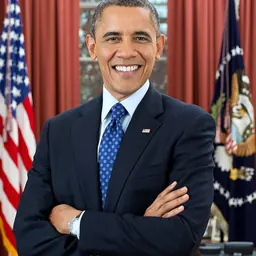
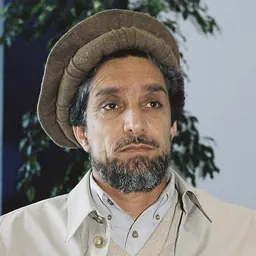
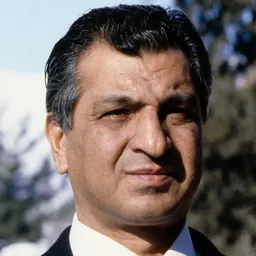

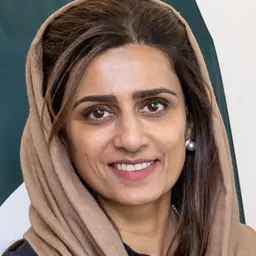

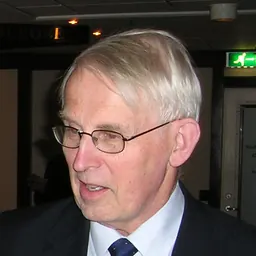
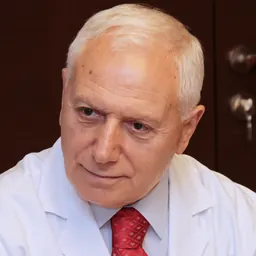
Related people
Same field, nearest in time




Contemporaries
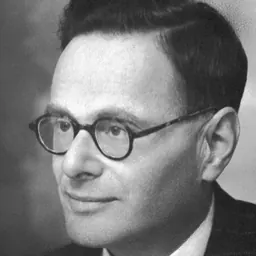
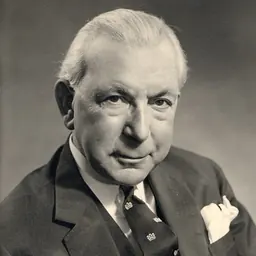
People whose lives overlapped Burhanuddin Rabbani's



Frequently asked questions
Who was Burhanuddin Rabbani?
Afghanistan politician, former President of Afghanistan (1992-2001)
When was Burhanuddin Rabbani born?
Burhanuddin Rabbani was born on 20 September 1940 in Fayzabad.
When did Burhanuddin Rabbani die?
Burhanuddin Rabbani died on 20 September 2011 in Kabul.
What was Burhanuddin Rabbani's occupation?
Burhanuddin Rabbani was a politician, pedagogue, university teacher and islamicist.
What nationality was Burhanuddin Rabbani?
Burhanuddin Rabbani was Afghan.
Sources & further reading
· Wikipedia: Burhanuddin Rabbani
· DBpedia: Burhanuddin Rabbani
Cite this page
APA: Biography.guide. (2026). Burhanuddin Rabbani. https://biography.guide/burhanuddin-rabbani/
MLA: "Burhanuddin Rabbani." Biography.guide, https://biography.guide/burhanuddin-rabbani/.
Chicago: "Burhanuddin Rabbani." Biography.guide. https://biography.guide/burhanuddin-rabbani/.
Data last updated: 2026-09-20 · Spot an error? Report a correction.
Page generated 2026-09-27 05:28 UTC