
About Song Du-yul
Born 1944. Song Du-yul is a German philosopher, sociologist and university teacher.
Song Du-yul (, born 12 October 1944) is a German philosopher and sociologist of Korean descent. A professor at the University of Münster, Germany, he has been a political exile from his native South Korea for over 40 years. Educated in South Korea, he left that country for Germany in 1967 to pursue higher education. He visited North Korea a total of 18 times while living in Germany, but did not return to the South until 2003. During his visit to the South that year, he was arrested, charged, and convicted of spying for the North under the South's National Security Act in a controversial court case; in the end, he was given a suspended sentence, and returned to Germany in August 2004.
Early life Song was born in Tokyo, Japan, to Korean parents. He underwent primary and secondary education in Gwangju before moving to Seoul to enter Seoul National University's Department of Philosophy. In 1967, he moved to West Germany, where he entered into a graduate programme at Heidelberg University. He later studied at Frankfurt University, where he wrote his thesis on The Understanding of Asia in Hegel, Marx, and Weber. Jürgen Habermas acted as his thesis advisor; he was also heavily influenced by the ideas of . He completed his doctoral studies in 1972, following which he took up a teaching post at the University of Münster, where he also completed in 1982 his Habilitation (German professorship) for sociology. He organized a total of six conferences for Korea's reunification in Beijing (1995–1999) and in Pyongyang (2003), attended by scientists from both parts of the divided county and from abroad.
Song attempted to make arrangements to travel to South Korea in May 2000 to attend memorial events commemorating the 20th anniversary of the Gwangju uprising. According to the North Korean-affiliated Zainichi Korean newspaper Choson Sinbo, he refused conditions placed on him by the South Korean National Intelligence Service, which included a demand that he make a written pledge to respect South Korean law; as a result, his plans to attend the memorial collapsed. In 2001, North Korean defector Hwang Jang-yop asserted that Song was actually a member of the Workers' Party of Korea's Politburo under the alias Kim Chol-su. In response, Song initiated a lawsuit against Hwang in the Seoul 16th District Court, alleging that Hwang's statements constituted libel. Song did not return to the South for this case; his lawyer An Sang-un appeared in court on his behalf. A court ruling in August 2001 recognised that Hwang's statement had no basis in fact, but denied Song's request for payment of damages; the following month, Song announced that he would not appeal the ruling, as he was satisfied with the court's affirmation that he was not Kim Chol-su.
Return to South Korea and trial Song finally returned to South Korea in September 2003 for the first time in 37 years at the invitation of the Korea Democracy Foundation; his itinerary was to include a meeting with then-President Roh Moo-hyun.
Pyongyang initially refrained from comment on the trial, sparking speculation that Song had cut his ties with the North; however, the official Korean Central News Agency eventually came out with harsh criticisms of the trial in 2004, calling the Grand National Party "traitors to the nation" for taking the lead in the legal action against Song and accusing the South of violating the June 15th Joint Declaration by charging him under the National Security Act. He was convicted on 30 March 2004 and sentenced to seven years' imprisonment in a ruling which drew criticism from Amnesty International. Song appealed the sentence; the appeal court ruling on 21 July upheld two of the five initial counts, those for spying and fraud; his sentence was suspended for five years, and he was permitted to leave the country. After a visit to Gwangju and Jeju, he departed for Germany on 5 August 2004.
Works Song, Du-Yul; (2026). Bruchlinien der Moderne: Grenzgänge zwischen Asien und Europa (in German), Würzburg Verlag K & N.
— a revised version of Song's dissertation
Dissertation:
Don’t just read it —
keep it.
Full-length biographies made to live with: read them, listen on the way to work, watch them tonight.
- E-book
- Audio
- Video
Instant download · yours to keep · every purchase keeps this site free
Important facts
People in Song Du-yul's life
Named in this biography and alive at the same time
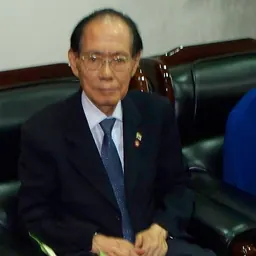

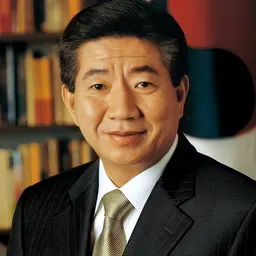
Related people
Same field, nearest in time
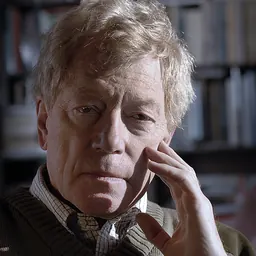



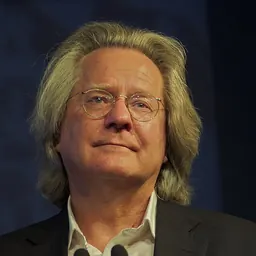
Contemporaries
People whose lives overlapped Song Du-yul's



Frequently asked questions
Who is Song Du-yul?
German sociologist
When was Song Du-yul born?
Song Du-yul was born on 12 October 1944 in Tokyo.
What is Song Du-yul's occupation?
Song Du-yul is a philosopher, sociologist and university teacher.
What nationality is Song Du-yul?
Song Du-yul is German.
Sources & further reading
Cite this page
APA: Biography.guide. (2026). Song Du-yul. https://biography.guide/song-du-yul/
MLA: "Song Du-yul." Biography.guide, https://biography.guide/song-du-yul/.
Chicago: "Song Du-yul." Biography.guide. https://biography.guide/song-du-yul/.
Data last updated: 2026-09-20 · Spot an error? Report a correction.
Page generated 2026-09-27 05:27 UTC