
About Sōkichi Furutani
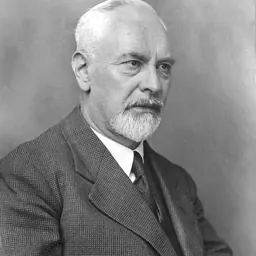
Lived 1914 – 1985 (aged 71). Sōkichi Furutani was a Japanese serial killer.
nihongo|Sokichi Furutani
The crimes occurred in various parts of Western Japan, such as Osaka, Kyoto, Shiga, Hyōgo and Fukuoka, with the seven murders and two attempted robberies being designated as "Police Agency Wide Area Important Designated Case No. 105 Case". This was the first case in the National Police Agency's designated area. His parents were part-time farmers, who also operated as relatively wealthy fish traders, but when Sokichi was four, his mother died,
While on the run, the accomplice, who was 19 years old at the time, had served 10 years in juvenile prison. The series of murders took place shortly after his release (since then, the death penalty laws have changed). For this reason, many condemned individuals were convinced that it was too harsh of a sentence.
Furutani got a job with civil engineering after his parole from Kumamoto Prison, and after reading a newspaper article, in May 1964, he decided to move to the Kansai region. The next attack took place in Nishinomiya, with Furutani continuing his crime spree until December 12 of that year, always attacking in West Japan, with his targets being persons above 50 years of age and living alone. He committed eight additional murders, as well as two attempted murders and two attempted robberies.
On December 11, in Fushimi-ku, Kyoto, authorities found that a fingerprint was consistent with those of Sokichi Furutani, who was designated as Internationally Wanted the following day. On that very day, Furutani was in Nishinomiya, walking around the coastal bank when he came across two local salvagers (51 and 69-years-old, respectively), whom he beat to death with a hammer.
Coincidentally, a patrol of police officers were near the scene when they discovered the bodies of the two men in a hut. To their surprise, Sokichi was also hiding in the shadows of that very same hut, and tried to escape. Without a weapon, he still ignored the warnings from police, but Furutani, who was 51 at the time, was not physically capable of outrunning the multiple police officers who were on his tail.
Initially, he denied any and all charges against him, blaming a fictitious accomplice while proclaiming his own innocence, much like with his 1951 crimes. However, this time the prosecution had sufficient evidence, and Sokichi Furutani was sentenced to death. When asked for a reason for the killings, he gave a very simple answer: he begged for meals and accommodation, and killed those who refused. Not counting his initial murders, eight men were murdered, including some construction workers.
Police also determined that Furutani was responsible for an additional murder of an old man between 1964 and 1965, but lacked the appropriate evidence for it. In total, the prosecution accused him of committing 12 murders.
Trial On June 29, 1966, the first trial of Sokichi Furutani was held in the Kobe District Court before the presiding judge of Nagahisa. He acknowledged the seven murder and eight attempted murder charges after the prosecutor read the indictment, but on April 17, 1965, in Higashi-ku, he denied attempted robbery of a waste collection company and the purpose of his murders being robbery, claiming that it was "simply murder/attempted murder". A second trial was held on December 13. The appeal was dismissed, after which he turned to the Supreme Court on November 28, 1978. The presiding judge, Takatsuji Masami, supported the death sentence and rejected the appeal, and in January 1979, the death sentence was formally established.
After the death penalty was established, he was held in Osaka Detention House until his execution, but on December 2, 1982, he attacked a fellow 39-year-old death row prisoner in his cell. This resulted in a one-week injury, with the supposed motive being jealousy. The other prisoner later said that "If Furutani was indicted in the case, he would not be executed until the sentencing was decided. He was not prosecuted, because I fear that it would raise the order of executions".
Execution On May 31, 1985, six years after being sentenced to death, Sokichi Furutani was executed in the Osaka Detention House following an order by Minister of Justice Hitoshi Shimazaki. At the time, he was oldest prisoner to be executed in Japan, a record later broken following the double execution of Yoshimitsu Akiyama and Yoshio Fujinami (77 and 75, respectively) on December 25, 2006.
Immediately after the execution, an official told Asahi Shimbun that Furutani "alternated" in his later years – one day, he would be calm like a Buddha, and on others, he would behave like a beast. He had no cellmates or friends, and the only person who sent him letters was a former investigator from the Hyōgo Prefectural Police.
Don’t just read it —
keep it.
Full-length biographies made to live with: read them, listen on the way to work, watch them tonight.
- E-book
- Audio
- Video
Instant download · yours to keep · every purchase keeps this site free
Important facts
more
Furuya SokichiRelated people
Same field, nearest in time



Contemporaries
People whose lives overlapped Sōkichi Furutani's

Frequently asked questions
Who was Sōkichi Furutani?
Japanese serial killer (1914 - 1985)
When was Sōkichi Furutani born?
Sōkichi Furutani was born on 16 February 1914 in Nita.
When did Sōkichi Furutani die?
Sōkichi Furutani died on 31 May 1985 in Osaka Detention House.
What was Sōkichi Furutani's occupation?
Sōkichi Furutani was a serial killer.
What nationality was Sōkichi Furutani?
Sōkichi Furutani was Japanese.
Sources & further reading
Cite this page
APA: Biography.guide. (2026). Sōkichi Furutani. https://biography.guide/sokichi-furutani/
MLA: "Sōkichi Furutani." Biography.guide, https://biography.guide/sokichi-furutani/.
Chicago: "Sōkichi Furutani." Biography.guide. https://biography.guide/sokichi-furutani/.
Data last updated: 2026-09-20 · Spot an error? Report a correction.
Page generated 2026-09-27 05:07 UTC