
About Snoo Wilson
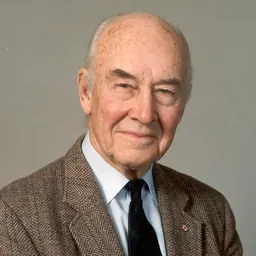
Lived 1948 – 2013 (aged 64). Snoo Wilson was a British screenwriter, director and writer.
Andrew James Wilson (2 August 1948 – 3 July 2013), better known as Snoo Wilson, was an English playwright, screenwriter and director. His early plays such as Blow-Job were overtly political, often combining harsh social comment with comedy. In his later works he moved away from purely political themes, embracing a range of surrealist, magical, philosophical and madcap, darkly comic subjects.
After studying literature at the University of East Anglia, Wilson began his writing career in 1969. He began to build his reputation with a series of plays and screenplays in the early 1970s and was a founder of Portable Theatre Company, a touring company concentrating on experimental theatre. In the mid-1970s, he served as dramaturge to the Royal Shakespeare Company and produced one of his best-regarded plays, The Soul of the White Ant. In 1978, his surrealist play The Glad Hand attracted favourable notice, as did his 1994 play, Darwin's Flood, among others. He continued to write plays and screenplays until the end of his life, including for the Bush Theatre. He also wrote several novels and held teaching positions.
Biography
Early years Wilson was born in Reading, the son of two teachers: Leslie Wilson and his wife Pamela Mary née Boyle. Snoo was a childhood nickname. He was educated at Bradfield College, where his father taught, and the University of East Anglia (UEA), graduating with a degree in American and English Literature in 1969. At UEA, he was a student of Lorna Sage and Malcolm Bradbury. His plays from these years included four one-act works, Charles the Martyr (1970), Device of Angels (1970), Pericles, The Mean Knight (1970) and Reason (1972), most of which dealt with overtly political subjects. Dusty Hughes called it "a vivid and emetic portrait of rural change and urban corruption". Blow-Job is a political exploration of urban violence during which a quantity of raw meat is thrown on stage to simulate the corpse of an Alsatian dog that has just been blown up. With some reservations, Irving Wardle praised the piece in The Times for its "authentic sense of horror … its intermingling of physical outrage and savage farce."
In Wilson's 1973 full-length play, The Pleasure Principle, comedy, politics and social comment were again combined, but to less savage effect. Billington wrote, "On the one hand it is a strenuous indictment of ownership, property, greed and personal exploitation: on the other, it is a madhouse extravaganza that operates on the good old comic principle of always putting a bomb under the audience's expectations." In The Observer, Robert Cushman wrote, "This is one of the best plays of the seventies' heartless school; Coward's Design for Living is a fount of charity by comparison." Other full-length plays of this period were Vampire (1973) written for Paradise Foundry, The Beast (1974), staged by the Royal Shakespeare Company and The Everest Hotel (1975) for Bush Theatre, which he also directed. In the 1970s, Wilson's plays fell from favour with theatre producers who were looking for more commercial projects.
In 1978, The Glad Hand, in which a South African tycoon employs a troupe of actors and sails an oil tanker through the Bermuda Triangle, hoping to conjure up the Anti-Christ and kill him in a Wild West gunfight, premiered at the Royal Court Theatre and won the John Whiting Award. Cushman wrote, "Sceptics like me have sometimes fallen foul of Mr Wilson's concern with the occult; here he makes it easy for us. Like Tom Stoppard he sets up impossible situations and explains them; and his wit in this piece has a Stoppardian exhilaration." Later that year, Wilson was appointed Henfield Fellow at the University of East Anglia. Commenting on his interest in magical subjects, Wilson said, "It's only because people like to think that the material world is at base solid that they have to think of magic as a separate category of events. … The stage is very near magic in what it does and it's also composed of finally the same thing, which is sort of people and tinsel, which is all magic really is." On another occasion, Wilson commented, "I prefer to write for theatre because it can create the oldest magic. The question of its relevance is only asked by passive incredulous individuals who cannot swallow the idea that perception is an act." He wrote some of his later plays for the Bush Theatre in Shepherd's Bush, including More Light (1987) and Darwin's Flood (1994). The first "convened Giordano Bruno with Elizabeth I, Doctor Dee and a female Shakespeare in heaven in 1600". In Darwin's Flood, Charles Darwin is visited on the eve of his death by his fascistic sister Elizabeth, her feckless husband Bernard, a dominatrix Mary Magdalene, the philosopher Friedrich Nietzsche, and Jesus in the guise of a wisecracking Irish bicyclist who seduces Darwin's wife, Emma. Meanwhile, a mammoth Ark breaks through the lawn of Darwin's backyard. The director Simon Stokes commented that there is a serious message behind such extravagances: "In a very humorous way the play is also asking: What if God does exist, and put the fossils in the rocks?"
A departure from Wilson's usual theatrical genres was in 1986, when he wrote a new libretto for Offenbach's Orpheus in the Underworld for the English National Opera. The reviews concentrated on the production designs, which strongly divided opinion; Wilson's work escaped the sharp censure directed at his colleagues, and his device of turning the bossy character "Public Opinion" into a parody of the then prime minister, Margaret Thatcher, was favourably remarked upon. Wilson's only play to have a production in the West End was HRH, concerning the Duke and Duchess of Windsor in exile. John Melmoth, the reviewer in The Times Literary Supplement, wrote that Wilson scored in his "nearness to the knuckle … a quirky, unpleasant and emetic sense of humour." Wilson also reviewed plays under the pseudonym Andy Boyle. The Times called Wilson, "the wild man of the theatre, a playwright of extravagant and idiosyncratic talent who broke most of the rules and never settled for the safe and ordinary." Sabina (1998) Moonshine (1999) Love Song of the Electric Bear (2003)
Selected screenplays, TV and radio Sunday for Seven Days (1971) The Good Life (1971) More About the Universe (1972) Swamp Music (1973; episode of Thirty-Minute Theatre TV series) The Barium Meal (1974) The Trip to Jerusalem (1974) Don't Make Waves (1975) A Greenish Man (1979; episode of The Other Side TV series) Shadey (1985) Hippomania (2004 radio play) Eichmann (2007)
Novels Spaceache (1984) Inside Babel (1985) I, Crowley: Almost the Last Confession of the Beast 666 (1999) The Works of Melmont (2004)
Don’t just read it —
keep it.
Full-length biographies made to live with: read them, listen on the way to work, watch them tonight.
- E-book
- Audio
- Video
Instant download · yours to keep · every purchase keeps this site free
Important facts
People in Snoo Wilson's life
Named in this biography and alive at the same time







Related people
Same field, nearest in time




Contemporaries
People whose lives overlapped Snoo Wilson's


Frequently asked questions
Who was Snoo Wilson?
English screenwriter (1948-2013)
When was Snoo Wilson born?
Snoo Wilson was born on 2 August 1948 in Reading.
When did Snoo Wilson die?
Snoo Wilson died on 3 July 2013 in Ashford.
What was Snoo Wilson's occupation?
Snoo Wilson was a screenwriter, director and writer.
What nationality was Snoo Wilson?
Snoo Wilson was British.
Sources & further reading
Cite this page
APA: Biography.guide. (2026). Snoo Wilson. https://biography.guide/snoo-wilson/
MLA: "Snoo Wilson." Biography.guide, https://biography.guide/snoo-wilson/.
Chicago: "Snoo Wilson." Biography.guide. https://biography.guide/snoo-wilson/.
Data last updated: 2026-09-20 · Spot an error? Report a correction.
Page generated 2026-09-27 05:15 UTC