
About Tom Stoppard
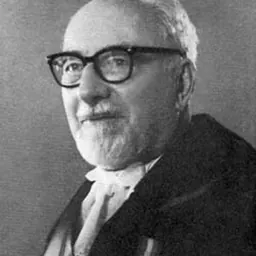
Lived 1937 – 2025 (aged 88). Tom Stoppard was a Czech and British playwright, screenwriter, journalist, film director, translator and writer.
Sir Tom Stoppard (; born ; 3 July 1937 – 29 November 2025) was a British playwright and screenwriter. He wrote for film, radio, stage, and television, finding prominence with plays. His work covered the themes of human rights, censorship, and political freedom, often delving into the deeper philosophical bases of society. Stoppard, a playwright of the Royal National Theatre, was one of the most internationally performed dramatists of his generation He was knighted for his contribution to theatre in 1997 and awarded the Order of Merit in 2000.
Born in Czechoslovakia, Stoppard left as a Jewish child refugee, fleeing imminent Nazi occupation. He spent three years at a boarding school in Darjeeling in the Indian Himalayas, then settled with his family in England after the war, in 1946. After being educated at schools in Nottingham and Yorkshire, Stoppard became a journalist, a drama critic and then, in 1960, a playwright.
Stoppard's most prominent plays include Rosencrantz and Guildenstern Are Dead (1966), Jumpers (1972), Travesties (1974), Night and Day (1978), The Real Thing (1982), Arcadia (1993), The Invention of Love (1997), The Coast of Utopia (2002), Rock 'n' Roll (2006), and Leopoldstadt (2020). He wrote the screenplays for Brazil (1985), Empire of the Sun (1987), The Russia House (1990), Billy Bathgate (1991), Shakespeare in Love (1998), Enigma (2001), and Anna Karenina (2012), as well as the BBC/HBO limited series Parade's End (2013). He directed the film Rosencrantz and Guildenstern Are Dead (1990), adapting his own 1966 play as its screenplay, with Gary Oldman and Tim Roth as the leads.
Stoppard received numerous accolades including an Academy Award for Best Original Screenplay for Shakespeare in Love, three Laurence Olivier Awards, and five Tony Awards. In 2008, The Daily Telegraph ranked him number 11 in their list of the "100 most powerful people in British culture". His final play, Leopoldstadt, set in the Jewish community of early 20th-century Vienna, premiered in 2020 at Wyndham's Theatre. It won the 2020 Laurence Olivier Award for Best New Play and later the 2023 Tony Award for Best Play.
Early life and education
Stoppard was born Tomáš Sträussler in Zlín, Czechoslovakia (present day Czech Republic). He was the younger son of Martha Becková and Eugen Sträussler, On 15 March 1939, the day the Nazis invaded Czechoslovakia, the Sträussler family fled to Singapore, where Bata had a factory. but later discovered that his father had been reported drowned after the ship he was aboard was bombed by Japanese forces, as he tried to flee Singapore in 1942. where the brothers became Tom and Peter.
In 1945, his mother married Kenneth Stoppard, a major in the British Army. Kenneth adopted her children and the family moved to Nottingham, England, in 1946.
Stoppard left school at 17 and began work as a journalist for the Western Daily Press in Bristol.
1980s In the 1980s, in addition to writing his own works, Stoppard translated many plays into English, including works by Sławomir Mrożek, Johann Nestroy, Arthur Schnitzler, and Václav Havel. Stoppard became influenced by the works of Polish and Czech absurdists. He was co-opted into the Outrapo group, a far-from-serious French movement to improve actors' stage technique through science.
In 1982, Stoppard premiered his play The Real Thing. The story revolves around a male-female relationship and the struggle between the actress and the member of a group fighting to free a Scottish soldier imprisoned for burning a memorial wreath during a protest. The leading roles were originated by Roger Rees and Felicity Kendal. The story examines various constructs of honesty including a play within a play, to explore the theme of reality versus appearance. It has been described as one of Stoppard's "most popular, enduring and autobiographical plays."
The play made its Broadway transfer in 1984, directed by Mike Nichols, starring Jeremy Irons and Glenn Close, with Christine Baranski in a supporting role. The transfer was a critical success with The New York Times theatre critic Frank Rich declaring, "The Broadway version of The Real Thing—a substantial revision of the original London production—is not only Mr. Stoppard's most moving play, but also the most bracing play that anyone has written about love and marriage in years." The production earned seven Tony Award nominations, winning five awards, including Best Play, as well as awards for Nichols, Irons, Close, and Baranski. This was Stoppard's third Tony Award for Best Play, following Rosencrantz and Guildenstern Are Dead in 1968 and Travesties in 1976.
In 1985, Stoppard co-wrote Brazil, a satirical science-fiction dark comedy film, with Terry Gilliam and Charles McKeown. The film received near universal acclaim. Pauline Kael, critic for The New Yorker, declared "Visually, it's an original, bravura piece of moviemaking... Gilliam's vision is an organic thing on the screen—and that's a considerable achievement". Stoppard, Gilliam, and McKeown were nominated for the Academy Award for Best Original Screenplay, losing to Witness. Stoppard went on to write the scripts for Steven Spielberg's films Empire of the Sun (1987), based on the book by J. G. Ballard, and Indiana Jones and the Last Crusade (1989). Spielberg later stated that though Stoppard was uncredited for the latter of the two, "he was responsible for almost every line of dialogue in the film".
For his 1985 appearance on BBC Radio 4's Desert Island Discs, Stoppard chose "Careless Love" by Bessie Smith as his favourite track. He also selected Inferno in two languages by Dante Alighieri as his chosen book and a plastic football as his luxury item.
1990s
In 1993, Stoppard wrote Arcadia, a play in which he explores the interaction between two modern academics and the residents of a Derbyshire country house in the early 19th century, including aristocrats, tutors and the fleeting presence, unseen on stage, of Lord Byron. The themes of the play include the philosophical implications of the second law of thermodynamics, Romantic literature, and the English picturesque style of garden design.
Arcadia was first performed at the Royal National Theatre in a production directed by Trevor Nunn and starring Rufus Sewell, Felicity Kendal, Bill Nighy, Harriet Walter and Emma Fielding. It won the 1993 Laurence Olivier Award for Best New Play. A year later the play made its transfer on Broadway starring Billy Crudup, Blair Brown, Victor Garber and Robert Sean Leonard. The production was well received with Vincent Canby of The New York Times writing, that while "There are real difficulties with this production... [there are] also great pleasures, not the least of which are Mark Thompson's sets and costumes. Mostly, though, there are Mr. Stoppard's grandly eclectic obsessions and his singular gifts as a playwright. Attend to them." The production received three nominations at the 49th Tony Awards including Best Play, losing to Terrence McNally's Love! Valour! Compassion!.
Stoppard wrote the screenplay for Shakespeare in Love (1998) with Marc Norman. The film, a romantic comedy, focuses on a fictional story involving William Shakespeare and his romance with a young woman who is an inspiration for the play Romeo and Juliet. The film starred an ensemble cast including Joseph Fiennes, Gwyneth Paltrow, Geoffrey Rush, Colin Firth, and Judi Dench. It was a critical and financial success and went on to earn seven Academy Awards including Best Picture. Stoppard received his second career Oscar nomination and first win for Best Original Screenplay. He also received the Golden Globe Award for the screenplay.
2000s The Coast of Utopia (2002) was a trilogy of plays Stoppard wrote about the philosophical arguments among Russian revolutionary figures in the late 19th century. The trilogy comprises Voyage, Shipwreck, and Salvage. Major figures in the play include Mikhail Bakunin, Ivan Turgenev, and Alexander Herzen. The title comes from a chapter in Avrahm Yarmolinsky's book Road to Revolution: A Century of Russian Radicalism (1959). The play premiered in 2002 at the National Theatre, directed by Trevor Nunn; its total length spanned nine hours. The play received three Laurence Olivier Award nominations including Best New Play, ultimately losing in all its categories. In 2006, it made its Broadway premiere in a production starring Billy Crudup, Jennifer Ehle, and Ethan Hawke. The play received 10 nominations winning seven Tony awards including for Best Play, Stoppard's fourth win in the category.
Rock 'n' Roll (2006) was set in Cambridge and Prague. The play explored the culture of 1960s rock music, especially the persona of Syd Barrett and the political challenge of the Czech band The Plastic People of the Universe, mirroring the contrast between liberal society in England and the repressive Czech state after the Warsaw Pact intervention in the Prague Spring.
Stoppard served on the advisory board of the magazine Standpoint, and was instrumental in its foundation, giving the opening speech at its launch. He was also a patron of the Shakespeare Schools Festival, a charity that enables school children across the UK to perform Shakespeare in professional theatres. Stoppard was appointed president of the London Library in 2002 and vice-president in 2017 following the election of Sir Tim Rice as president.
2010s
For Joe Wright, Stoppard adapted Leo Tolstoy's Anna Karenina into the 2012 film adaptation starring Keira Knightley. Film critic Lisa Schwarzbaum for Entertainment Weekly praised the film, writing "Stoppard—himself a master of puzzle-like construction in fine plays including Arcadia—supplies an excellently clean, delicately balanced script."
In 2012, Stoppard wrote a five-part limited series for television, Parade's End, which revolves around a love triangle between a conservative English aristocrat, his mean socialite wife and a young suffragette. The series premiered on BBC Two, starring Benedict Cumberbatch and Rebecca Hall. The series received widespread acclaim from critics with The Independents Grace Dent proclaiming it "one of the finest things the BBC has ever made". IndieWire declared, "Parade's End is wonderful accomplishment, smart, adult television". Stoppard received a British Academy Television Award and Primetime Emmy Award nomination for the series.
It was announced in June 2019 that Stoppard had written a new play, set in the Jewish community of early 20th-century Vienna. Leopoldstadt premiered in January 2020 at Wyndham's Theatre The play was nominated for six Tony Awards and won four, including Best Play.
Screenwriting Stoppard also co-wrote screenplays including Indiana Jones and the Last Crusade (1989) and Shakespeare in Love (1998). He worked in a similar capacity with Tim Burton on his film Sleepy Hollow.
Radio plays Among other work, Stoppard's philosophical comedy radio drama Darkside (2013) was written for BBC Radio 2 to celebrate the 40th anniversary of Pink Floyd's album The Dark Side of the Moon. "" became a term describing works using wit and comedy while addressing philosophical concepts. His second marriage (1972–92) was to Miriam Stern; they separated when he began a relationship with actress Felicity Kendal. He also had a relationship with actress Sinéad Cusack, but she made it clear she wished to remain married to Jeremy Irons and stay close to their two sons. Also, after she was reunited with a son she had given up for adoption, she wished to spend time with him in Dublin rather than with Stoppard in the house they shared in France. He had two sons from each of his first two marriages: Oliver Stoppard, Barnaby Stoppard, the actor Ed Stoppard, and Will Stoppard, who is married to violinist Linzi Stoppard. In 2014 he married Sabrina Guinness.
Stoppard's mother died in 1996. The family had not talked about their history and neither brother knew what had happened to the family left behind in Czechoslovakia. In the early 1990s, with the fall of communism, Stoppard found out that all four of his grandparents had been Jewish and had died in Terezin, Auschwitz, and other camps, along with three of his mother's sisters.
In 1998, following the deaths of his parents, he returned to Zlín for the first time in more than 50 years.
Stoppard was a friend of journalist and popular historian Paul Johnson, and dedicated his 1978 play Night and Day to him.
In 2013, Stoppard asked Hermione Lee to write his biography.
The Tom Stoppard Prize was created in 1983 under the Charter 77 Foundation and is awarded to authors of Czech origin.
In 2014, Stoppard publicly backed "Hacked Off" and its campaign towards press self-regulation by "safeguarding the press from political interference while also giving vital protection to the vulnerable".
Death On 29 November 2025, Stoppard died peacefully at his home in Dorset, England, at the age of 88, surrounded by members of his family. Many statements in tribute were made and King Charles issued a statement
A memorial held at the National Theatre included performances from Glenn Close, Benedict Cumberbatch, Felicity Kendal, Jeremy Irons, Harriet Walter, and Ed Stoppard, and brief speeches by Richard Eyre, Trevor Nunn, and Mick Jagger.
Legacy and honours Stoppard was one of the most internationally performed dramatists of his generation Writing in The Guardian, Michael Billington compared him to Samuel Beckett, Michael Frayn, and Harold Pinter with "a capacity to make ideas dance", and described his main achievement as showing "that audiences were open to plays about complex ideas". He also noted Stoppard's emotional and political themes in plays such as Arcadia and Professional Foul. The Wall Street Journal stated that he
Awards
In July 2013, Stoppard was awarded the PEN Pinter Prize for "determination to tell things as they are".
In July 2017, Stoppard was elected an Honorary Fellow of the British Academy (HonFBA), the United Kingdom's national academy for the humanities and social sciences. Stoppard was appointed Cameron Mackintosh Visiting of Contemporary Theatre at St Catherine's College, Oxford, for the academic year 2017/18.
Representations in art Stoppard has been represented in various forms of art. He sat for sculptor Alan Thornhill, and a bronze head is now in public collection, situated with the Stoppard papers in the reading room of the Harry Ransom Center at the University of Texas at Austin. The terracotta remains in the collection of the artist in London. The correspondence file relating to the Stoppard bust is held in the archive of the Henry Moore Foundation's Henry Moore Institute in Leeds.
Stoppard also sat for the sculptor Angela Conner, who was a friend, and his bronze portrait bust is on display in the grounds of Chatsworth House in the Derbyshire Dales.
Archive
Stoppard's papers are housed at the Harry Ransom Center at the University of Texas at Austin. The archive was first established by Stoppard in 1991 and continues to grow. The collection consists of typescript and handwritten drafts, revision pages, outlines, and notes; production material, including cast lists, set drawings, schedules, and photographs; theatre programmes; posters; advertisements; clippings; page and galley proofs; dust jackets; correspondence; legal documents and financial papers, including passports, contracts, and royalty and account statements; itineraries; appointment books and diary sheets; photographs; sheet music; sound recordings; a scrapbook; artwork; minutes of meetings; and publications.
Works The British Library published a comprehensive and substantial bibliography for Stoppard in 2010: Tom Stoppard: A Bibliographical History. This also included a CD-ROM containing illustrations.
Prose 1964: Introduction II: Stories by New Writers - Stoppard contributed three short stories to this anthology. A fourth story, rejected by the editors, served as the basis for M is for 'Moon' Among Other Things.
Theatre 1960: A Walk on the Water, adapted for television in 1963 and re-written as Enter a Free Man in 1968. 1965: The Gamblers – based on the novel The Gambler by Dostoevsky 1965: Higg and Cogg - curtain-raiser for The Gamblers 1966: Tango – adapted from Sławomir Mrożek's play and Nicholas Bethell's translation, it premiered at the Aldwych Theatre, London 1966: Rosencrantz and Guildenstern Are Dead, first staged at the Edinburgh Festival Fringe on 24 August 1966, by the Oxford Theatre Group. The play debuted in London with a production at The Old Vic on 11 April 1967. 1968: Enter a Free Man – first performed on 28 March 1968 at the St. Martin's Theatre in London. As it consists largely of material from his 1960 play A Walk on the Water, it has sometimes been described as Stoppard's first play. 1968: The Real Inspector Hound – the first performance took place at the Criterion Theatre in London on 17 June 1968 1969: Albert's Bridge – premiered at St. Mary's Hall in Edinburgh 1969: If You're Glad I'll Be Frank – premiered at St Mary's Hall in Edinburgh 1970: After Magritte – frequently performed as a companion piece to The Real Inspector Hound 1971: Dogg's Our Pet – first performed at the Almost Free Theatre on 7 December 1971 1973: Galileo - Stoppard began working on an adaptation of Bertolt Brecht's Life of Galileo as a screenplay in 1969. Due to a lack of interest from various Hollywood studios, Stoppard rewrote the script to be performed at the London Planetarium some time in 1973. However, technical difficulties led to the cancellation of the production, and Stoppard abandoned his work on the project. The play was eventually published in a 2003 issue of Areté and performed in 2004 at the Edinburgh Fringe. 1973: The House of Bernarda Alba - adaptation of the play by Federico Garcia Lorca, based on a translation by Kate Kendall. Performed at the Greenwich Theatre. 1974: Travesties – first produced at the Aldwych Theatre, London, on 10 June 1974, by the Royal Shakespeare Company 1976: Dirty Linen and New-Found-Land – first performed as an Ambiance Lunch-Hour Theatre Club presentation at Interaction's Almost Free Theatre on 6 April 1976 1976: 15-Minute Hamlet - included in Pieces of Eight, a 1982 performance of eight one-act plays by eight playwrights as The (15 Minute) Dogg's Troupe Hamlet 1977: Every Good Boy Deserves Favour – written at the request of André Previn (the play calls for a full orchestra) 1978: Night and Day, which won the Evening Standard Award for Best Play 1979: Dogg's Hamlet, Cahoot's Macbeth – two plays written to be performed together. Stoppard described Dogg's Hamlet as "a conflation of two pieces... namely Dogg's Our Pet... and The Dogg's Troupe 15-Minute Hamlet. 1979: Undiscovered Country – first produced at the Olivier Theatre in London, Stoppard's play is an adaptation of by the Austrian playwright Arthur Schnitzler, which focuses on 1890s Viennese society, demonstrating the effects of upper class codes of behaviour on human relationships. The title of the play is a reference to the concept of the afterlife as the "undiscovered country" from the "To be, or not to be" soliloquy in Hamlet. 1981: On the Razzle – based on Einen Jux will er sich machen by Johann Nestroy, Stoppard's play opened on 18 September 1981 at the Royal National Theatre in London 1982: The Real Thing – opened at the Strand Theatre, London, on 16 November 1982 1983: English libretto for The Love for Three Oranges (original opera by Sergei Prokofiev) 1984: Rough Crossing – based on Play at the Castle by Ferenc Molnár, it opened at the Lyttelton Theatre in London on 30 October 1984 1986: Dalliance – an adaptation of Arthur Schnitzler's Liebelei, Dalliance was first performed at the Lyttelton Theatre, London, on 27 May 1986 1987: Largo Desolato – a translation of a play by Václav Havel 1988: Artist Descending a Staircase, a radio play, originally broadcast on BBC Radio 3 on 14 November 1972. A stage adaptation, written by Stoppard, was first performed at the King's Head Theatre, Islington, London in 1988, and later transferred to The Duke of York's Theatre, London. The title alludes to Marcel Duchamp's 1912 painting Nude Descending a Staircase, No. 2. 1988: Hapgood – first performed at the Aldwych Theatre, London, on 8 March 1988 1993: Arcadia – first performed at the Royal National Theatre in London on 13 April 1993, in a production directed by Trevor Nunn 1993: The Merry Widow - linking narration for performances of the operetta by Franz Lehár by Glyndebourne Opera 1995: Indian Ink – based on Stoppard's radio play In the Native State, the stage version of Indian Ink had its first performance at the Yvonne Arnaud Theatre, Guildford, and opened at the Aldwych Theatre, London, on 27 February 1995. 1997: The Invention of Love – portrayed the life of poet A. E. Housman, focusing specifically on his personal life and love for a college classmate. The play was first performed in the Cottesloe Theatre of the Royal National Theatre on 25 September 1997 and won both the Evening Standard Award and the New York Drama Critics Circle Award. 1997: The Seagull – a translation of Anton Chekhov's play, it was first performed at The Old Vic theatre in London on 28 April 1997 2002: The Coast of Utopia – a trilogy of plays: Voyage, Shipwreck, and Salvage. The trilogy, nine hours in total, premiered with Voyage on 22 June 2002 at the Royal National Theatre's Olivier auditorium in repertory. The openings of Shipwreck and Salvage followed on 8 and 19 July, completing The Coast of Utopias run on 23 November 2002. 2004: Enrico IV (Henry IV) – a translation of the Italian play by Luigi Pirandello, it was first presented at the Donmar Theatre, London, in April 2004. 2005: The Merchant of Venice, a half-hour adaptation of the play by William Shakespeare for young actors. It premiered on 5 April 2005 at the Royal Opera House in a performance by the National Youth Theatre 2015: The Hard Problem was first performed in the Dorfman Theatre of the Royal National Theatre on 28 January 2015. 2019: Penelope - monodrama with music written by Andre Previn; first performed on 24 July 2019 at the Tanglewood Music Festival 2020: Leopoldstadt – first performed in January 2020 at Wyndham's Theatre in London, 1964: M' is for Moon Amongst Other – written for a BBC series of 15-minute radio plays, Just before Midnight 1968: Where Are They Now? – commissioned for Schools Radio and first broadcast on 28 January 1970 1972: Artist Descending a Staircase– first broadcast on BBC Radio 3 on 14 November 1972 1978: Rosencrantz and Guildenstern Are Dead - adaptation of Stoppard's 1966 play of the same name. First broadcast on BBC Radio Three on 24 December 1978. 1979: Professional Foul - adaptation of Stoppard's 1977 television play of the same name. First broadcast on BBC Radio Four on 17 June 1979. 2012: Albert's Bridge, Artist Descending a Staircase, The Dog It Was That Died and In the Native State were published by the British Library as Tom Stoppard Radio Plays 2013: Darkside – written for BBC Radio 2 to celebrate the 40th anniversary of Pink Floyd's album Dark Side of the Moon.
Television 1963: A Walk on the Water - broadcast in November 1963 on ITV. Re-broadcast on the BBC in 1964 as The Preservation of George Riley. Adapted from the play of the same name and later re-written by Stoppard as Enter a Free Man. 1965: A Paragraph for Mr. Blake - adapted from Stoppard's own short story, "The Story," as The Explorers. The program was significantly changed by the producer prior to its October 1965 broadcast on ITV as an episode of Knock on Any Door. 1965: A Separate Peace – broadcast in August 1966 to accompany a BBC documentary about chess players that Stoppard made with Christopher Martin 2012: Parade's End – television screenplay for BBC/HBO of Ford Madox Ford's series of novels
Film 1975: The Romantic Englishwoman - co-authored with Thomas Wiseman 1978: Despair – screenplay for the film directed by Rainer Werner Fassbinder, starring Dirk Bogarde, based on the novel by Vladimir Nabokov 1979: The Human Factor – adaption of the novel by Graham Greene 1985: Brazil – co-authored with Terry Gilliam and Charles McKeown, script nominated for an Academy Award 1998: Shakespeare in Love – co-authored with Marc Norman; the script won an Academy Award 1989: Indiana Jones and the Last Crusade – final rewrite of Jeffrey Boam's rewrite of Menno Meyjes's screenplay 1990: The Russia House – screenplay for the 1990 film of the novel by John le Carré 1990: Rosencrantz & Guildenstern are Dead – adaptation of his own stage play, which he directed; won the Golden Lion 1999: Sleepy Hollow - uncredited script doctor work 2001: Enigma – adaptation of the Robert Harris novel 2005: Star Wars: Episode III – Revenge of the Sith – dialogue-polish of George Lucas's screenplay 2005: The Golden Compass – a draft screenplay of the novel by Philip Pullman, not produced 2012: Anna Karenina – adaptation of the Leo Tolstoy novel 2014: Tulip Fever – adaptation of the Deborah Moggach novel, written with Moggach
Don’t just read it —
keep it.
Full-length biographies made to live with: read them, listen on the way to work, watch them tonight.
- E-book
- Audio
- Video
Instant download · yours to keep · every purchase keeps this site free
Important facts
Family & relationships
People in Tom Stoppard's life
Named in this biography and alive at the same time





Related people
Same field, nearest in time

Contemporaries
People whose lives overlapped Tom Stoppard's



Frequently asked questions
Who was Tom Stoppard?
Czech–English playwright (1937–2025)
When was Tom Stoppard born?
Tom Stoppard was born on 3 July 1937 in Zlín.
When did Tom Stoppard die?
Tom Stoppard died on 29 November 2025 in Dorset.
What was Tom Stoppard's occupation?
Tom Stoppard was a playwright, screenwriter, journalist, film director, translator and writer.
What nationality was Tom Stoppard?
Tom Stoppard was Czech and British.
Sources & further reading
Cite this page
APA: Biography.guide. (2026). Tom Stoppard. https://biography.guide/tom-stoppard/
MLA: "Tom Stoppard." Biography.guide, https://biography.guide/tom-stoppard/.
Chicago: "Tom Stoppard." Biography.guide. https://biography.guide/tom-stoppard/.
Data last updated: 2026-09-20 · Spot an error? Report a correction.
Page generated 2026-09-27 05:27 UTC