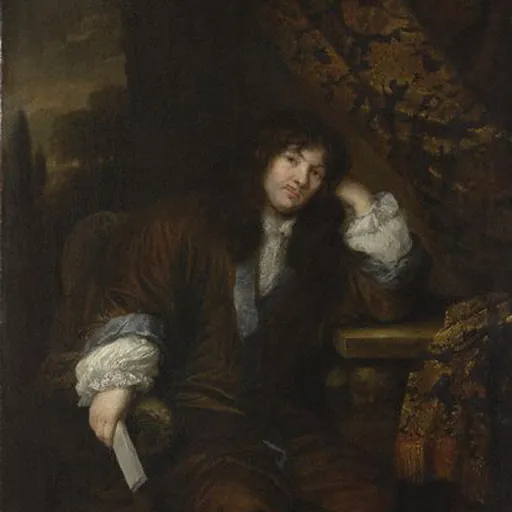
Sir William Temple, 1st Baronet
English statesman and essayist
About Sir William Temple, 1st Baronet
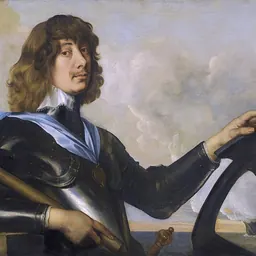
Lived 1628 – 1699 (aged 70). Sir William Temple, 1st Baronet was an English politician, diplomat and essayist.
Sir William Temple, 1st Baronet (25 April 162827 January 1699) was an English diplomat, politician and writer. An important diplomat, he was recalled in 1679, and for a brief period was a leading advisor to Charles II of England, with whom he then fell out. Temple subsequently retired to the countryside, and thereafter occupied himself with gardening and writing. He is best remembered today for two aspects of his life after retirement: a passage on the designs of Chinese gardens, written without ever having seen one, and for employing a young Jonathan Swift as his secretary. The first is sometimes given as an early indication of the English landscape garden style, praising irregularity in design.
Biography
William Temple was the son of Sir John Temple of Dublin, an Irish judge and Master of the Rolls. Born in London, and educated at Emmanuel College, Cambridge, Temple travelled across Europe, and was for some time a member of the Irish Parliament. He was a representative at the Irish Convention of 1660 and was also employed on various diplomatic missions. During his time as a diplomat, Temple successfully negotiated the Triple Alliance of 1668 and the marriage of the Prince of Orange and Princess Mary of England in 1677. On his return in 1679 he was much consulted by Charles II, but disapproving of the anti-Dutch courses adopted, retired to his house at Sheen.
He was called out of retirement to implement a plan of his design to reform government rule. He was the architect of the Privy Council Ministry of 1679, which, though it failed, was an early effort to establish an executive along the lines of what later came to be understood as Cabinet government. Charles II disapproved of the scheme, which in his view took away too much of the Royal Prerogative, although in the exceptional circumstances of the Exclusion Crisis he was willing to give it a brief trial.
Temple later left Sheen and purchased Compton Hall, Farnham around 1686. He renamed the house More Park after Moor Park, Hertfordshire, a house he much admired and which influenced the formal gardens he built at Farnham. Here the later-famous Jonathan Swift was his secretary for most of the period from 1689 onward. It was here that Swift met Esther Johnson, who became his lifelong companion and whom he immortalised as Stella. Despite rumours that she was Temple's own daughter, the evidence suggests that her widowed mother lived in the house as companion to Temple's sister Martha. Temple installed his family motto "God has given us these opportunities for tranquility" above the door and took great pleasure from this house in his retirement from public life.
He took no part in the Glorious Revolution, but acquiesced to the new regime, and was offered, but refused, a role as Secretary of State.
Temple died in More Park, Surrey, England in 1699. His memorial in Westminster Abbey names also his wife Dorothy, and their daughter Diana; in 1722 his sister Martha was also buried in the abbey and her name was added as she had left money for a monument. He was much loved by his friends; Swift wrote that all that was good and amiable in mankind departed with him. The normally cynical Robert Spencer, 2nd Earl of Sunderland, was deeply grieved by his death, writing to Temple's sister Martha that "the chief pleasure I proposed to myself was to see him sometimes".
Marriage and children
Temple married Dorothy Osborne (d. 1695), a daughter of Sir Peter Osborne and Dorothy Danvers, in 1654. It was a love marriage and the couple were noted for constancy during their long engagement: Dorothy resisted pressure from her family to accept any of several other more eligible suitors, including Henry Cromwell and her cousin Thomas Osborne, 1st Duke of Leeds. She and William outlived all of their nine children, most of whom died in infancy; the suicide of their adult son John in 1689 was the greatest tragedy of their lives. was made Paymaster General and, on 12 April 1689, Secretary at War in succession to William Blathwayt. A few days later, having filled his pockets with stones, he threw himself from a boat into the strong current beneath London Bridge, and was drowned. The suicide, which created the greatest sensation at the time, was probably due to official anxiety, aggravated by the treachery of a confidential agent whom he had recommended to the king. He married Marie du Plessis-Rambouillet, daughter of Paul du Plessis-Rambouillet of France, of a Huguenot family, by whom he left two daughters:
As a garden writer, Temple was rather typical of his period in England, but perhaps to an extreme degree, in being highly interested in growing fruit trees of all sorts and very little interested in flowers:I will not enter upon any Account of Flowers, having only pleased my self with seeing and smelling them, and not troubled my self with the Care, which is more the Ladies Part than the Mens; but the Success is wholly in the Gardener.
The passage in which Temple outlines the concept of sharawadgi is the following:Amongst us, the Beauty of Building and Planting is placed chiefly in some Proportions, Symmetries and Uniformities; our Walks and our Trees ranged so, as to answer one another, and at exact Distances. The Chineses scorn this way of Planting, and say a Boy that can tell an Hundred, may plant Walks of Trees in strait Lines, and over-against one another, and to what Length and Extent he pleases. But their greatest reach of Imagination, is employed in contriving Figures, where the Beauty shall be great, and strike the Eye, but without any Order or Disposition of Parts, that shall be commonly or easily observ'd. And though we have hardly any Notion of this sort of Beauty, yet they have a particular word to express it; and where they find it hit their Eye at first Sight, they say the Sharawadgi is fine or is admirable, or any such Expression of Esteem. And whoever observes the Work upon the best Indian gowns, or the Painting on their best Skreens and Purcellans, will find their Beauty is all of this Kind, (that is) without Order. But I should hardly advise any of these Attempts in the Figure of Gardens among us; they are Adventures of too hard Atchievement for any common hands; and tho' there may be more Honour if they succeed well, yet there is more Dishonour if they fail, and 'tis Twenty to One they will; whereas in regular Figures, 'tis hard to make any great and remarkable Faults.
In 1690, Temple intervened in the debate about the difference between the ancients and the moderns with his essay On Ancient and Modern Learning, and his prose style was praised by later critics. Hume called it negligent and infected by foreign idioms, but agreeable and interesting; not like the perusal of a book, but conversation with a companion. Samuel Johnson called him "the first writer who gave cadence to English prose. Before his time they were careless of arrangement, and did not mind whether a sentence ended with an important word or an insignificant word, or with what part of speech it was concluded".
Death Temple died on 27 January 1699. He was buried in Westminster Abbey, but his heart, by his special wish, was placed in a silver casket under the sun-dial at Moor Park, near his favourite window seat. Swift recorded, "He died at one o clock in the morning and with him all that was great and good among men".
Don’t just read it —
keep it.
Full-length biographies made to live with: read them, listen on the way to work, watch them tonight.
- E-book
- Audio
- Video
Instant download · yours to keep · every purchase keeps this site free
Important facts
People in Sir William Temple, 1st Baronet's life
Named in this biography and alive at the same time





Related people
Same field, nearest in time

Contemporaries
People whose lives overlapped Sir William Temple, 1st Baronet's






Frequently asked questions
Who was Sir William Temple, 1st Baronet?
English statesman and essayist
When was Sir William Temple, 1st Baronet born?
Sir William Temple, 1st Baronet was born on 25 April 1628 in London.
When did Sir William Temple, 1st Baronet die?
Sir William Temple, 1st Baronet died on 27 January 1699 in Moor Park.
What was Sir William Temple, 1st Baronet's occupation?
Sir William Temple, 1st Baronet was a politician, diplomat and essayist.
What nationality was Sir William Temple, 1st Baronet?
Sir William Temple, 1st Baronet was English.
Sources & further reading
· Wikipedia: Sir William Temple, 1st Baronet
· DBpedia: Sir William Temple, 1st Baronet
Cite this page
APA: Biography.guide. (2026). Sir William Temple, 1st Baronet. https://biography.guide/sir-william-temple-1st-baronet/
MLA: "Sir William Temple, 1st Baronet." Biography.guide, https://biography.guide/sir-william-temple-1st-baronet/.
Chicago: "Sir William Temple, 1st Baronet." Biography.guide. https://biography.guide/sir-william-temple-1st-baronet/.
Data last updated: 2026-09-21 · Spot an error? Report a correction.
Portrait: Wikimedia Commons · author & licence
Page generated 2026-09-27 04:58 UTC