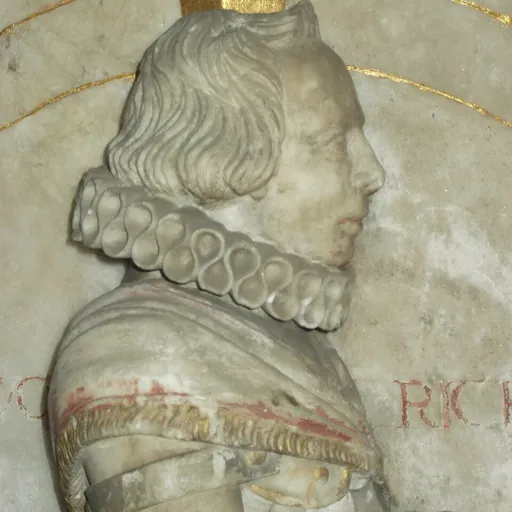
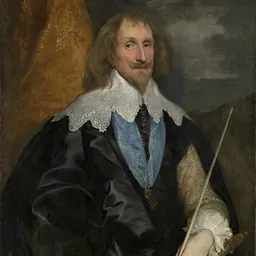
About Sir Thomas Wolryche, 1st Baronet
Lived 1598 – 1668 (aged 70). Sir Thomas Wolryche, 1st Baronet was an English politician.
Sir Thomas Wolryche, 1st Baronet ( ; 1598–1668) was an English landowner and politician who sat in the House of Commons for Wenlock between 1621 and 1625. He fought in the Royalist army in the English Civil War, serving as military governor of Bridgnorth.
Background and early life
Wolryche was born at Worfield, an estate to the south and east of Worfield. The Wolryches had large estates in Shropshire, centred on Dudmaston, on the River Severn to the south of Bridgnorth, which they had acquired from the de Dudmaston family through marriage in the early 15th century; He succeeded his father in 1614. As he was still a minor, he was subject to wardship, a potentially costly period in which his estates might profit a stranger. He was rescued from this as, at the age of 16, his wardship was purchased by his mother and uncle, Sir Edward Bromley
Family tree
Education Effigies of Edward Bromley and Margaret Lowe, his wife, in Worfield parish church. Bromley was Wolryche's uncle, godfather and patron. Wolryche matriculated at Trinity College, Cambridge at Easter 1614. Edward Bromley then secured him a special admission to the Inner Temple, ratified by the Inn's parliament on 15 October 1615, along with his relative Philip Bromley, the youngest son of Henry Bromley. Edward Bromley was intending to adopt Philip as heir to his personal property. Wolryche was to be his political protégé for some years.
Landowner Francis Wolryche had considerable debts. His will appointed as trustees Edward Bromley and Roger Puleston, husband of Thomas's aunt, if necessary until Thomas reached 30 years of age. guaranteeing his debts to the sum of £1,740. The borough or liberty of Wenlock was identified with the whole parish of Holy Trinity church in the town by its charter of 1468. When Wenlock Priory was dissolved, the resulting property rush brought a large number of landed gentry and yeoman families into the area, so that two thirds of the burgesses were actually from the rural area around the town.
The Civil War
Prelude to war
Wolryche is regarded as a "zealous supporter of the king." and created the first of the Wolryche baronets on 4 August 1641. The influence of the militantly royalist Francis Ottley, whose sister, Ursula, Wolryche had married in 1625, seems to have been decisive in making him act for the king. Ottley, unlike Wolryche himself, was politically committed and well-informed, retaining a correspondent in London to help him follow developments. Wolryche accepted a commission to collect the Poll Tax in 1641 and during the summer of 1642, with both Charles and Parliament mobilising for possible war, both he and Ottley received Commissions of array from the king. A group of Shrewsbury aldermen petitioned parliament on 16 July to recognise a militia that had begun to gather under the command of Thomas Hunt. Parliament responded positively and sent a deputation of three MPs to establish its military control of Shropshire. One of these was Sir John Corbet, 1st Baronet, of Stoke upon Tern, a grandson of Lord Chancellor Thomas Bromley and thus Wolryche's second cousin. However, it was Francis Ottley who seized the initiative and disrupted the parliamentary muster on 1 August, allowing Royalist forces to rally the following day under Sir Vincent Corbet of Moreton Corbet.
On 8 August Wolryche was prominent among the county gentry who signed a "declaration and protestation" of the Grand Jury at the Shrewsbury Assizes. This was inspired by Ottley and stated: wee wilbee ready to attend and obey his maiestie in all lawfull wayes ffor the putting of the Countrey in a posture of Armes for the defence of his maiestie and the peace of this Kingdome And doe resolve according to our oathes of Supremacye and allegiance late protestacons to adventure our lives and fortunes in the defence of his Royall and sacred person and honor the true protestant religion The iust Priviledges of Parliament and the knowne lawes and liberties of the subiects That thereby the distractions and disturbances of his maiesties kingdome may bee reduced to his loyall government.
The warmth of this support persuaded the king, on leaving his initial rallying point at Nottingham on 12 September, to head with his field army for Shrewsbury, which he reached on 20 September, remaining until 12 October. Ottley took effective control of Shrewsbury during the king's stay and, after some delay, was formally recognised as military governor of the town. It was probably Ottley who recommended Wolryche for the post of governor of Bridgnorth. At some time early in the conflict, Wolryche was also appointed a Deputy Lieutenant of Shropshire. Prince Rupert had arrived in the town on 21 September and ensured that two reliable, royalist bailiffs were elected for the following year: Thomas Dudley and John Farr. Setting out from Shrewsbury on 12 October, the king arrived at Bridgnorth and stayed for three days with Sir William Whitmore at Bridgnorth Castle, billetting his army of 14,000 on the surrounding inhabitants, before moving on to Wolverhampton.
Wolryche seems to have left the precautions for the town's defence largely to the council. Not until 29 November did they think even to set "watch and ward" at the direction of the bailiffs. In December Wolryche's name was again prominent in an "Ingagement and Resolution of the Principall Gentlemen of the County of Salop," pledging that we will do our uttermost endeavours, both by our selves and friends, to raise, as well for defence of our King and Countrey, as our own particular safeties, one entire regiment of Dragoneers, and with our lives to defend those men's Fortunes and Families that shall be Contributors herein, to their abilities.
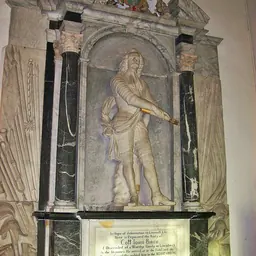
However, an embarrassing incident soon followed, in which Wolryche and his friends, in their desire to go on drinking as in peacetime, allowed a dangerous roundhead to evade capture. Wolryche, together with Sir William Whitmore, Edward Cresset and Sir Edward Acton were customers of John Birch, originally of Cannock and now a Bristol wine merchant. On 19 January they were at Bridgnorth, in the very act of making a deal, when a warrant arrived from Ottley, demanding Birch's arrest on the grounds that he "hath taken up Armes and is a disaffected p'son to our Sov'aigne Lord the Kinge and doth still persist therein as a traytor to his Royall person." Wolryche and the others wrote to Ottley the next day, offering to stand bail so that Birch could carry on his business with the local gentry until the following Thursday. Evidently Birch continued to trade, albeit with some inconveniences, and on 28 January had the gall to write from Bristol to Ottley, claiming that there was an agreement to allow free trade between Bristol and Shrewsbury, and demanding restitution or compensation for four butts of sack, confiscated at Shrewsbury and worth, he alleged, the enormous sum of £64. Birch soon appeared in arms on the side of Parliament, later waging a successful campaign against the royalists in Herefordshire. Wolryche, Cresset and Acton, however, showed their loyalty to the royalist cause on 28 January by having a villager committed to the assizes for "speaking of words tending to high tresson."
Meanwhile, the inhabitants of Bridgnorth were taking steps to improve their own protection. On 25 January the council agreed to maintain nine dragoons at the expense of the town, although the force was assembled only by renting a horse and rider from Thomas Corbet of Longnor Hall and two horses from Thomas Glover, a townsman who demanded a shilling a day for each animal. At the same time the watch was organised on more efficient military lines, with captains for day and night, and eight men assigned to the night watch, with six to the day. Corbet was persuaded to begin drilling the young men of the town and the surrounding area for its defence, although it was to Ottley he wrote on 5 February for support and validation. Arthur Capell, 1st Baron Capell of Hadham, royalist commander in Shropshire, Cheshire and North Wales. In March 1643 Wolryche took a small force out of the county to support a royalist attack on Lichfield. apparently discovering material of interest. On his return, Wolryche was faced in May by a much more rigorous set of demands from the town council, based on a directive from Lord Capell, the regional royalist commander: to draw his forces of the trayned band of this county which are under his command, to this towne and neighbourhood hereabouts of Bridgnorth; it is agreed that fortifications be made in all fords and places about this towne, and the liberties thereof, where the said Thomas Wolrich shall think good to appoint, and that all the men of this towne shall come themselves, or send labourers to this work, with all speed; unto which work Edward Cressett, Esq., and Edward Acton, Esq., justices of peace of the said county, being present, do promise to send labourers and workmen out of the country. Secondly, whosoever has volunteered will bear arms for the defence of this towne, and the neighbourhood hereabouts, shall be listed, and attend the service of training weekly, upon every Tuesday, to be exercised therein, whose teaching and training for that service Lieutenant Billingsley (at the towne's entreaty) is pleased to undertake.
Signature of Sir Thomas Wolryche from a letter to Sir Francis Ottley.
Francis Billingsley seems to have brought a measure of professionalism to the defence of Bridgnorth. Wolryche, however, seems never to have fully reconciled himself to the demands of war. In June he wrote to Capell to denounce a constable of Halesowen, then in Shropshire, who had been insufficiently vigorous in levying taxation, requisitioning and conscripting for the king. Nevertheless, when a relative, Gilbert Warley, protested to him about the exactions of a royalist foraging party on his neighbours, Wolryche was quick to write to Ottley, asking for his help in recovering horses stolen in the incident.
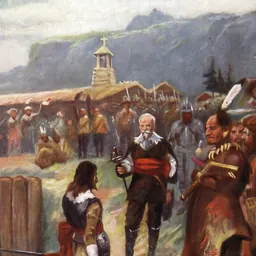
Ottley was removed from the governorship of Shrewsbury in February 1644, under pressure from Prince Rupert. It seems that Wolryche too was replaced at some time early in 1644, His replacement was Sir Lewis Kirke, the brother of David Kirke, and like him a tough soldier and adventurer honed by his experiences in Canada. Kirke and Billingsley established a small committee to manage the fortification and defence of Bridgnorth. However, Kirke was later accused of using torture in his attempts to suppress internal opposition in the town. He was not present at the taking of Bridgnorth, which took place on 21 March 1646, when the commander was still Kirke. The garrison set fire to the town, which was largely destroyed, as an inscribed tablet on the North Gate Museum makes clear. This was in response to a volley of stones rained on them by the townspeople as they were retreating into the castle, suggesting that the population generally was hostile to the royalist occupation, at least by this stage. The damage was valued at £60,000. Wolryche was imprisoned once and sequestered twice. of Roger on 14 December 1628, as well as the much younger Andrew on 25 April 1644.
Francis automatically succeeded to the baronetcy but his mental illness prevented his taking responsibility for the property. The estates were put in trust with John, the fifth but third surviving son, and the situation was regularised by a private act of Parliament in 1673, (25 Cha. 2. c. 6 ). John was elected MP for his father's constituency of Much Wenlock in August 1679 and February 1681. John died in 1685, three years before Francis, but it was his son, Thomas who inherited both the baronetcy and the estates in 1688.
Family tree
Don’t just read it —
keep it.
Full-length biographies made to live with: read them, listen on the way to work, watch them tonight.
- E-book
- Audio
- Video
Instant download · yours to keep · every purchase keeps this site free
Important facts
People in Sir Thomas Wolryche, 1st Baronet's life
Named in this biography and alive at the same time






Related people
Same field, nearest in time
Contemporaries
People whose lives overlapped Sir Thomas Wolryche, 1st Baronet's





Frequently asked questions
Who was Sir Thomas Wolryche, 1st Baronet?
English politician and Baronet
When was Sir Thomas Wolryche, 1st Baronet born?
Sir Thomas Wolryche, 1st Baronet was born on 3 March 1598.
When did Sir Thomas Wolryche, 1st Baronet die?
Sir Thomas Wolryche, 1st Baronet died on 4 July 1668.
What was Sir Thomas Wolryche, 1st Baronet's occupation?
Sir Thomas Wolryche, 1st Baronet was a politician.
What nationality was Sir Thomas Wolryche, 1st Baronet?
Sir Thomas Wolryche, 1st Baronet was English.
Sources & further reading
· Wikipedia: Sir Thomas Wolryche, 1st Baronet
· DBpedia: Sir Thomas Wolryche, 1st Baronet
Cite this page
APA: Biography.guide. (2026). Sir Thomas Wolryche, 1st Baronet. https://biography.guide/sir-thomas-wolryche-1st-baronet/
MLA: "Sir Thomas Wolryche, 1st Baronet." Biography.guide, https://biography.guide/sir-thomas-wolryche-1st-baronet/.
Chicago: "Sir Thomas Wolryche, 1st Baronet." Biography.guide. https://biography.guide/sir-thomas-wolryche-1st-baronet/.
Data last updated: 2026-09-22 · Spot an error? Report a correction.
Portrait: Wikimedia Commons · author & licence
Page generated 2026-09-27 05:02 UTC