
About Edward Bromley
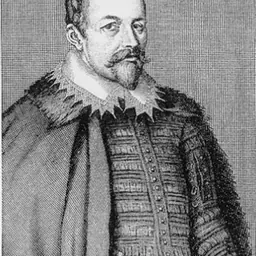
Lived 1563 – 1626 (aged 62–63). Edward Bromley was a lawyer, judge and politician.
Effigies of Edward Bromley and Margaret Lowe, his wife, in Worfield parish church. Sir Edward Bromley (1563–2 June 1626) was an English lawyer, judge, landowner and politician of the Elizabethan and Jacobean periods. A member of a Shropshire legal and landed gentry dynasty, he was prominent at the Inner Temple and became a Baron of the Exchequer. He was elected MP for Bridgnorth on six consecutive occasions.
Background
Edward Bromley was the second son of Sir George Bromley of Hallon, near Worfield, in Shropshire, the son of George Bromley of Hodnet. Sir George, like his father, was an important figure at the Inner Temple and a considerable politician on the regional stage, becoming chief legal officer of the Council in the Marches of Wales and chief justice of Chester. His career was, however, overshadowed by that of his younger brother, Edward's uncle, Thomas Bromley, who became Lord Chancellor. Joan Waverton, the daughter of John Waverton of Worfield. and Waterton. for probably only one generation. On acquiring it through marriage, George Bromley had made it his seat
Family Tree
Education and legal training Edward Bromley was sent to Shrewsbury School in 1577 reflecting Calvinist principles. The first head Thomas Ashton had established a tradition of using drama to develop students' confidence and self-expression.
Bromley was admitted to the Inner Temple by its parliament on 27 November 1580: a special admission, without cost, in recognition of his father's status. An undated note states that he was in debt to the treasurer, Andrew Gray, to the tune of 20 marks: Gray was treasurer during 1585–6. Bromley's call to the bar was noted by the parliament on 5 July 1590. The same meeting noted that he was permitted to use a chamber over the buttery, which had been restored by Michael Lowe, and was used also by his nephew, Humphrey Lowe. In 1595 the shared chamber fell into disrepair and the Inner Temple itself was forced to take action, spending £40 on repairs and subsequently billing Lowe and his relative Abney, for 20 marks each. The chamber seems to have become a family institution, with Bromley on a similar footing to Lowe's blood relations. The association was entirely reciprocal: In November 1590 Lowe, a chief clerk of the King's Bench, was accorded a seat next to Bromley and "ancienty" of those under Bromley, i.e. recognised as their co-tutor. Bromley's marriage to Margaret Lowe in April 1593 was one result of this close association.
Bromley went on to achieve prominence at the Inner Temple. He was called to the bench on 19 May 1603. Responsibilities, minor at first, quickly followed. In June 1604 it was steward for the Reader's dinner, and in November auditor for the steward's accounts, and in April 1605 he and Sir Edward Coke were nominated as attendants to the Reader – generally a signal that the appointee was himself to receive this high academic honour in the near future. As expected, on 3 November 1605 the Inn's parliament named Bromley Lent Reader for the following year, attended by Coke and Sir John Jackson Later in the year he was able to nominate students for special admissions, a sign of his greatly enhanced status. After this his career took a turn towards the administration of justice.
Parliamentary career
Elizabethan parliament Bromley's parliamentary career unfolded alongside his progress at his Inn of Court. He was returned as an MP for Bridgnorth at every election between 1586 and 1604 – a total of six times. Although the council nominally selected the MP, with the consent of the burgesses, the Council in the Marches and local gentry effectively shared parliamentary representation, ensuring that lawyers monopolised the seats. Bromley would have had little difficulty in securing election, as he had leverage on all counts. He was a landowner based very locally and Sir George Bromley, his father, was both acting head of the Council in the Marches, between the death of Henry Sidney and the arrival of his successor, and recorder of Bridgnorth. In the last of the Elizabethan parliaments, elected in October 1601, Bromley was outranked by Thomas Horde, who had succeeded Sir George as recorder in 1589, and took the second seat. who had been appointed the king's Master of the Ceremonies. Lewknor probably owed his election to the influence of his uncle, Sir Richard Lewknor, chief justice of Chester and an influential member of the Council in the Marches. The proposed bill was a sop to the king: although Bromley and others were appointed to a committee, it was allowed to fade from attention and no report was ever produced.
Bromley was compelled to resign his parliamentary seat in February 1610, when he was made a judge, occasioning a contested by-election – a very rare event. who was Bromley's cousin, once removed. His main interest was in the constituency of Much Wenlock, which was small and easier to manipulate. Bromley's nephew, Thomas Wolryche of Dudmaston Hall, was returned as MP in 1621, 1624 and 1625.
Judicial career As late as 23 January 1610 John Chamberlain, the noted letter writer, described Bromley as "an obscure lawyer of the Inner Temple." was made a Serjeant-at-law, one of an elite corps of barristers. The promotion was for the express purpose of making him a judge. He was presented with a purse containing £10 by the treasurer of the Inner Temple. The benchers and fellows of the Inner Temple then accompanied him in procession to Serjeant's Inn, where he was robed, and then to Westminster for his inauguration.
Next day, 6 February, Bromley was appointed a Baron of the Exchequer in place of Edward Heron, who had died after serving only a little over two years. The Barons were judges in the Exchequer of Pleas, a court which dealt with important equity cases. He was the third in his family to be "adorned with the judicial ermine," after Chief Justice Thomas Bromley, and the Lord Chancellor. When he went to the Exchequer on his first day of service, wearing his judge's ermine, the entire available membership of the Inner Temple and the Inns of Chancery preceded him on foot. Bromley held his post at the Exchequer until his death, serving for all but the last year under Sir Lawrence Tanfield, the Chief Baron of the Exchequer, and sitting alongside Denham from 1617. Bromley and Denham had their patents renewed on the accession of Charles I in March 1625. Tanfield died a month after being reappointed and was replaced by Sir John Walter.
Alongside his work in London at the Exchequer, Bromley also operated as a justice of assize, working on the Northern circuit from 1610 until 1618, when he moved to the Midland circuit. He survived for less than two years. The Bromley estates then passed to his young son, Thomas.
Edward Bromley, meanwhile, start to build up his own landholding, in 1593 marrying the coheiress to the small estate of Tymore, near Enville, in neighbouring Staffordshire, who brought a scattering of land across the Midlands. From this point he began to occupy a selection of the local and regional offices that pertained to the landed gentry. By 1595 he was serving as a Justice of the Peace for Shropshire. Jane and William Davenport now laid claim to Hallon and the other lands that had been inherited through Edward and Francis's mother, Jane Waverton or Wannerton. Although Bromley now regarded Hallon as his seat, The dispute lasted for decades, with Hallon finally in the hands of the Davenport family and becoming their seat, Davenport House.
Death
Sir Richard Hutton, a friend of Bromley and, with Denham, an overseer of his will. Bromley died on 2 June 1626. He was interred in St Peter's church at Worfield. In his will, dated 14 October 1625, he asks for a night burial two days after his death "without funeral pompe." It appears that the Inner Temple had already installed a stained glass window displaying Bromley's armorial bearings and this was restored some time shortly after his death, presumably as a mark of respect.
Bromley left £100 for "a monument to be set up in Shifnall church or elsewhere". He had installed a fine alabaster monument for his parents at Worfield and may have doubted it would be available. In the event, a substantial alabaster tomb was built at Worfield and dedicated to him by his wife. His epitaph reads: Spiritus astra petit. (Latin: The spirit strives for the stars.) Here resteth the Bodie of Sir Edward Bromley, Knight, second Baron of Exchequer, being second sonne of Sir George Bromley, Knight, and of Dame Jane his wife. Who married Margaret one of the daughters and coheirs of Michael Lowe, of Tymore, in the County of Stafford, Esquire and died without issue, the second of June 1626. Dame Margaret his wife according to his will did dedicate this monument to his memory. and, few months later, George Wolryche and John Lyttelton, a son of Meriel Bromley, were similarly admitted. Philip Bromley seems to have predeceased him. The austerity shown in her husband's will was amplified in hers, which was dated 6 March 1657. She asked that only one nephew, James Abney, attend her funeral and that even bell ringing be avoided. Most of the bequests relate to Abney and to other nephews and nieces, the Bromskills. Calamy, the historian who collated information about the Great Ejection, added a supplementary note to his account of Leicestershire for the 1702 edition: Loughborough : Mr. OLIVER BRUMSKILL. Add; He was a judicious solid Divine, and excellent Preacher, and holy Liver. He liv'd with that eminent Saint, the old Lady Bromley, Widow to Judge Bromley. Bromskill, a Presbyterian minister of the Commonwealth period, was evidently related to Lady Bromley by marriage and her active support for his ministry, as well as Calamy's encomium, makes clear that she was a committed Puritan.
Don’t just read it —
keep it.
Full-length biographies made to live with: read them, listen on the way to work, watch them tonight.
- E-book
- Audio
- Video
Instant download · yours to keep · every purchase keeps this site free
Important facts
People in Edward Bromley's life
Named in this biography and alive at the same time




Related people
Same field, nearest in time


Contemporaries
People whose lives overlapped Edward Bromley's




Frequently asked questions
Who was Edward Bromley?
English judge and politician
When was Edward Bromley born?
Edward Bromley was born in 1563.
When did Edward Bromley die?
Edward Bromley died in 1626.
What was Edward Bromley's occupation?
Edward Bromley was a lawyer, judge and politician.
Sources & further reading
Cite this page
APA: Biography.guide. (2026). Edward Bromley. https://biography.guide/edward-bromley/
MLA: "Edward Bromley." Biography.guide, https://biography.guide/edward-bromley/.
Chicago: "Edward Bromley." Biography.guide. https://biography.guide/edward-bromley/.
Data last updated: 2026-09-20 · Spot an error? Report a correction.
Page generated 2026-09-27 05:22 UTC