
About Sir Thomas de Veil
Lived 1684 – 1746 (aged 61). Sir Thomas de Veil was an English and British magistrate and justice of the peace.
Sir Thomas de Veil (21 November 1684 – 7 October 1746), also known as deVeil, was Bow Street's first magistrate. He was known for having enforced the Gin Act 1736, and, with Sir John Gonson, Henry Fielding, and John Fielding, was responsible for creating the first professional police and justice system in England.
Early life Thomas de Veil was born in St Paul's Churchyard, London, in 1684. The identity of his parents needs to be clarified: while a contemporary biographer had pinpointed Revd. Dr. Hans de Veil as his father, the parish of St Augustine, London, records the birth of a Thomas de Veil to Lewis de Compiègne de Veil and his wife, Anne, on 21 November 1684.
De Veil is said to have left home when he was 15 years old to learn the trade of mercer in a shop on Queen street, near Cheapside. When his master's business failed after several months, De Weil enlisted as a private in the War of the Spanish Succession. He fought at Cadiz and Vigo in 1702 and at Almanza in 1707,
By the time the war ended in 1713, Thomas de Veil had attained the rank of lieutenant colonel in the Red Regiment of Westminster. Returning to England, he borrowed a great deal of money to restore his fortunes, which in turn led to a considerable debt. He retired to the countryside and lived upon the half pay provided by the army until he had dispensed of his debts, upon which he returned to London in search of a second source of income, and became a political lobbyist with an office in Whitehall: his work at this time consisted of "soliciting at the war-office, the treasury, and other public boards, drawing petitions, cases, and representations, memorials, and such kind of papers, for which he kept an office in Scotland-yard". Thanks to his diligence, and the interest of many former acquaintances like Martin Bladen, he was made a justice of the peace and was appointed to the commissions of the peace of Middlesex and Westminster in 1729.
Career Soon after being appointed to the commissions of the peace he opened his first office in Leicester Fields, He would be the first magistrate to set up court there, effectively creating the Bow Street Magistrates' Court. and would provide the public access to his services on a regular basis. He broke up many criminal gangs, the most famous (and the one from which he gained the most recognition) being that led by William Wreathock, a Hatton Garden attorney, in 1735. and in this period had to implement the Riot Act several times. He personally investigated serious crimes, solving some of the most notorious cases of his era, though his work was primarily magisterial. In September 1744, after the City's deputy marshal, Mr Jones, requested assistance from Middlesex peace officers, he attempted to promote co-operation between the fragmented police forces in the capital.
His success and professionalism in his work, however, made him the subject of several assassination plots. In one attempt in 1731, de Veil was stabbed in the stomach by Mr John Webster, an Irish "trading justice" who had been angered by de Veil's correction of one of his cases. Another failed attempt in 1735 led Julian Brown, a member of the Wreathock gang who was tasked with killing de Veil, to become a key witness against his former master instead.
Personal life
Little is known of Sir Thomas de Veil's personal life. He was a freemason, and he was a member of the Lodge meeting at Vine Tavern, together with William Hogarth. The two did not see eye to eye on many issues, the best known – and the one that led Hogarth to parody him in Night, part of the set of prints titled Four Times of the Day – being the Gin Act 1736.
De Veil married four times and had twenty-five children, very few of whom survived him.
He married his first wife, Mrs Anne Hancock (1685–1720) on 27 January 1704 at St-Martin-in-the-Fields, Westminster,
His third wife, Alice née Kingsman (died c1735) whom he married in the Whitehall Chapel on 29 May 1730, was the sister of an attorney in Gray's Inn; while the fourth, Anne Bedell, whom he married in 1737, was a lady with a vast fortune.
At the time of his death, de Veil was a widower, and his only surviving children were from his second wife. His father died in 1650 and he, his two brothers and a sister were left with his mother. In 1652 Jacques-Bénigne Bossuet came to Metz as Archdeacon and started preaching to try to convert the Jewish community. His elder brother converted on 8 September 1654, taking the name Charles-Marie de Veil - the de Veil probably taken from an ancestral home in a village named Weil. The following year Daniel converted at Compiègne with King Louis XIV and his mother Anne of Austria as his godparents. He took the baptismal name of Louis de Compiègne de Veil.
His son Thomas was born in 1684; in 1685 he was licensed to teach letters in the City of London, and was denizenated on 9 April 1687. He died in London in about 1710.
Controversies Some considered de Veil a "trading justice"; in the latter case, however, there appears to be no real evidence to corroborate the suggestion. His biographer would admit that "his greatest foible, was a most irregular passion for the fairer sex". Some, however, have suggested that his relationship with brothel keepers may have allowed him to control the trade – although, if true, this association would also have given the madams some hold over him. Again, no documented evidence is known to support these claims.
Don’t just read it —
keep it.
Full-length biographies made to live with: read them, listen on the way to work, watch them tonight.
- E-book
- Audio
- Video
Instant download · yours to keep · every purchase keeps this site free
Important facts
People in Sir Thomas de Veil's life
Named in this biography and alive at the same time
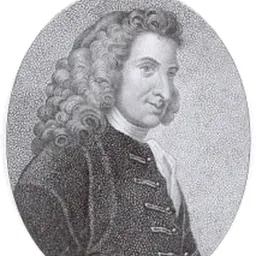
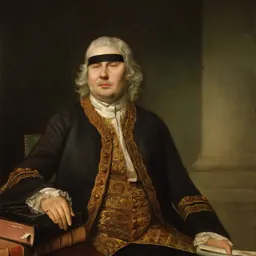



Related people
Same field, nearest in time


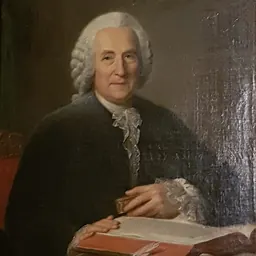
Contemporaries
People whose lives overlapped Sir Thomas de Veil's
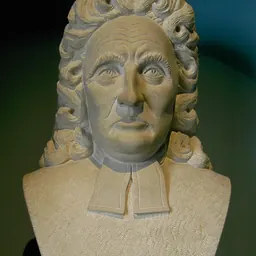

Frequently asked questions
Who was Sir Thomas de Veil?
English magistrate
When was Sir Thomas de Veil born?
Sir Thomas de Veil was born on 21 November 1684 in London, St Paul's Cathedral.
When did Sir Thomas de Veil die?
Sir Thomas de Veil died on 7 October 1746 in Bow Street Magistrates' Court, Covent Garden, London, Westminster.
What was Sir Thomas de Veil's occupation?
Sir Thomas de Veil was a magistrate and justice of the peace.
What nationality was Sir Thomas de Veil?
Sir Thomas de Veil was English and British.
Sources & further reading
· Wikipedia: Sir Thomas de Veil
Cite this page
APA: Biography.guide. (2026). Sir Thomas de Veil. https://biography.guide/sir-thomas-de-veil/
MLA: "Sir Thomas de Veil." Biography.guide, https://biography.guide/sir-thomas-de-veil/.
Chicago: "Sir Thomas de Veil." Biography.guide. https://biography.guide/sir-thomas-de-veil/.
Data last updated: 2026-09-22 · Spot an error? Report a correction.
Page generated 2026-09-27 05:06 UTC