
About Sir Thomas Blount, 1st Baronet
Lived 1649 – 1697 (aged 47). Sir Thomas Blount, 1st Baronet was a politician.
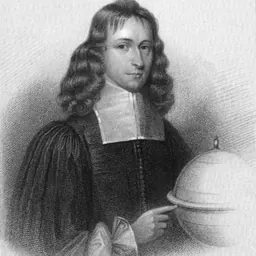
Thomas Blount was the son of Henry and Hester Blount (pictured). Sir Thomas Pope Blount, 1st Baronet (12 September 164927 January 1697) was an English politician and essayist.
Life Thomas Pope Blount was born on 12 September 1649 at Upper Holloway, Islington, London. He was the eldest son of Sir Henry Blount and Hester, the widow of Sir Henry Mainwaring. (The manor house of Upper Holloway had been inherited by his mother from her father Christopher Wase.) Thomas was the brother of Charles Blount, a prominent deist philosopher and writer. Thomas married on 22 July 1669 Jane Caesar, the daughter of Sir Henry Caesar.
He was admitted to Lincoln's Inn on 1 December 1668. In December 1678 he inherited Tyttenhanger House, Hertfordshire from his mother, before succeeding to the remainder of the family estate on the death of his father in 1682. On his death the title passed to his son, Sir Thomas Pope Blount, 2nd Baronet. [spelling in the original] I. That INTEREST Governs the World: And that Popery is nothing but Priest-Craft, or an Invention of the Priests to get Money. II. The great Mischief and Prejudice of LEARNING. And that a Wise Man ought to be preferr'd before a Man of LEARNING. III. Of Education, and Custome; The great Influence it hath upon most Men. But that a good Education is not al∣way Effectual. IV. Of the Ancients: And the Respect that is due unto them: That we should not too much enslave our selves to their Opinions. V. Whether the Men of this present Age are any way inferiour to those of former Ages, either in respect of Vertue, Learning, or long Life. VI. Of Passion: And whether the Passions are an Advantage, or Disadvantage to Men. VII. The Variety of Opinions: Whence it proceeds: The uncertainty of Humane Knowledge. A Natural History, containing many not common observations extracted out of the best modern writers (1693) De re poetica, or remarks upon Poetry, with Characters and Censures of the most considerable Poets (1694)
In 1697 Blount added an essay that has been described as openly deistic. His (1690) was originally compiled for Blount's own use, and is a dictionary in chronological order of what various eminent writers have said about one another. This involved enormous labour in Blount's time. It was published at Geneva in 1694 with all the quotations from modern languages translated into Latin, and again in 1710.
Don’t just read it —
keep it.
Full-length biographies made to live with: read them, listen on the way to work, watch them tonight.
- E-book
- Audio
- Video
Instant download · yours to keep · every purchase keeps this site free
Important facts
People in Sir Thomas Blount, 1st Baronet's life
Named in this biography and alive at the same time


Related people
Same field, nearest in time


Contemporaries
People whose lives overlapped Sir Thomas Blount, 1st Baronet's



Frequently asked questions
Who was Sir Thomas Blount, 1st Baronet?
English politician; (1649-1697)
When was Sir Thomas Blount, 1st Baronet born?
Sir Thomas Blount, 1st Baronet was born on 12 September 1649.
When did Sir Thomas Blount, 1st Baronet die?
Sir Thomas Blount, 1st Baronet died on 27 January 1697.
What was Sir Thomas Blount, 1st Baronet's occupation?
Sir Thomas Blount, 1st Baronet was a politician.
Sources & further reading
· Wikipedia: Sir Thomas Blount, 1st Baronet
· DBpedia: Sir Thomas Blount, 1st Baronet
Cite this page
APA: Biography.guide. (2026). Sir Thomas Blount, 1st Baronet. https://biography.guide/sir-thomas-blount-1st-baronet/
MLA: "Sir Thomas Blount, 1st Baronet." Biography.guide, https://biography.guide/sir-thomas-blount-1st-baronet/.
Chicago: "Sir Thomas Blount, 1st Baronet." Biography.guide. https://biography.guide/sir-thomas-blount-1st-baronet/.
Data last updated: 2026-09-20 · Spot an error? Report a correction.
Page generated 2026-09-27 05:23 UTC