
Sir Percival David, 2nd Baronet
British financier, scholar and collector of Chinese ceramics
About Sir Percival David, 2nd Baronet
Lived 1892 – 1964 (aged 72). Sir Percival David, 2nd Baronet was a philatelist and art collector.
Sir Percival Victor David Ezekiel David, 2nd Baronet (21 July 1892 – 9 October 1964) was a Bombay-born British financier who is best known as a scholar and collector of Chinese ceramics. His collection of Chinese ceramics in the Percival David Foundation of Chinese Art is regarded as the world's most important single collection outside of the palace collections in China and Taiwan. He also formed a collection of Chinese stamps and postal history that has been evaluated as one of the greatest ever assembled.
Early life David was born in Bombay into a Jewish family in British India that originated in Baghdad. His father, Sir Sassoon David, 1st Baronet, founded the Bank of India.
He was educated in India at Elphinstone College and the University of Bombay, and then at the University of London (D. Lit.).
Personal life David married in 1912, and Sheila Yorke Hardy was his second wife
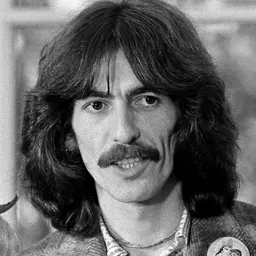
He married in 1920, in London, and inherited his father's baronetcy in 1926. After the death of the previous owner in 1919, he bought and lived in Friar Park, the eccentric Victorian neo-Gothic mansion in Henley-on-Thames, later owned by George Harrison of the Beatles.
He funded the excavation of the southern tomb in Seobongchong (서봉총) and visited there in 1929. Seobongchong are two old tombs of Silla kingdom at Gyeongju, South Korea. But the excavation was processed by Japanese scholars because Korea was a Japanese colony in 1920s. So, they named the tomb 'David chong'(David-tomb), but present Korean scholars call it Seobongchong nambun (서봉총 남분, southern tomb in Seobongchong).
Career David was a financier and the chairman of Sassoon, J. David and Co Ltd., in Bombay.
Chinese ceramics David started collecting Chinese art some time around 1913 and continued until his death in 1964. The first items he collected were four pieces of Chinese ceramics bought from dealers. David also began to study the Chinese language. He first visited China in 1924, where he studied and collected Chinese ceramics. He made several further trips, including in 1927 when he acquired 40 imperial pieces. He translated the Ge Gu Yao Lun, a fourteenth century Ming period manual by Cao Zhao. This was published as Chinese Connoisseurship: The Ko Ku Yao Lun, The Essential Criteria of Antiquities. (Faber and Faber, 1971).
The Percival David Foundation of Chinese Art is his collection of Chinese ceramics and related items in London. The Foundation's main purpose is to promote the study and teaching of Chinese art and culture. The Collection consists of some 1,700 pieces of Song, Yuan, Ming and Qing ceramics, mostly porcelain, from the 10th century to the 18th, "high-quality Chinese-taste Song, Ming and Qing ceramics", as the British Museum puts it.
It also holds a large library of Western and East Asian books related to Chinese art. In 1950 the collection was presented to the University of London and until 2007 was displayed in a house in Gordon Square. Since 2009 it has been shown in a separate gallery, Room 95, at the British Museum, where it is on long-term loan. Percival had already donated several pieces to the British Museum. The collection, which included material that David acquired from John A. Agnew (died 1939), and subsequently became a fellow of that society. Some of his China essays and proofs were displayed in New York in 1947.
Honours and arms David was an officer of the Legion d'Honneur; F.S.A., F.R.A.I., F.R.S.A., Hon. Advisor 1928–29 National Palace Museums (Beijing); Governor of School of Oriental and African Studies (SOAS), University of London; Director of the International Exhibition of Chinese Art, 1935–6.
Death and legacy David died on 9 October 1964 after which the baronetcy became extinct.
Sir Percival and Lady David are commemorated at SOAS in the Percival David Foundation on Torrington Square and the Lady David Gallery on Gordon Square.
Don’t just read it —
keep it.
Full-length biographies made to live with: read them, listen on the way to work, watch them tonight.
- E-book
- Audio
- Video
Instant download · yours to keep · every purchase keeps this site free
Important facts
People in Sir Percival David, 2nd Baronet's life
Named in this biography and alive at the same time


Related people
Same field, nearest in time




Contemporaries
People whose lives overlapped Sir Percival David, 2nd Baronet's


Frequently asked questions
Who was Sir Percival David, 2nd Baronet?
British financier, scholar and collector of Chinese ceramics (1892–1964)
When was Sir Percival David, 2nd Baronet born?
Sir Percival David, 2nd Baronet was born on 21 July 1892 in Mumbai.
When did Sir Percival David, 2nd Baronet die?
Sir Percival David, 2nd Baronet died on 9 October 1964 in London.
What was Sir Percival David, 2nd Baronet's occupation?
Sir Percival David, 2nd Baronet was a philatelist and art collector.
Sources & further reading
· Wikipedia: Sir Percival David, 2nd Baronet
Cite this page
APA: Biography.guide. (2026). Sir Percival David, 2nd Baronet. https://biography.guide/sir-percival-david-2nd-baronet/
MLA: "Sir Percival David, 2nd Baronet." Biography.guide, https://biography.guide/sir-percival-david-2nd-baronet/.
Chicago: "Sir Percival David, 2nd Baronet." Biography.guide. https://biography.guide/sir-percival-david-2nd-baronet/.
Data last updated: 2026-09-20 · Spot an error? Report a correction.
Page generated 2026-09-27 05:02 UTC