
About Sir John Moore, 1st Baronet
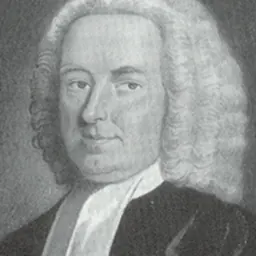
Lived 1718 – 1779 (aged 60). Sir John Moore, 1st Baronet was a British naval officer.
Admiral Sir John Moore, 1st Baronet, KB (24 March 1718 – 2 February 1779) was a British officer of the Royal Navy during the War of the Austrian Succession and the Seven Years' War. He eventually rose to the rank of admiral.
Childhood Moore was born on 24 March 1718, as the third son of Henry Moore, the rector of Malpas, Cheshire and the son of Henry Hamilton-Moore, 3rd Earl of Drogheda. John's mother, Catherine, was the daughter of Sir Thomas Knatchbull, baronet, and was also the widow of Sir George Rooke. Moore was initially educated at the Whitchurch grammar school, Shropshire but by age 11 he appears on the books of HMS Lion for her voyage to the West Indies in 1729. During the period of peace that followed the end of the War of the Austrian Succession Moore was appointed to command the yacht HMY William & Mary, followed by a return to the Devonshire in April 1756. His next appointment was as commodore of a squadron to go with his new post as commander-in-chief on the Leeward Islands Station in 1758. He subsequently raised his flag aboard HMS Cambridge. With the decision to distract French attention during the Seven Years' War, Moore was reinforced in January 1759 with a force of eleven ships of the line, besides frigates and small craft, and a military force under General Peregrine Hopson. He was then instructed to carry out attacks on French possessions in the West Indies. Moore took his force from Barbados to Martinique and reduced the enemy stronghold of Fort Negro, after which he covered the landing of troops in Fort Royal Bay. Despite the initial success, the undertaking was abandoned over Hopson's fears that the approaches to the French towns were mined.
Plan of the attack against Fort Louis now Fort George, at Point à Pitre by a squadron, detached from Commodore Moore and commanded by Captain Wm. Harman on 14 February 1759
Hopson then suggested an attack on Saint-Pierre, but Moore advised an assault on Guadeloupe instead. For the Invasion of Guadeloupe Moore transferred his flag to HMS Woolwich. The fleet arrived off Basse-Terre on 22 January, and had deployed by 23 January. Cambridge, in company with HMS Norfolk and HMS St George, were ordered to attack the main citadel. The resulting attack lasted from nine in the morning until four in the afternoon, and succeeded in silencing the defences, and starting serious fires throughout the French positions. Troops were then landed and drove the French into the hills, where they maintained their resistance, secretly supplied with provisions by the Dutch. Moore then received intelligence on 11 March that a large French naval force had arrived. He consequently shifted his position to Prince Rupert's Bay in Dominica to be able to outflank any attempt by this enemy fleet to relieve Guadeloupe. No such attempt was made and Guadeloupe and the adjacent small islands, the Saints and Deseada, surrendered to the British. After this success, Moore returned to England in 1760.
Final years Moore was promoted to rear-admiral on 21 October 1762, spending the rest of the war as commander-in-chief in The Downs. He then became Commander-in-Chief, Portsmouth, a post he held for the next three years. He was created a baronet on 4 March 1766. A series of promotions followed, based on his seniority within the service. He was made vice-admiral on 18 October 1770, a Knight of the Bath in 1772, and admiral on 29 January 1778. He had suffered from gout since the 1760s, and his health had been steadily declining. The attacks had become violent by 1777. His last public duty was to join his old commander Edward Hawke in signing a protest against the holding of a court-martial against Admiral Augustus Keppel in December 1778. John Moore died two months later, on 2 February 1779.
Family and personal life Moore married Penelope, the daughter of General William Matthew sometime around 1756. They had one son, who died young, and four daughters. The baronetcy became extinct on his death.
Don’t just read it —
keep it.
Full-length biographies made to live with: read them, listen on the way to work, watch them tonight.
- E-book
- Audio
- Video
Instant download · yours to keep · every purchase keeps this site free
Important facts
People in Sir John Moore, 1st Baronet's life
Named in this biography and alive at the same time
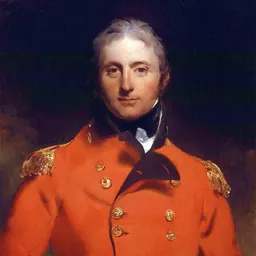


Related people
Same field, nearest in time
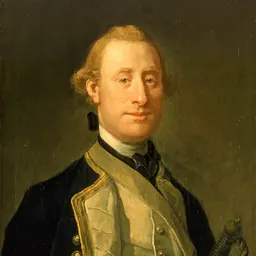
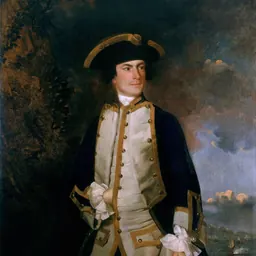



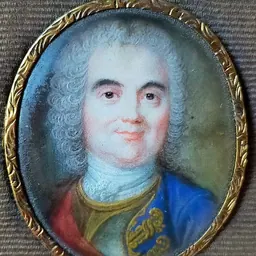
Contemporaries
People whose lives overlapped Sir John Moore, 1st Baronet's



Frequently asked questions
Who was Sir John Moore, 1st Baronet?
British officer of the Royal Navy (1718-1779)
When was Sir John Moore, 1st Baronet born?
Sir John Moore, 1st Baronet was born on 24 March 1718.
When did Sir John Moore, 1st Baronet die?
Sir John Moore, 1st Baronet died on 2 February 1779.
What was Sir John Moore, 1st Baronet's occupation?
Sir John Moore, 1st Baronet was a naval officer.
What nationality was Sir John Moore, 1st Baronet?
Sir John Moore, 1st Baronet was British.
Sources & further reading
· Wikipedia: Sir John Moore, 1st Baronet
· DBpedia: Sir John Moore, 1st Baronet
Cite this page
APA: Biography.guide. (2026). Sir John Moore, 1st Baronet. https://biography.guide/sir-john-moore-1st-baronet/
MLA: "Sir John Moore, 1st Baronet." Biography.guide, https://biography.guide/sir-john-moore-1st-baronet/.
Chicago: "Sir John Moore, 1st Baronet." Biography.guide. https://biography.guide/sir-john-moore-1st-baronet/.
Data last updated: 2026-09-20 · Spot an error? Report a correction.
Page generated 2026-09-27 05:22 UTC