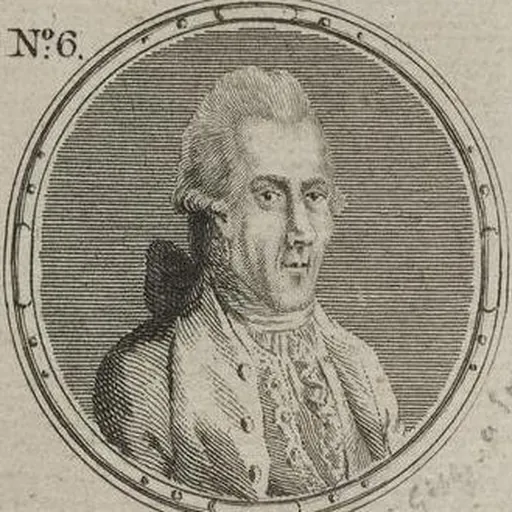
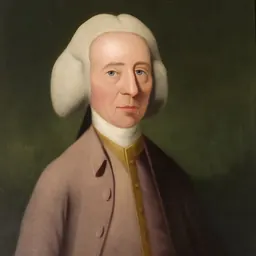
Sir Gilbert Elliot, 3rd Baronet
Scottish politician, philosopher and poet
About Sir Gilbert Elliot, 3rd Baronet
Lived 1722 – 1777 (aged 54–55). Sir Gilbert Elliot, 3rd Baronet was a British politician, poet and writer.
Sir Gilbert Elliot, 3rd Baronet, (of Minto) (September 172211 February 1777) was born at Minto, Roxburghshire, and was a Scottish statesman, philosopher and poet.
Early life Elliot was born in September 1722 in Minto, Roxburghshire. He was one of nine children born to Helen Steuart and Sir Gilbert Elliot, 2nd Baronet, of Minto.
He was educated at Dalkeith grammar school and from 1735 at Edinburgh University. A period of study at the University of Utrecht in 1743 was followed by a tour of the Netherlands and the German states during 1744 to 1745. Elliot was "a distinguished classical scholar" who claimed in a letter to another intimate companion, David Hume, to have "read over almost all the classics, both Greek and Latin". Elliot's friendship with Hume had begun while both were students at Edinburgh University. He was trained for the Scottish Bar, and passed Advocate on 10 December 1743.
Career
In March 1748, Elliot was appointed as the first sheriff-depute of Roxburghshire, one of the judges introduced in Scotland by legislation passed in the wake of the Jacobite rising of 1745, a post he held until 1753. Elliot then served in the House of Commons as Member of Parliament for Selkirkshire from 1753 to 1765, and again for Roxburghshire from 1765 to 1777 during which period his father died on 16 April 1766, and he inherited the Baronetcy.
In parliament, he was a supporter of the policies of King George III in the American colonies. His Papers concerning the Boston Tea Party are in Harvard University Library. At one time he was a candidate for the Speaker's Chair in the House of Commons. He was made a Lord of the Admiralty in 1756, a position he held until his resignation in support of William Pitt in April 1757, and to which he was reinstated in June with Pitt's return to office
Elliot was Treasurer of the Chamber in the Royal Household from 1762 to 1770. He was appointed Treasurer of the Navy in 1770 in Lord North's government, and after was appointed Keeper of the Signet in Scotland in 1767. Elliot was a friend and follower of the Earl of Bute. Horace Walpole said Elliot was "one of the ablest members of the House of Commons". As a politician Elliot was best remembered for performances such as that during the militia debate in 1760 which, again according to Walpole, placed him in an élite group of mid- to late-century parliamentarians who displayed "the various powers of eloquence, art, reasoning, satire, learning, persuasion, wit, business, spirit and plain common sense".
Writing career Elliot was the author of Amynta, which Sir Walter Scott described as "the beautiful pastoral song", and which began:
My sheep I neglected; I broke my sheep-hook And all the gay haunts of my youth I forsook;
Personal life On 14 December 1746, Gilbert was married to Agnes Dalrymple-Murray-Kynynmound, daughter and heiress of Hugh Dalrymple-Murray-Kynynmound of Melgund, County of Forfar, and Kynynmound, County of Fife. They lived at Browns Square in Edinburgh, and were the parents of eight children, including:
Gilbert Elliot-Murray-Kynynmound, 1st Earl of Minto (1751–1814), who married Anna Maria Amyand, daughter of Sir George Amyand, 1st Baronet, in 1777. Hugh Elliot (1752–1830), who married Charlotte von Kraut in 1778. They divorced in 1783 and he married Margaret Jones in . Alexander Kynymound Elliot (1754–1778) Robert Elliot (1755–1825), who married Mary Garforth, the daughter of Rev. Edmund Garforth, in 1788. Eleanor Elliot (1758–1818), who married William Eden, 1st Baron Auckland.
On 11 February 1777, Elliot died in Marseille, France, where he had gone to recover his health.
Don’t just read it —
keep it.
Full-length biographies made to live with: read them, listen on the way to work, watch them tonight.
- E-book
- Audio
- Video
Instant download · yours to keep · every purchase keeps this site free
Important facts
People in Sir Gilbert Elliot, 3rd Baronet's life
Named in this biography and alive at the same time

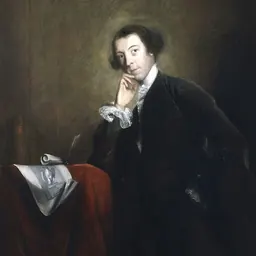

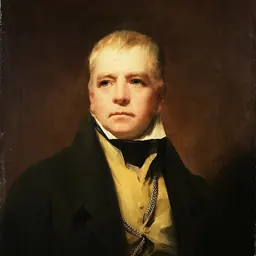

Related people
Same field, nearest in time

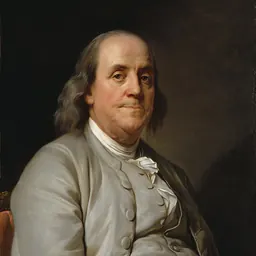


Contemporaries
People whose lives overlapped Sir Gilbert Elliot, 3rd Baronet's




Frequently asked questions
Who was Sir Gilbert Elliot, 3rd Baronet?
Scottish politician, philosopher and poet (1722–1777)
When was Sir Gilbert Elliot, 3rd Baronet born?
Sir Gilbert Elliot, 3rd Baronet was born in 1722 in Minto.
When did Sir Gilbert Elliot, 3rd Baronet die?
Sir Gilbert Elliot, 3rd Baronet died on 11 February 1777 in Marseille.
What was Sir Gilbert Elliot, 3rd Baronet's occupation?
Sir Gilbert Elliot, 3rd Baronet was a politician, poet and writer.
What nationality was Sir Gilbert Elliot, 3rd Baronet?
Sir Gilbert Elliot, 3rd Baronet was British.
Sources & further reading
· Wikipedia: Sir Gilbert Elliot, 3rd Baronet
· DBpedia: Sir Gilbert Elliot, 3rd Baronet, of Minto
Cite this page
APA: Biography.guide. (2026). Sir Gilbert Elliot, 3rd Baronet. https://biography.guide/sir-gilbert-elliot-3rd-baronet/
MLA: "Sir Gilbert Elliot, 3rd Baronet." Biography.guide, https://biography.guide/sir-gilbert-elliot-3rd-baronet/.
Chicago: "Sir Gilbert Elliot, 3rd Baronet." Biography.guide. https://biography.guide/sir-gilbert-elliot-3rd-baronet/.
Data last updated: 2026-09-22 · Spot an error? Report a correction.
Portrait: Wikimedia Commons · author & licence
Page generated 2026-09-27 05:03 UTC