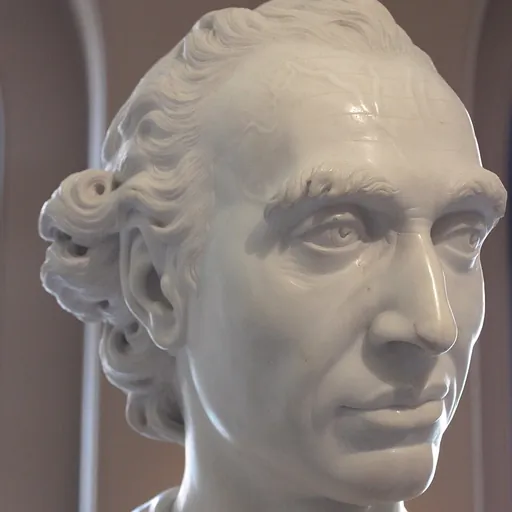
About Sir George Savile, 8th Baronet
Lived 1726 – 1784 (aged 57). Sir George Savile, 8th Baronet was a politician and aristocrat.
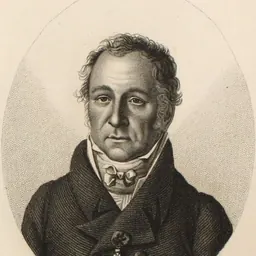
Sir George Savile, 8th Baronet of Thornhill FRS (18 July 1726 – 10 January 1784), was an English politician who sat in the House of Commons from 1759 to 1783.
Background Savile was born in Savile House, London, the only son of Sir George Savile, 7th Baronet, and Lady Savile (born Mary Pratt, later married to Charles Morton), of Rufford Abbey, Nottinghamshire, and inherited his baronetcy on the death of his father in 1743. Savile was educated at Queens' College, Cambridge.
Political career Savile was returned unopposed as Member of Parliament for Yorkshire at a by-election on 3 January 1759. In general he advocated views of a very liberal character, including measures of relief to Roman Catholics and to Protestant dissenters, and he defended the action of the American colonists. He introduced the Catholic Relief Act, leading to the Gordon Riots in 1780. He refused to take office and in 1783 he resigned his seat in parliament. He was elected a Fellow of the Royal Society in December 1747. He was elected as a member to the American Philosophical Society in 1768.
Personal life Savile died unmarried in London and was buried in the family vault at Thornhill, West Riding of Yorkshire. Horace Walpole said Savile had a large fortune and a larger mind, and Edmund Burke also had a high opinion of him.
Part of the inscription on his statue in York Minster by John Fisher reads,
"In private life, he was benevolent, and sincere; His charities were extensive and secret; His whole heart was founded on principles Of generosity, mildness, justice, and universal candour. In public, the patron of every national improvement; In the senate, incorrupt; In his commerce with the world, disinterested."
Bequests Rufford Abbey and some of his other estates were bequeathed to his nephew, Richard Lumley (1757–1832), a younger son of Richard Lumley-Saunderson, 4th Earl of Scarbrough (1725–1752). Richard took the additional name of Savile, but when on his brother's death in 1807 he became 6th Earl of Scarbrough the Savile estates passed to his brother John (1760–1835), afterwards the 7th earl. John's son and heir was John Lumley-Savile, 8th Earl of Scarbrough (1788–1856). The 8th earl was never married, but he left four natural sons, the eldest of whom was John Savile (1818–1896), the diplomat, who was created Baron Savile of Rufford in 1888. He entered the foreign office in 1841, was British envoy at Dresden and Bern, and from 1883 to 1888 represented his country in Rome. Although the eldest son, he did not inherit Rufford and his father's other estates until after the deaths of two of his younger brothers. He made a fine collection of pictures and died at Rufford on 28 November 1896, when his nephew John Lumley-Savile (born 1854) became the 2nd Baron. He was a member of the Oddfellows.
Don’t just read it —
keep it.
Full-length biographies made to live with: read them, listen on the way to work, watch them tonight.
- E-book
- Audio
- Video
Instant download · yours to keep · every purchase keeps this site free
Important facts
People in Sir George Savile, 8th Baronet's life
Named in this biography and alive at the same time

Related people
Same field, nearest in time




Contemporaries
People whose lives overlapped Sir George Savile, 8th Baronet's





Frequently asked questions
Who was Sir George Savile, 8th Baronet?
English politician
When was Sir George Savile, 8th Baronet born?
Sir George Savile, 8th Baronet was born on 18 July 1726.
When did Sir George Savile, 8th Baronet die?
Sir George Savile, 8th Baronet died on 10 January 1784.
What was Sir George Savile, 8th Baronet's occupation?
Sir George Savile, 8th Baronet was a politician and aristocrat.
Sources & further reading
· Wikipedia: Sir George Savile, 8th Baronet
· DBpedia: Sir George Savile, 8th Baronet
Cite this page
APA: Biography.guide. (2026). Sir George Savile, 8th Baronet. https://biography.guide/sir-george-savile-8th-baronet/
MLA: "Sir George Savile, 8th Baronet." Biography.guide, https://biography.guide/sir-george-savile-8th-baronet/.
Chicago: "Sir George Savile, 8th Baronet." Biography.guide. https://biography.guide/sir-george-savile-8th-baronet/.
Data last updated: 2026-09-22 · Spot an error? Report a correction.
Portrait: Wikimedia Commons · author & licence
Page generated 2026-09-27 05:02 UTC