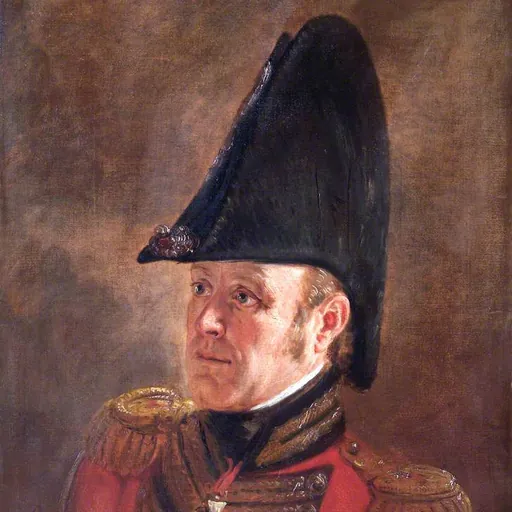
About Sir George Cooke
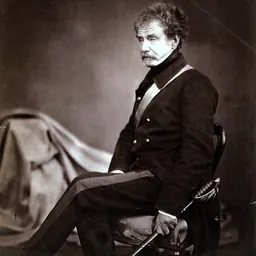
Lived 1768 – 1837 (aged 68–69). Sir George Cooke was a British military officer.
Major-General Sir George Cooke (bapt. 26 August 1766 3February 1837) was a British Army officer who commanded the 1st Division, under overall command of the Prince of Orange, at the Battle of Waterloo.
Early life and education Cooke was the son and heir of George John Cooke of Harefield, MP for Middlesex, and Penelope Bowyer, daughter of Sir William Bowyer, 3rd Baronet of Denham Court. His father, the son of George Cooke, descended from a line of prothonotaries of the Court of Common Pleas. Educated at Harrow and at the military school in Caen, Normandy, in 1784 Cooke was appointed an ensign in the 10th Grenadier Guards. His brothers were General Sir Henry Frederick Cooke and naval officer Edward Cooke while his sister was Penelope Anne Cooke, who became Countess of Cardigan.
Career Cooke achieved his lieutenancy in 1792, followed shortly by his captaincy. In March 1794, he joined the Guards in Flanders and was appointed aide-de-camp to Major General Sir Samuel Hulse. He served throughout the French Revolutionary Wars, in Flanders and Holland, at the conclusion of which he was promoted to lieutenant-colonel of his regiment, despite being severely wounded in 1799. From 1803 until early 1805, he held the post of assistant adjutant-general of the north west district. After receiving the rank of brevet colonel in 1808, he participated in the ill-fated 1809 Schelde expedition. After posts in Cádiz, he went to Holland in 1813 with the Brigade of Guards and took part in the ill-fated Siege of Bergen op Zoom the following year where he was described as a "prudent and humane commander".
In 1815 Cooke was on Wellington's staff at the Battle of Waterloo, where he lost his right arm. For his services at Waterloo he was made a Knight Commander of the Order of the Bath (KCB) on 22June 1815 and a Knight of St George of Russia.
He became Lieutenant-Governor of Portsmouth and General Officer Commanding South-West District in 1819.
He died, unmarried, at Harefield Park on 3 February 1837.
Don’t just read it —
keep it.
Full-length biographies made to live with: read them, listen on the way to work, watch them tonight.
- E-book
- Audio
- Video
Instant download · yours to keep · every purchase keeps this site free
Important facts
People in Sir George Cooke's life
Named in this biography and alive at the same time



Related people
Same field, nearest in time
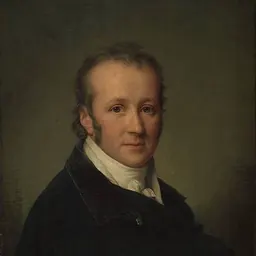
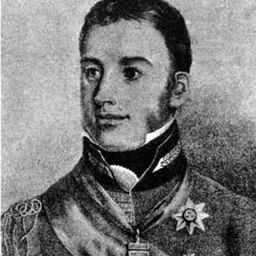
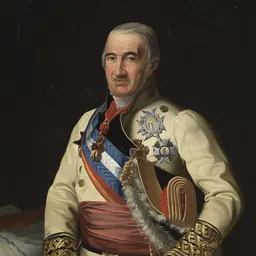
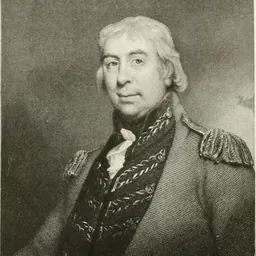

Contemporaries
People whose lives overlapped Sir George Cooke's





Frequently asked questions
Who was Sir George Cooke?
British Army officer; (1768-1837)
When was Sir George Cooke born?
Sir George Cooke was born in 1768 in Harefield.
When did Sir George Cooke die?
Sir George Cooke died on 3 February 1837 in Harefield.
What was Sir George Cooke's occupation?
Sir George Cooke was a military officer.
What nationality was Sir George Cooke?
Sir George Cooke was British.
Sources & further reading
· DBpedia: George Cooke (British Army officer)
Cite this page
APA: Biography.guide. (2026). Sir George Cooke. https://biography.guide/sir-george-cooke/
MLA: "Sir George Cooke." Biography.guide, https://biography.guide/sir-george-cooke/.
Chicago: "Sir George Cooke." Biography.guide. https://biography.guide/sir-george-cooke/.
Data last updated: 2026-09-23 · Spot an error? Report a correction.
Portrait: Wikimedia Commons · author & licence
Page generated 2026-09-27 05:06 UTC