
Sir George Colebrooke, 2nd Baronet
English merchant banker, chairman of the East India Company and Member of Parliament
About Sir George Colebrooke, 2nd Baronet
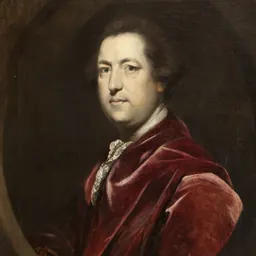
Lived 1729 – 1809 (aged 80). Sir George Colebrooke, 2nd Baronet was a British banker and politician.
Sir George Colebrooke, 2nd Baronet (14 June 1729 – 5 August 1809) - also known as Sir George Colebroke - was a British merchant, banker and politician who sat in the British House of Commons from 1754 to 1774, representing the constituency of Arundel. Born in Chilham, Kent, he was also a stockjobber and nabob with close ties to Robert Clive and Alexander Fordyce who thrice served as the chairman of the East India Company in 1769, 1770 and 1772 respectively. His financial activities, which included the ownership of slave plantations in the West Indies, resulted in Colebrooke coming into the possession of a large fortune; however, he went bankrupt through poor speculations during the British credit crisis of 1772–1773.
Early life
George Colebrooke was born on 14 June 1729 in Chilham, Kent, the third son of London banker James Colebrooke. He was educated at Leiden University around 1745, alongside John Wilkes and Charles Townshend. He acquired Arnos Grove house in 1752 on the death of his father.
His older brothers were Robert Colebrooke and James Colebrooke. Robert was Member for Maldon, Essex from 1741 to 1761. In 1751 James bought control of one seat in the rotten borough, Gatton in Surrey, for £23,000, and was sitting in Parliament. From 1754 the brothers were at first Opposition Whigs, but switched support to the Duke of Newcastle's government and were rewarded in 1759 with the creation of a baronetcy for James (who had daughters but no son) and a special remainder of the baronetcy to George. When James died, and Robert was appointed as ambassador to Switzerland, George inherited both the baronetcy, Gatton Park and the Lordship of the Manor at Gatton with its guaranteed control of one of the parliamentary seats there. He had Gatton Park landscaped by Capability Brown between 1762 and 1768. He offered Jean Jacques Rousseau to live on his estate.
Career
In 1761 George was left in sole charge of the family bank in Threadneedle Street, and invested some of his wealth in buying up control of the borough of Arundel in Sussex, where the family lived. Arundel was not a classic pocket borough, where the power to return MPs was literally tied to property rights that could be freely bought and sold, but a thoroughly corrupt one where bribery was routine and where maintaining influence of the elections required constant expenditure. Nevertheless, Colebrooke kept control for twenty years, sitting himself as Arundel's MP from 1754 to 1774 and for most of the period being able to choose also who held the other seat.
More valuably, however, Colebrooke's support for Newcastle ensured his eligibility for lucrative government contracts. By 1762, he held two of these contracts, one for remitting money to the British forces in the American colonies and the other for victualling the troops there. But with Newcastle's fall from power in that year, Colebrooke was immediately ejected from one contract by the new government, and the other was not renewed when it expired in 1765. Though offered compensation or new contracts on the formation of the Rockingham government, he preferred instead to accept a well-paid post as chirographer to the Court of Common Pleas. From this point onwards although he retained his seat in Parliament he was rarely active there.
In 1764, he became a partner in a Dublin bank. Colebrooke's business interests were diverse. He speculated in land, purchasing large estates in Lanarkshire and slave plantations in Antigua (where his wife already had interests), Grenada and Dominica.
By 1771, Colebrooke clearly desired a new interior decorative scheme for 23 Arlington Street, and he hired Robert Adam to produce designs for at least seven rooms, and a selection of furniture. It is unlikely that any of Adam's designs for Colebrooke were completed owing to the start of his financial problems at around the same time. Yet at the same period he was spending considerable sums on the rebuilding of his London house at 32 Soho Square. The mansion was sold to Sir Joseph Banks in 1779.
Marriage
He had married Mary Gayner, daughter of Peter Gayner of Antigua, in 1754, and they had three sons and three daughters: Mary Colebrooke (born 1757-d.20 Dec 1813) married 1) Chevalier de Peyron [died 1784] (parents of Charles Adolphus Peyron (1780–1807); married 2) William Traill [1759-1842(?)](graduate of Harvard 1777); parents of British diplomat George William Traill (1792–1847) George Colebrooke (1759–1809) James Edward Colebrooke (1761–1838), and succeeded to the baronetcy Harriet Colebrooke (1762–1785) Louisa Colebrooke (born 1764) Professor Henry Thomas Colebrooke (1765–1837) He also raised his brother James' two daughters, Mary and Emma Colebrook from 1761 until they were married.
References and sources
Don’t just read it —
keep it.
Full-length biographies made to live with: read them, listen on the way to work, watch them tonight.
- E-book
- Audio
- Video
Instant download · yours to keep · every purchase keeps this site free
Important facts
People in Sir George Colebrooke, 2nd Baronet's life
Named in this biography and alive at the same time



Related people
Same field, nearest in time



Contemporaries
People whose lives overlapped Sir George Colebrooke, 2nd Baronet's





Frequently asked questions
Who was Sir George Colebrooke, 2nd Baronet?
English merchant banker, chairman of the East India Company and Member of Parliament
When was Sir George Colebrooke, 2nd Baronet born?
Sir George Colebrooke, 2nd Baronet was born on 14 June 1729.
When did Sir George Colebrooke, 2nd Baronet die?
Sir George Colebrooke, 2nd Baronet died on 5 August 1809.
What was Sir George Colebrooke, 2nd Baronet's occupation?
Sir George Colebrooke, 2nd Baronet was a banker and politician.
What nationality was Sir George Colebrooke, 2nd Baronet?
Sir George Colebrooke, 2nd Baronet was British.
Sources & further reading
· Wikipedia: Sir George Colebrooke, 2nd Baronet
Cite this page
APA: Biography.guide. (2026). Sir George Colebrooke, 2nd Baronet. https://biography.guide/sir-george-colebrooke-2nd-baronet/
MLA: "Sir George Colebrooke, 2nd Baronet." Biography.guide, https://biography.guide/sir-george-colebrooke-2nd-baronet/.
Chicago: "Sir George Colebrooke, 2nd Baronet." Biography.guide. https://biography.guide/sir-george-colebrooke-2nd-baronet/.
Data last updated: 2026-09-20 · Spot an error? Report a correction.
Page generated 2026-09-27 05:03 UTC