
About Sir Ewan Forbes, 11th Baronet
Lived 1912 – 1991 (aged 79). Sir Ewan Forbes, 11th Baronet was a British farmer, physician and general practitioner.
Sir Ewan Forbes, 11th Baronet, (6 September 1912 – 12 September 1991), was a Scottish nobleman, general practitioner and farmer. Forbes was a trans man; he was officially registered as the youngest daughter of John, Lord Sempill. After an uncomfortable upbringing, he began presenting as a man in the 1930s, following a course of medical treatments in Germany. He formally re-registered his birth as male in 1952, changing his name to Ewan, and was married a month later.
In 1965, he stood to inherit the baronetcy of his elder brother William, Lord Sempill, together with a large estate. This inheritance was challenged by his cousin, who argued that the re-registration was invalid; under this interpretation, Forbes would legally be considered a woman, and thus unable to inherit the baronetcy. The legal position was unclear, and it took three years before a ruling by the Court of Session, which held him to be intersex, finally led to the Home Secretary recognising his claim to the title. The case was heard in great secrecy, with the effect that it was unable to be considered in other judgments on the legal recognition of gender variance, but has become more widely known since his death in 1991.
Family background The Forbeses were a well-established Aberdeenshire noble family, holders of both a barony and a baronetcy. The baronetcy had been bestowed in 1630, and was restricted to heirs male. In 1884 Sir William Forbes, the eighth baronet, inherited his cousin Maria's title as Lord Sempill and took the surname of Forbes-Sempill. On William's death in 1905, both titles passed to his eldest son, John. During the 1880s, he had met Gwendolyn Prodger at the fashionable German resort of Bad Homburg; the couple were married on 22 June 1892. The bride, from a Cornish background, had been brought up in Wales and was an accomplished harpist.
Early life The issue of Ewan's gender would later prove contentious; the birth registration recorded a female, but Forbes later commented that this was "a ghastly mistake". Ewan was brought up as a girl alongside Margaret, but found childhood to be dominated by a growing gender insecurity. He spent a large amount of time playing with their cousins Patrick and David, and routinely dressed as a boy. In his book The Aul' Days, written many years later, Forbes recalled a hatred of being "made to dress up" for social engagements, and of going to great lengths to avoid them. Forbes refused to go away to a girls' school, which meant being educated at home; In Dresden, he and his mother first began visiting specialist doctors for a course of hormone therapy. This journey provided the opportunity for a further series of visits to medical specialists for treatment.
As well as the harp, Forbes was an accomplished public reciter; in the summer of 1930, he won the Scots Verse recital contest at the Aberdeen Music Festival, and was paid by Beltona to make a series of recordings of the poems of Charles Murray. By this time, Forbes's heart was set on studying medicine. However, his father refused to fund his studies, arguing that since there was more than enough work to be done managing the estate, there was no need for him to study further. Ewan resolved to fund his own studies, aiming to put aside £1,000 to cover the costs. In 1933, he studied under the psychologist Leonhard Seif in Munich, living with his cousin, the British novelist Phyllis Bottome. He continued his hormone treatment during this time. of about , After a swift progression to Senior Casualty Officer, he began to work as a general practitioner in Alford, Aberdeenshire in 1945. In addition to the normal work of a rural doctor, in 1946 Forbes was called upon to act as a medical officer for German prisoners of war who were held in the area, due to his command of the language.
The Alford area was one of the largest medical practices in Great Britain, and in the winter months Forbes often had to travel through snowdrifts in a converted Universal Carrier.
On moving to Alford, Forbes had continued to present himself publicly as a man. In 1952, he formally became male by the simple process of requesting a warrant for birth re-registration from the Sheriff of Aberdeen, registering himself as male, and changing his name to Ewan Forbes-Sempill. The marriage took place at the kirk in Kildrummy, which he had recently joined.
Inheritance and lawsuit The re-registration passed without much public comment, and the issue of his gender would remain a private one until 1965. That December, his elder brother died, leaving daughters but no sons, and thus posing a problem of inheritance. The barony could be inherited by heirs male or female, and so passed directly to Sempill's eldest daughter Ann, but the baronetcy – along with the bulk of the land – would have to pass to the first male heir. The family had assumed that Ewan would inherit, as the younger brother. Following the death of the Lord Sempill in December 1965, The Times cited Debrett's in reporting that the heir to the baronetcy was the Hon. Ewan Forbes-Sempill, "formerly registered as Elizabeth". However, this was challenged by his cousin John Forbes-Sempill, who argued that the 1952 re-registration was invalid. This would mean that Forbes was still legally considered a woman, unable to inherit the title, and so it would pass to John Forbes-Sempill. A total of twelve medical experts were called to give evidence. Professor Louis Gooren returned to his records of the case in 1999 and "concluded, with hindsight, that Forbes-Sempill was almost certainly a female-to-male transsexual"; the details that have since emerged of his treatment make it clear that he was a trans man.
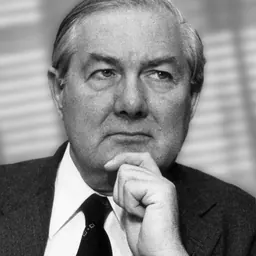
The judge's ruling was that "as a matter of probability, the second petitioner [Ewan Forbes-Sempill] is a ... hermaphrodite", according with the legal requirement of "indeterminate at birth". It has been suggested that the judge desired to ensure the estate and the title was inherited by the "right" candidate, and was flexible with his judgement to obtain this result. The ruling continued to be challenged by John Forbes-Sempill, who caused it to be referred to the Home Secretary, James Callaghan, as the person responsible for the Roll of the Baronetage. Callaghan consulted the Lord Advocate, and finally declared in December 1968 that Ewan should be entered on the Roll as the rightful holder of the title.
The level of secrecy of the case, which was criticised by some contemporary observers, meant that it was not properly recorded or published, and the exact facts of the argument were not known for some time. As a result, whilst it sharply differs from later rulings such as Corbett v Corbett (1970), it was not able to be considered as precedent in later judgments on the legal recognition of gender variance. However, further release of records was limited, with the Lord Advocate's office stating that disclosing the files "would not be appropriate",
Forbes died in 1991, leaving no children, and was succeeded in the baronetcy by his cousin John, the relative who had made the legal challenge in the 1960s. As of 2021, Playdon's book was in early development as a television miniseries.
Coat of arms
Don’t just read it —
keep it.
Full-length biographies made to live with: read them, listen on the way to work, watch them tonight.
- E-book
- Audio
- Video
Instant download · yours to keep · every purchase keeps this site free
Important facts
People in Sir Ewan Forbes, 11th Baronet's life
Named in this biography and alive at the same time




Related people
Same field, nearest in time




Contemporaries
People whose lives overlapped Sir Ewan Forbes, 11th Baronet's





Frequently asked questions
Who was Sir Ewan Forbes, 11th Baronet?
11th Baronet of Craigievar, 1968 to 1991
When was Sir Ewan Forbes, 11th Baronet born?
Sir Ewan Forbes, 11th Baronet was born on 6 September 1912.
When did Sir Ewan Forbes, 11th Baronet die?
Sir Ewan Forbes, 11th Baronet died on 12 September 1991.
What was Sir Ewan Forbes, 11th Baronet's occupation?
Sir Ewan Forbes, 11th Baronet was a farmer, physician and general practitioner.
What nationality was Sir Ewan Forbes, 11th Baronet?
Sir Ewan Forbes, 11th Baronet was British.
Sources & further reading
· Wikipedia: Sir Ewan Forbes, 11th Baronet
· DBpedia: Sir Ewan Forbes, 11th Baronet
Cite this page
APA: Biography.guide. (2026). Sir Ewan Forbes, 11th Baronet. https://biography.guide/sir-ewan-forbes-11th-baronet/
MLA: "Sir Ewan Forbes, 11th Baronet." Biography.guide, https://biography.guide/sir-ewan-forbes-11th-baronet/.
Chicago: "Sir Ewan Forbes, 11th Baronet." Biography.guide. https://biography.guide/sir-ewan-forbes-11th-baronet/.
Data last updated: 2026-09-20 · Spot an error? Report a correction.
Page generated 2026-09-27 05:25 UTC