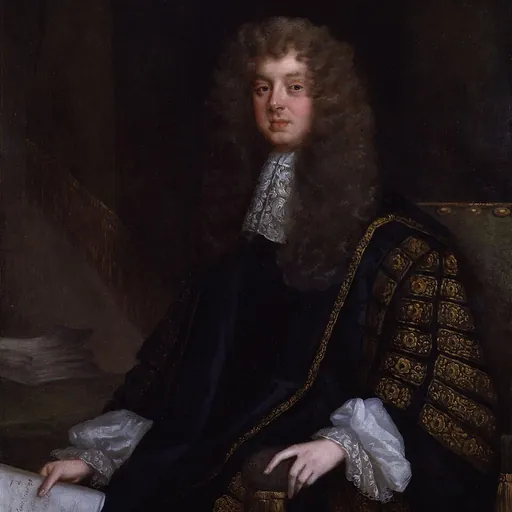
About Sir Edward Seymour, 4th Baronet
Lived 1633 – 1708 (aged 74–75). Sir Edward Seymour, 4th Baronet was an English politician.
Sir Edward Seymour, 4th Baronet (1632/1633 – 17 February 1708) was an English nobleman, and a Royalist and Tory politician.
Life Born at Berry Pomeroy Castle in Devon, of a family greatly influential in the Western counties, he was the eldest son of Sir Edward Seymour, 3rd Baronet, and his wife Anne Portman, and a descendant of Edward Seymour, 1st Duke of Somerset, in the senior line. (Because of the alleged adultery of the Duke's first wife, the Dukedom had been entailed with preference to his sons by his second marriage.)
Seymour first sat in Parliament in 1661 for Hindon, Wiltshire, a constituency near Maiden Bradley where the family had their principal residence at Bradley House. For much of the rest of his life he represented at various times the Devon county constituency, Totnes and Exeter. A skilled debater and politician, he was twice Speaker of the House of Commons during the Cavalier Parliament, the first non-lawyer to be chosen for that position for a considerable time. However in 1679, he was the only nominee to be Speaker that was refused royal approbation, which led to a prorogation of Parliament.
Seymour was a signatory to The Several Declarations of The Company of Royal Adventurers of England Trading into Africa, a document published in 1667 which led to the expansion of the Royal Africa Company.
He was one of the Lords Commissioners of the Admiralty from 1673 until 1679, when he was made a Privy Counsellor. He also held office as Treasurer of the Navy from 1673 until 1681, Lord Commissioner of the Treasury from 15 November 1690 to 2 May 1696 and Comptroller of the Household from 1702 to 1704. He was also responsible for the Habeas Corpus Act 1679. nearly 40 years later the Duke of Marlborough wrote that while one should not wish for any person's death, he was sure that Seymour's death would be no great loss.
From the security of this position, Seymour moved that the Loyal Parliament investigate the irregularities surrounding the election of its members before it granted any revenues to James II, but as no other member dared to second it, it brought about no immediate consequence. He continued to oppose the arbitrary measures of James throughout his reign.
During the Glorious Revolution, he was one of the first Tories to declare for the Prince of Orange. The remarks that supposedly passed between the two on the first meeting are indicative of his pride of birth: "I think, Sir Edward," said the Prince, "that you are of the family of the Duke of Somerset." "Pardon me, your highness," replied Seymour, "the Duke of Somerset is of my family." However, he adhered to the Tory party, acting as a sort of whip or manager, and remained a vigorous rhetorical opponent of the Whig. He particularly attacked Lord Somers, the Chancellor, and managed the several attempts made to remove him from office. In 1699, the death of his third son, Popham Seymour-Conway, from the effects of a wound incurred in a duel with Captain George Kirk, prompted him to make an attack upon the standing army. His vigorous defence of his friend Sir Richard Reynell, 1st Baronet, Lord Chief Justice of Ireland, against the absurd charge that he had conspired to kill William of Orange, shows his eloquence in debate and a loyalty to old friends with which he is not always credited.
He seems to have suffered from diabetes in later life, an exchange of wit between Seymour and his physician, Dr. Ratcliffe, being recorded in Joe Miller's Jests. He died at Bradley House.
Family On 7 September 1661, he married Margaret Wale (d. before 1674), daughter of Sir William Wale, of North Lappenham, Rutland, Alderman of London, and wife, and sister of Elizabeth Wale, married to the Hon. Henry Noel, of North Luffenham, Rutland, Member of Parliament, by whom he had two children: Sir Edward Seymour, 5th Baronet (1663–1741), father of Edward Seymour, 8th Duke of Somerset Lt.-Gen. William Seymour (1664–1728)
In 1674, he married Laetitia Popham , daughter of Alexander Popham and his wife Letitia Carre, by whom he had seven children: Col. Popham Seymour-Conway (1675–1699) Francis Seymour-Conway, 1st Baron Conway (1679–1732), father of Francis Seymour, 1st Marquess of Hertford Charles Seymour, of Staston, Dorset, married and had a daughter: Jane Seymour, Admiral Thomas Lynn Anne Seymour , married 8 January 1707/1708 William Berkeley (who changed his name by a private act of Parliament, Portman's Name Act 1735 (9 Geo. 2. c. 22 ), to William Portman and was thereafter also known as William Berkeley-Portman ), of Pylle and Orchard Portman, Somerset (d. 1737), son of Edward Berkeley, of Pylle, Somerset and wife Elizabeth Ryves (d. 1724), by whom she had a son, Henry William Berkeley-Portman, father of Henry William Portman through his wife Anne Fitch. Henry Seymour, died without male issue Alexander Seymour, died without male issue John Seymour, died young
Don’t just read it —
keep it.
Full-length biographies made to live with: read them, listen on the way to work, watch them tonight.
- E-book
- Audio
- Video
Instant download · yours to keep · every purchase keeps this site free
Important facts
People in Sir Edward Seymour, 4th Baronet's life
Named in this biography and alive at the same time




Related people
Same field, nearest in time
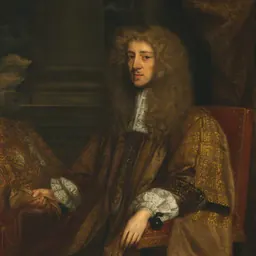
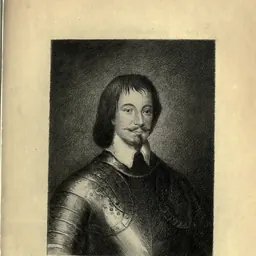

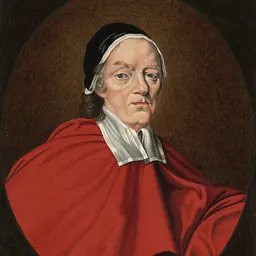
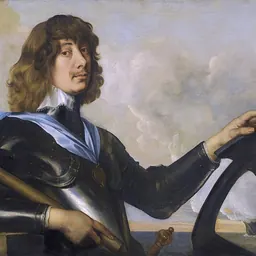
Contemporaries
People whose lives overlapped Sir Edward Seymour, 4th Baronet's






Frequently asked questions
Who was Sir Edward Seymour, 4th Baronet?
British politician (1633-1708)
When was Sir Edward Seymour, 4th Baronet born?
Sir Edward Seymour, 4th Baronet was born in 1633 in Berry Pomeroy Castle.
When did Sir Edward Seymour, 4th Baronet die?
Sir Edward Seymour, 4th Baronet died on 17 February 1708.
What was Sir Edward Seymour, 4th Baronet's occupation?
Sir Edward Seymour, 4th Baronet was a politician.
What nationality was Sir Edward Seymour, 4th Baronet?
Sir Edward Seymour, 4th Baronet was English.
Sources & further reading
· Wikipedia: Sir Edward Seymour, 4th Baronet
· DBpedia: Sir Edward Seymour, 4th Baronet
Cite this page
APA: Biography.guide. (2026). Sir Edward Seymour, 4th Baronet. https://biography.guide/sir-edward-seymour-4th-baronet/
MLA: "Sir Edward Seymour, 4th Baronet." Biography.guide, https://biography.guide/sir-edward-seymour-4th-baronet/.
Chicago: "Sir Edward Seymour, 4th Baronet." Biography.guide. https://biography.guide/sir-edward-seymour-4th-baronet/.
Data last updated: 2026-09-21 · Spot an error? Report a correction.
Portrait: Wikimedia Commons · author & licence
Page generated 2026-09-27 04:59 UTC