
About Sir Denis Browne
Lived 1892 – 1967 (aged 74). Sir Denis Browne was an Australian pediatric surgeon, surgeon, tennis player and pediatric surgery, known for Denis Browne bar.
Sir Denis John Wolko Browne (2 April 1892 – 9 January 1967) was the first British surgeon to devote his practice entirely to the care of children. A native of Australia, he served in the Royal Australian Army Medical Corps in World War I before moving to England and joining the staff of the Hospital for Sick Children at Great Ormond Street. An amateur tennis player in the 1920s, he made four appearances at Wimbledon.
He created several medical devices, including the Denis Browne bar and a restraint device used in surgery known as the Denis Browne crucifix. Browne suggested modifications to the surgical or medical treatment of children with several conditions. He devised his own approach to the repair of hypospadias and worked on improvements to the management of other genitourinary, gastrointestinal, orthopaedic and cardiovascular problems. He was the first president of the British Association of Paediatric Surgeons and the association awards the Denis Browne Gold Medal for worldwide excellence in paediatric surgery.
Browne was married to novelist Helen de Guerry Simpson until her death in 1940. A few years later, he married nurse administrator Lady Moyra Ponsonby. He practised at Great Ormond Street until 1957, when he was named emeritus surgeon. He died of a short illness a few years after his retirement and was survived by his second wife and three children.
Early life
Born in Melbourne, Browne was the son of Sylvester J. Browne and Anne Catherine Stawell. His maternal grandfather, William Stawell, had come to Australia from Ireland and had become Chief Justice of Victoria.
A tall, athletic youngster, Browne had been given the middle name Wolko, which was an Aboriginal word for "big man". After graduating from medical school, Browne was a captain with the Royal Australian Army Medical Corps during World War I, and he served in Gallipoli with the 13th Light Horse Regiment. He became ill with typhoid fever, necessitating his return to Australia. He later returned to service and was in charge of a field ambulance in France. He introduced a "top hat" facemask device for the delivery of ether anesthesia to children in 1928. In 1930, Browne created a wooden T-shaped device for the restraint of infants during surgery. A second version of the device, which became known as the Denis Browne crucifix, was padded and made of duralumin.
Browne studied and influenced the surgical management of a wide variety of problems, including cleft lip and palate, patent ductus arteriosus, intestinal obstruction and genitourinary problems. He paid special attention to the surgical problems of newborns, and he introduced new thoughts on the development and management of conditions such as club foot and hypospadias.
In the correction of club foot, Browne suggested that the feet would respond to bracing. He created a device consisting of a bar and open-toed shoes that would keep the feet joined horizontally at optimal angles of external rotation – 20 degrees of external rotation for unaffected feet and as much as 90 degrees for the affected limbs. Nearing the end of his career, Browne expressed frustration that the Denis Browne bar had met with resistance from orthopaedic surgeons and that the device had been modified without his consultation before it was introduced in the US.
Often approaching surgical problems with unique thought processes, he was sometimes seen as resistant to the opinions of other physicians. He was said to be very kind, but he could appear aloof, as he did not engage in much conversation. Commenting on Browne's reputation for brash behavior, surgeon E. Durham Smith wrote, "He certainly had a prickly personality and a particular venom reserved for orthopaedic surgeons and anatomists, but his achievements may have been possible only by one possessed of such a strong and towering character."
Browne was an honorary fellow of the Royal Australasian College of Surgeons and the International College of Surgeons. He and a few other paediatric surgeons had founded the organization in 1954. Because there were only thought to be 50–60 paediatric surgeons in the world at that time, BAPS quickly developed an international membership.
Personal
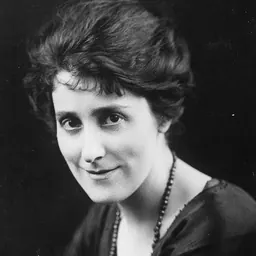
As a young doctor, Browne married novelist Helen de Guerry Simpson and they had one daughter, named Clemence after one of Simpson's literary collaborators, Clemence Dane. Simpson died in 1940. For the next few years, Browne lived at Great Ormond Street, and his daughter sometimes came to stay with him. He married Lady Myra Ponsonby in 1945; she was the daughter of Vere Ponsonby, 9th Earl of Bessborough. They had two children together, a son and daughter.
Browne was a skilled amateur tennis player, and he appeared in the first round at Wimbledon each year between 1921 and 1924. His four Wimbledon losses included a singles match against future Japanese Olympian Masanosuke Fukuda and a doubles match where he faced Jacques Brugnon. In his room at Great Ormond Street, he painted a line at the level of a tennis net so that he could practise his shots.
Later life During Browne's tenure as surgeon-in-chief at Great Ormond Street, a number of distinguished physicians practiced there, including cardiac surgeon David Waterston and urologists David Innes Williams and Barry O'Donnell. In 1957, Browne was named an emeritus surgeon. Four years later, he was made Knight Commander of the Royal Victorian Order (KCVO) and Chevalier of the Legion of Honour.
Arms
Don’t just read it —
keep it.
Full-length biographies made to live with: read them, listen on the way to work, watch them tonight.
- E-book
- Audio
- Video
Instant download · yours to keep · every purchase keeps this site free
Important facts
People in Sir Denis Browne's life
Named in this biography and alive at the same time






Related people
Same field, nearest in time




Contemporaries
People whose lives overlapped Sir Denis Browne's

Frequently asked questions
Who was Sir Denis Browne?
Australian pediatric surgeon (1892-1967)
When was Sir Denis Browne born?
Sir Denis Browne was born on 2 April 1892 in Melbourne.
When did Sir Denis Browne die?
Sir Denis Browne died on 9 January 1967 in London.
What was Sir Denis Browne's occupation?
Sir Denis Browne was a pediatric surgeon, surgeon, tennis player and pediatric surgery.
What was Sir Denis Browne known for?
Sir Denis Browne was known for Denis Browne bar.
What nationality was Sir Denis Browne?
Sir Denis Browne was Australian.
Sources & further reading
· DBpedia: Denis Browne (surgeon)
Cite this page
APA: Biography.guide. (2026). Sir Denis Browne. https://biography.guide/sir-denis-browne/
MLA: "Sir Denis Browne." Biography.guide, https://biography.guide/sir-denis-browne/.
Chicago: "Sir Denis Browne." Biography.guide. https://biography.guide/sir-denis-browne/.
Data last updated: 2026-09-22 · Spot an error? Report a correction.
Page generated 2026-09-27 05:13 UTC