
About Sion Sono
Born 1961. Sion Sono is a Japanese actor, poet, novelist, film director, screenwriter and composer.
is a Japanese filmmaker, writer, and poet. He is best known for the films Love Exposure, Strange Circus (2005) and Suicide Club (2001). He has been called "the most subversive filmmaker working in Japanese cinema today," and a "stakhanovite filmmaker" with an "idiosyncratic" career.
Early life Sion Sono was born in Aichi Prefecture in 1961. He has described his parents as being excessively strict, leading to him running away from home at 17.
Homelessness After Sono ran away from home, he wandered the streets, often on the verge of starvation. On his first night in Tokyo, he met a woman who lured Sono into a hotel room where she put a knife to her own throat and threatened to commit suicide if he would not help her meet her parents pretending to be her husband. Sono not only agreed but spent several weeks with her family in the countryside, but in the end the woman let him go and gave him a small amount of money.
Entering the Unification Church Soon, he began starving again. Then he met a priest from the Unification Church and agreed to join their cult because the priest promised Sono food and shelter. Sono spent some time in the cult but found it extremely funny how the main priest claimed to be God. Soon, Sono fled. Even though the cult was not yet as powerful as it is nowadays, it strictly prohibited its members to return into normal life and was not easy to get away from. The cultists tracked and followed the runaway.
Leaving the Unification Church When Sono returned home, he found a letter from the cult on his table. To save himself from the cult, Sono decided to join one of the Communist terrorist groups which were protesting the expansion of the Narita International Airport during the Sanrizuka Struggle. Almost everyday their protests grew into fights with the riot police so they were happy to take in one more young and strong soldier. Eventually, Sono left the group, and the cult members never showed up again.
Return home and early poetry Upon returning home, Sono entered Hosei University. During his student years he tried himself as a poet and even was published in magazines Eureka and The Modern Poem Book. Then he also started taking his first steps in film directing, making a series of short films on Super 8. was selected for the Pia Film Festival. Two years later, in 1987 Sono won the PFF Gran Prix with his film Otoko no Hanamichi (A Man's flower road). The PFF scholarship he spent to create the next movie, his first feature-length 16 mm film Bicycle Sighs (Jitensha Toiki), a coming-of-age tale about two underachievers in perfectionist Japan. Sono co-wrote, directed, and starred in the film.
In 1990, Sono moved to San Francisco, and was admitted to University of California, Berkeley; however, he never attended class, or learned English, instead spending his time watching B-movies and porno movies. The Room also toured on 49 festivals worldwide, including the Berlin Film Festival and the Rotterdam Film Festival.
In 1993–1995, Sono's main project was an art-group named Tokyo GAGAGA. Armed only with their creative ideas and art, group members ‘led a guerilla war against normalization of solitude and loneliness in everyday life’. They seized the busiest streets of Tokyo and filled them with installations and banners. the faux-documentary Utsushimi (2000), and the pink film Teachers of Sexual Play: Modelling Vessels with the Female Body (2000). Also in 2000, Sono released an experimental short film 0cm4, contemplating on colourblindness and epistemology.
In 2001, Sono wrote and directed the horror film Suicide Club, his breakthrough feature, which follows a series of interconnected mass suicides. The film was very successful, gaining considerable notoriety in film festivals (including winning the Prize for "Most Ground-Breaking Film" at the 2003 Fantasia Film Festival), and developing a significant cult following over the years, even spawning a manga adaptation, as well as a companion piece novel written by Sono himself. In 2005, Sono released Noriko's Dinner Table, a prequel to Suicide Club, which also received acclaim. The film received special mention at the 40th Karlovy Vary International Film Festival.
In 2005, Sono also released three other films: Into a Dream (Yume no Naka e), a coming-of-age tale about the life of a theatre group member, Hazard, a crime film shot in New York City, (which was wide released in 2006) and Strange Circus, where Sono worked not only as director and writer, but also as composer and cinematographer. In 2006, he wrote and directed the drama film Balloon Club, Afterwards. In 2007, he wrote and directed the horror film Exte: Hair Extensions.
In 2008, Sono directed and wrote the 237 minutes-long epic Love Exposure, which is widely considered his most acclaimed and popular work to date. The film won the Caligari Film Award and the FIPRESCI Prize at Berlin International Film Festival, as well as the Best Asian Film award at the Fantasia Film Festival. Almost a decade later, Sono would release an extended mini-series version of the film titled, Love Exposure: The TV-Show. Love Exposure was the first film in Sono's thematic "Hate" trilogy. In 2009, Sono directed the dramas Be Sure to Share and Make The Last Wish.
2010s and further
Love Exposure was followed by the second and third installments, Cold Fish, released in 2010, and Guilty of Romance, released in 2011; both were acclaimed, and gained him the Best Director awards at the Yokohama Film Festival and the Hochi Film Awards. 2011 saw Sono be recognized in the United States with his work being highlighted in the cinema series Sion Sono: The New Poet presented at the Museum of Arts and Design in New York City.
In 2011 and 2012 respectively, Sono released two drama films inspired by the 2011 Fukushima nuclear disaster and Tohoku Earthquake: Himizu and The Land of Hope. The films were praised for their simplicity and seriousness compared to Sono's other works, and Himizu won the Marcello Mastroianni Award at the 68th Venice International Film Festival. In 2012, Sono edited and released the film BAD FILM using footage from the production of a massive unreleased underground film he shot in 1995 starring the performance collective Tokyo GAGAGA.
In 2013, he directed the action-drama Why Don't You Play in Hell?, which was an international success, winning the People's Choice Award in the Midnight Madness section at the 2013 Toronto International Film Festival, and being distributed by the American company Drafthouse Films. In 2014, he directed Tokyo Tribe, a hip-hop musical adaptation of the manga of the same name.
In 2015, five films directed by Sono were released: Shinjuku Swan, an action yakuza film, Love & Peace, a tokusatsu fantasy drama, Tag, an action horror film which was named Best Film of the year at the Fantasia Film Festival, and the Fancine Malaga, The Virgin Psychics, an adaptation of the science fiction comedy manga series All Esper Dayo! by Kiminori Wakasugi, and The Whispering Star, a science fiction film which won the NETPAC Award at the 2015 Toronto International Film Festival.
In 2016, Sono was one of the directors chosen by Nikkatsu for its Roman Porno Reboot project, which asked five Japanese filmmakers to make a film that abided by the same rules as the studio's popular softcore pornography films released in the 1970s. Sono's film, the surrealist Antiporno, was praised for its exploration of female sexuality and contemplations on such topics as freedom and addiction, patriarchy, sexual objectification.
In 2017, Sono directed a sequel to Shinjuku Swan, Shinjuku Swan II. In the same year, he wrote and directed a 9-part horror mini-series titled Tokyo Vampire Hotel, which was produced and released to streaming by Amazon. A special feature-length cut of the show running 2 hours and 22 minutes was shown at various festivals. Also he made a cameo appearance in Meisekimu Genshi's short film Ami. exe.
In 2018, it was announced that Sono was working on his first overseas production and English-language debut, a film titled Prisoners of the Ghostland, starring Nicolas Cage, which was described by Cage as "the wildest movie I've ever made." In 2019, Sono was hospitalized and underwent emergency surgery following a heart attack, temporarily halting pre-production on the film.
In 2019, Netflix released The Forest of Love, a crime film written, directed and co-edited by Sono, inspired by the murders of Japanese serial killer Futoshi Matsunaga. An extended, mini-series version of the film, titled The Forest of Love: Deep Cut was also released. In 2020, Sono wrote, directed and edited the film Red Post on Escher Street, which followed a film director's efforts to complete a film, and won the People's Choice Award at the Montreal Festival of New Cinema.
Sono co-wrote the 2022 film Moshikashite, Hyūhyū, credited under the pseudonym "Takayuki Yamamoto" to obscure his involvement.
Television Sono has director and writer credits for two episodes and acted in one episode of the 2006 comedy television mini-series Jikō Keisatsu (Prescription Police) and wrote one episode of the 2007 series Kaette Kita Jikō keisatsu (Before Prescription Police). He directed, wrote, and acted in an episode of the 2013 series Minna! ESPer Dayo! and directed its 2015 television special continuation All Esper Dayo! SP. Sono directed and wrote the 2017 Amazon original mini-series Tokyo Vampire Hotel.
Reception In The Hollywood Reporter, Clarence Tsui writes that Sono has "established himself as one of the most idiosyncratic artists of his generation". Sono is considered an auteur, with his style being characterized by features such as grotesque violence, extreme eroticism, philosophical references, surreal imagery, and complex narratives. Sono's portrayal of women has been a subject of discussion, with some considering his works misogynist, and others claiming they are feminist. Common themes in his works include sex, cinema, cynicism, and modern Japanese society. Sono's work has often been described as belonging to, or being inspired by, the ero guro nansensu genre.
Sexual misconduct allegations On April 4, 2022, women's magazine Shūkan Josei reported allegations by two actresses and rumors inside the Japanese film industry that Sono had allegedly sexually harassed and made unwanted advances towards actresses for years.
Sono released a statement on his website apologizing to everyone he may have disturbed and admitting his "lack of consideration and respect for others" as a filmmaker, but denied many of the allegations and said he would defend himself in court.
On May 18, 2022, Sono sued the publisher of Shūkan Josei for damages. On February 1, 2024, Sono Sion and Shūkan Josei reached a settlement whereby Shūkan Josei agreed to delete two articles from April 2022 that originally made the allegations.
Awards Sono received the following awards for his films: 2003: Fantasia International Film Festival – Most Ground-Breaking Film and Fantasia Ground-Breaker Award (Suicide Club) 2005: Karlovy Vary International Film Festival – Don Quijote Award and Special Mention (Noriko's Dinner Table) 2006: Berlin International Film Festival – Reader Jury of the "Berliner Zeitung" (Strange Circus) 2007: Austin Fantastic Fest – Best Film (Exte) 2009: Berlin International Film Festival – FIPRESCI Prize and Caligari Film Award (Love Exposure) 2009: Fant-Asia Film Festival – Best Asian Film, Most Innovative Film and Special Jury Prize (Love Exposure) 2010: Mainichi Film Concours – Best Director (Love Exposure) 2015: Fantasia International Film Festival – Cheval Noir Award for Best Film (Tag) 2015: Fantasia International Film Festival – Special Mention for its creative, surprising and monumental opening kill sequence (Tag)
Sono also received the following nominations for his films: 2005: Karlovy Vary International Film Festival – Crystal Globe (Noriko's Dinner Table) 2009: Asia Pacific Screen Awards – Achievement in Directing (Love Exposure) 2010: Asian Film Awards – Best Director (Love Exposure)
Filmography
Feature films
Sion Sono's filmography includes:
Year Title Distributor Credited as Notes Ref. Director Screenwriter Actor1986 A Man's Flower Road Happiness Avenue 1988 Decisive Match! Boys Dorm vs Girls Dorm 1990 Bicycle Sighs Co-written with Hisashi Saito. 1991 I Hate You... Not 1992 Heya (The Room) 1994 Otaku 1997 Keiko Desukedo (I Am Keiko) 1998 Dankon: The Man 1999 Kōshoku Fūfu: Susutte Hoshii 2000 Blind Beast vs. Killer Dwarf Teruo Ishii Productions, Slow Learner (Japan), Eleven Arts (USA) Seigi no tatsujin: Nyotai tsubo saguri (Teachers of Sexual Play: Modelling Urns with the Female Body) Utsushimi (The Real Body) Credited as cinematographer. 2001 Suicide Club Earthrise (Japan), TLA Releasing 2004 Nō-pantsu gāruzu: Movie box-ing2 : Otona ni Nattara (No Pants Girls: Movie Box-ing2) Anthology series. 2005 Into a Dream Noriko's Dinner Table Eleven Arts (global), Tidepoint Pictures Hazard Evokative Films, Eleven Arts With Kazuyoshi Kumakiri as contributing writer. Also cameo. Strange Circus Credited as composer, cinematographer. 2006 Balloon Club Revisited Damejin 2007 Exte Toei Company Screenplay written with Masaki Adachi, Makoto Sanada. The Insects Unlisted in the Encyclopedia Credited as composer. 2008 Love Exposure Omega Project Tokyo Gore Police 2009 Be Sure to Share Make the Last Wish Cameo. 2010 Cold Fish Co-written with Yoshiki Takahashi. 2011 Himizu Gaga Guilty of Romance Story written by Mizue Kunizane. 2012 The Land of Hope Bad Film Credited as Film editor. Shot in 1995, released in 2012. 2013 Why Don't You Play in Hell? Drafthouse Films (USA) Credited as composer. 2014 Tokyo Tribe Nikkatsu Cameo. 2015 Shinjuku Swan Sony Pictures Entertainment Love & Peace Asmik Ace Entertainment Tag Shochiku, Asmik Ace Entertainment, Universal Pictures Japan The Virgin Psychics Gaga The Whispering Star Credited as producer. 2016 Antiporno Nikkatsu Credited as producer. 2017 Tokyo Vampire Hotel Amazon Video Shinjuku Swan II 2018 Red Blade Screenplay by Toshiki Kimura (as Ichirô Ryû), story by Sion Sono (as Shion Sono). 2019 The Forest of Love Netflix 2020 State of Emergency Amazon Studios Anthology series (segment "Lonely at 7 PM"). Red Post on Escher Street Credited as Film Editor (as Shion Sono). 2021 Prisoners of the Ghostland RLJE Films First English-language film
Short films Year Title Credited as director screenWriter Actor 1984 Love Songs 1985 I Am Sion Sono!! 1986 Love 1995 Vagina and Virgin 1998 Kaze (Wind) 2001 0cm4 2001 Father's Day 2010 Karma 2013 Venice 70: Future Reloaded 2016 Madly 2017 Ami. exe 2018 ami.exe 2018 The Bastard and the Beautiful World 2020 The Lonely 19:00
Don’t just read it —
keep it.
Full-length biographies made to live with: read them, listen on the way to work, watch them tonight.
- E-book
- Audio
- Video
Instant download · yours to keep · every purchase keeps this site free
Important facts
Family & relationships
People in Sion Sono's life
Named in this biography and alive at the same time
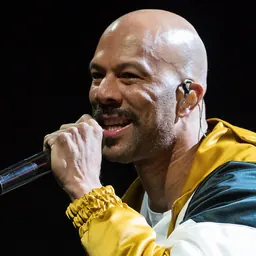
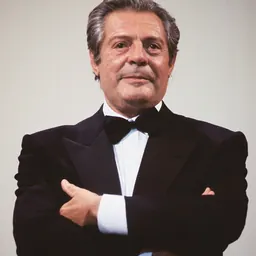


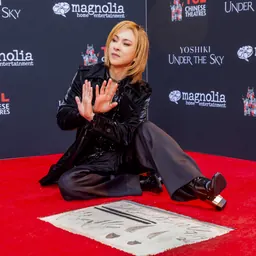



Related people
Same field, nearest in time
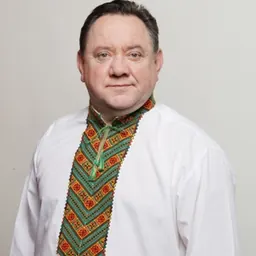



Contemporaries
People whose lives overlapped Sion Sono's

Frequently asked questions
Who is Sion Sono?
Japanese filmmaker, author and poet
When was Sion Sono born?
Sion Sono was born on 18 December 1961 in Toyokawa.
What is Sion Sono's occupation?
Sion Sono is an actor, poet, novelist, film director, screenwriter and composer.
What nationality is Sion Sono?
Sion Sono is Japanese.
Sources & further reading
Cite this page
APA: Biography.guide. (2026). Sion Sono. https://biography.guide/sion-sono/
MLA: "Sion Sono." Biography.guide, https://biography.guide/sion-sono/.
Chicago: "Sion Sono." Biography.guide. https://biography.guide/sion-sono/.
Data last updated: 2026-09-20 · Spot an error? Report a correction.
Page generated 2026-09-27 05:34 UTC