
Simon Bolivar Buckner Jr.
American lieutenant general during World War II
About Simon Bolivar Buckner Jr.
Lived 1886 – 1945 (aged 58). Simon Bolivar Buckner Jr. was an American military personnel and soldier.
Simon Bolivar Buckner Jr. ( ; 18 July 1886 – 18 June 1945) was a lieutenant general in the United States Army during World War II who served in the Pacific Theater. As commanding general of Alaska Defense Command, Buckner commanded American-Canadian forces in the Aleutian Islands campaign, including the Battle of Attu and the Kiska Expedition. Following that assignment, he was promoted to command the Tenth Army, which conducted the amphibious invasion of the Japanese island of Okinawa in 1945. He was killed during the closing days of the Battle of Okinawa by enemy artillery fire, making him the highest-ranking United States military officer lost to enemy fire during World War II.
Buckner, Lesley J. McNair, Frank Maxwell Andrews, and Millard Harmon, all lieutenant generals at the time of their deaths, were the highest-ranking Americans to be killed in World War II. Buckner and McNair were posthumously promoted to the rank of four-star general on 19 July 1954, by a Special Act of Congress (Public Law 83-508).
Early life and education Buckner was the son of Confederate general Simon Bolivar Buckner and his wife Delia Hayes Claiborne. Buckner and his father are named after the Venezuelan soldier and statesman, Simón Bolívar, who led what are currently the countries of Colombia, Venezuela, Ecuador, Panama, Peru, and Bolivia to independence from the Spanish Empire. His father was Governor of Kentucky from 1887 to 1891, and was the Gold Democratic Party's candidate for Vice President of the United States in 1896. Buckner was raised near Munfordville, Kentucky, and accompanied his father on his 1896 presidential campaign when he served as the running mate of ex-Union general John M. Palmer.
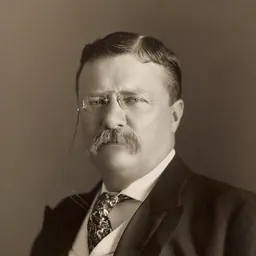
Military career Buckner attended the Virginia Military Institute. When he turned 18 in the summer of 1904, his father asked President Theodore Roosevelt to grant him an appointment to West Point. Roosevelt granted this request and Buckner graduated in the class of 1908. He served two military tours in the Philippines, and wrote about his adventures in Tales of the Philippines – In the Early 1900s. It was on a transport ship headed to Manila when he had a revelation about the importance of military service. Writing to his mother:
During World War I, he served as a temporary major, drilling discipline into aviator cadets.
Inter-war period For the 17 years beginning May 1919, Buckner's assignments were not with troops but with military schools as follows: four years as tactical officer at the United States Military Academy, West Point, New York; one year as student at The Infantry School at Fort Benning, Georgia; four years at the Command and General Staff School, Ft. Leavenworth, Kansas, with the first year as a student (distinguished graduate), then three years as instructor; four years at the Army War College, Washington, D.C., with year one as student then three years as executive officer; four more years at West Point, as Assistant Commandant and Commandant of Cadets. At West Point, "His rule is remembered for constructive progressiveness, with a share of severity tempered with hard, sound sense, and justice." However, one cadet's parent commented: "Buckner forgets cadets are born, not quarried."
Buckner gave orders in June 1942 for the indigenous Aleut people to be evacuated and for their villages to be burned. The Aleut people were not allowed to return until 1945, after the war was over. Buckner furthermore objected to the deployment of African American troops in Alaska, writing to his superiors of his concern that they would remain after the war, "with the natural result that they would interbreed with the Indians and the Eskimos and produce an astonishingly objectionable race of mongrels which would be a problem".
The campaign to take back Attu Island took nearly a year. The Battle for Attu, Operation Landcrab, occurred across three weeks in May 1943. The casualties on both sides were high. On shore, some 549 US soldiers were killed, 1,148 were wounded, and 1,814 suffered cold and disease. Of the 2,900 Japanese garrison, only 28 survived.
Subsequently, in August 1943, Kiska was invaded by Canadian and US soldiers. However, its Japanese garrison had been secretly withdrawn under cover of fog prior to the arrival of Allied forces. Allied commanders refused to believe that the Japanese could have completely evacuated Kiska. For eight days, troops searched the island, firing into the dense fog and sometimes accidentally shooting their comrades. The bombardment and invasion of the deserted island was written off as a "training exercise", and the Aleutian Campaign officially ended after 439 days of warfare. In 1943, Buckner was promoted to lieutenant general.
On May 29, 1945, Marines from Company A, 1st Battalion, 5th Marine Regiment (nicknamed the "Rebel Company") captured the ruins of Shuri Castle. Lacking a U.S. flag at the time, Captain Julian D. Dusenbury raised a small Confederate battle flag he had carried in his helmet. The flag flew for two to three days. Upon hearing of it, Buckner ordered it taken down, stating it was inappropriate because "Americans from all over are involved in this battle". The regulation replaced it with 48-star flag of the United States.
Death
On June 18, Buckner arrived in his command jeep which was flying its standard 3-star flag to visit a forward observation post on a ridge approximately behind the front lines, as Marine infantry advanced on the Japanese-held Ibaru Ridge. Visits from the general were not always welcome as his presence frequently drew enemy fire, usually as he was departing. Buckner had arrived with his standard three stars showing on the front of his steel helmet and a nearby Marine outpost sent a signal to Buckner's position stating that they could clearly see the general's three stars on his helmet. Told of this, Buckner replaced his own helmet with an unmarked one.
The last picture of Buckner (right), taken just before he was killed by a Japanese artillery shell.
As Buckner stood at the outpost, a small flat-trajectory Japanese artillery shell of unknown caliber (estimated to have been 47mm) struck a coral rock outcrop near him, and fragments pierced his chest. Buckner was carried by stretcher to a nearby aid station, where he died on the operating table. He was succeeded in command by Marine General Roy Geiger.
Buckner was the highest-ranking American military officer killed during World War II, and he remained the highest-ranked officer killed in action until the death of Lieutenant General Timothy Maude during the September 11 attacks in 2001.
Personal life Buckner was married to Adele Blanc Buckner (1893–1988). They had three children.
Buckner is interred in the Frankfort Cemetery over looking the city of Frankfort and the Kentucky State Capitol.
Legacy
Named in honor of Buckner: Fort Buckner, an Army sub-post of the Marine Corps' Camp Foster on Okinawa, is home to the 78th Signal Battalion and E Co. of the 53rd Signal Battalion and includes a small memorial to its namesake. , an Admiral W. S. Benson class troop transport. Nakagusuku Bay on the East side of Okinawa was nicknamed "Buckner Bay" in the 1940s by American military personnel. They often refer to it as such to this day, even in official correspondence. West Point's Camp Buckner, where yearlings (incoming sophomores) go through Cadet Field Training (CFT). Several places built in Alaska during Cold War-related military construction, including: Buckner Gymnasium (also Fieldhouse and Physical Fitness Center) at Fort Richardson (now part of Joint Base Elmendorf-Richardson) in Anchorage, Alaska, a post which the general established during World War II. The Buckner Building in Whittier, Alaska, once the largest building in Alaska by square footage. Buckner Drive in the Nunaka Valley subdivision of Anchorage, originally built as military housing. Buckner Drive in Fort Leavenworth's Normandy Village. Buckner Avenue in Fort George Meade's Heritage Park. Buckner Gate at Fort Shafter, Hawaii. Buckner Hall, the Headquarters Building at the former Fort McClellan Buckner Circle, the street at the former Fort McClellan where the senior officer homes (20) were located, all facing a central greenspace Buckner Road, Mount Vernon, Virginia, along with McNair Road, Patton Road and Stillwell Avenue, all US Army generals in Woodlawn Manor neighborhood.
Military awards Buckner's military decorations and awards include:
Distinguished Service CrossArmy Distinguished Service MedalNavy Distinguished Service MedalPurple HeartWorld War I Victory MedalAmerican Defense Service MedalAsiatic-Pacific Campaign MedalWorld War II Victory Medal
Dates of rank
Don’t just read it —
keep it.
Full-length biographies made to live with: read them, listen on the way to work, watch them tonight.
- E-book
- Audio
- Video
Instant download · yours to keep · every purchase keeps this site free
Important facts
People in Simon Bolivar Buckner Jr.'s life
Named in this biography and alive at the same time


Related people
Same field, nearest in time




Contemporaries
People whose lives overlapped Simon Bolivar Buckner Jr.'s



Frequently asked questions
Who was Simon Bolivar Buckner Jr.?
American lieutenant general during World War II (1886–1945)
When was Simon Bolivar Buckner Jr. born?
Simon Bolivar Buckner Jr. was born on 18 July 1886 in Munfordville.
When did Simon Bolivar Buckner Jr. die?
Simon Bolivar Buckner Jr. died on 18 June 1945 in Okinawa Prefecture.
What was Simon Bolivar Buckner Jr.'s occupation?
Simon Bolivar Buckner Jr. was a military personnel and soldier.
What nationality was Simon Bolivar Buckner Jr.?
Simon Bolivar Buckner Jr. was American.
Sources & further reading
· Wikipedia: Simon Bolivar Buckner Jr.
· DBpedia: Simon Bolivar Buckner Jr.
Cite this page
APA: Biography.guide. (2026). Simon Bolivar Buckner Jr.. https://biography.guide/simon-bolivar-buckner-jr/
MLA: "Simon Bolivar Buckner Jr.." Biography.guide, https://biography.guide/simon-bolivar-buckner-jr/.
Chicago: "Simon Bolivar Buckner Jr.." Biography.guide. https://biography.guide/simon-bolivar-buckner-jr/.
Data last updated: 2026-09-20 · Spot an error? Report a correction.
Page generated 2026-09-27 05:23 UTC