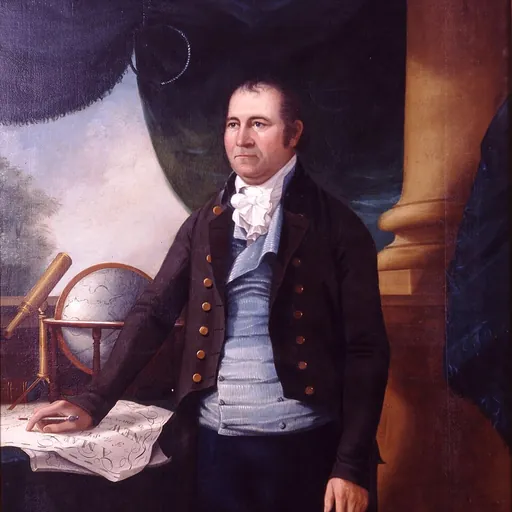
About Simeon De Witt
Lived 1756 – 1834 (aged 77). Simeon De Witt was an American cartographer and surveyor.
Simeon De Witt (December 25, 1756 – December 3, 1834) was Geographer and Surveyor General of the Continental Army during the American Revolution and Surveyor General of the State of New York for the fifty years from 1784 until his death.
Life and career De Witt was born in Ulster County, New York, one of fourteen children of physician Andries De Witt and Jannetje Vernooy De Witt, both of Dutch ancestry. He was the only graduate in the class of 1776 at Queens College – now Rutgers College of Rutgers University – in New Brunswick, New Jersey. After the capture of New Brunswick by the British during the war, De Witt fled to New York City where he joined the Revolutionary Army.
In June 1778, having been trained as a surveyor by James Clinton, the husband of De Witt's Aunt Mary, De Witt was appointed as assistant to the Geographer and Surveyor of the Army, Colonel Robert Erskine, and contributed to a number of historically significant maps. After Erskine's death in 1780, De Witt was appointed to his post.
In 1796, George Washington favored De Witt to become the Surveyor General of the United States, but De Witt turned down the nomination. Washington wrote to Thomas Jefferson about De Witt "I can assure you, he is extremely modest, sensible, sober, discreet, and deserving of favors. He is esteemed a very good mathematician," but despite this praise, none of De Witt's various proposals gained traction during Jefferson's presidency, and De Witt had nothing to do with the Land Ordinance of 1785, despite what some sources claim.
De Witt was appointed in 1807 by the state legislature, at the request of the New York City Common Council, to a three-man commission which was to determine how the city's future streets would be laid out. Frustrated by opposition from landowners, who wanted to determine for themselves where streets would go as they developed their properties, and interference from various political factions, the Council had called on the state for assistance. The Commission was given "exclusive power to lay out streets, roads, and public squares, of such width, extent, and direction, as to them shall seem most conducive to public good, and to shut up, or direct to be shut up, any streets or parts thereof which have been heretofore laid out... [but] not accepted by the Common Council." The commissioners were authorized to be paid $4 a day for their work – although De Witt was the only one who was actually compensated; the other two commissioners, Gouvernor Morris and John Rutherfurd, were rich men and waived their fees. De Witt, however, also wanted additional compensation for the days he spent traveling from his home in Albany to New York City, and for Sundays he was required, because of Commission business, to stay in the city; he was reluctantly given travel payment, but was refused additional payment for his Sundays in New York City.
The result of the work of the commission was the Commissioners' Plan of 1811, which laid out Manhattan's streets above 14th Street – and to a certain extent between 14th and Houston Streets – in a regular rectilinear gridiron pattern, which has garnered both praise and intense criticism ever since it was presented to the public.
Ironically, considering the massive effect on Manhattan of the Commissioners' Plan, De Witt himself did not much like New York City. He never took up residence there, and seems to have held his time there to a minimum. Ithaca, New York, of which he is considered one of the founders; and on a number of other developments of state-owned land.
From 1810 to 1816, De Witt was also a member of the first Erie Canal Commission, a project dear to the heart of his cousin, De Witt Clinton. He ordered the making of surveys which would prove essential for the eventual building of the canal.
De Witt did not leave much in the way of writings. He wrote a treatise published in 1813 on perspective drawing, and one in 1819 which argued for the establishment of a state agricultural college, and also had some letters published on scientific topics. The map is said by historian Gerard Koeppel to have been "meticulously drawn" and to have "set a standard for American cartography; it is still considered 'the most important map ever made of the Empire State.'" The map shows New York state to be primarily uninhabited, at least as far as white settler go: the map does not indicate Native American encampments or lodges.
Portfolio samples The following map sections were drawn by, or under the direction of, Simeon De Witt. The originals were not colored as these are.
Don’t just read it —
keep it.
Full-length biographies made to live with: read them, listen on the way to work, watch them tonight.
- E-book
- Audio
- Video
Instant download · yours to keep · every purchase keeps this site free
Important facts
People in Simeon De Witt's life
Named in this biography and alive at the same time




Related people
Same field, nearest in time

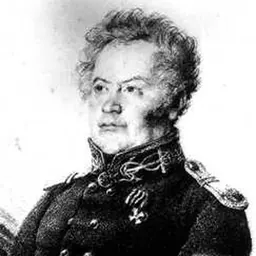
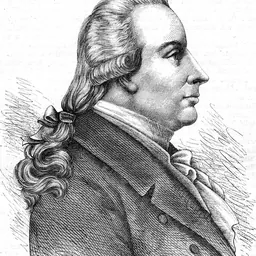
Contemporaries
People whose lives overlapped Simeon De Witt's




Frequently asked questions
Who was Simeon De Witt?
American geographer and surveyor general
When was Simeon De Witt born?
Simeon De Witt was born on 25 December 1756 in Wawarsing.
When did Simeon De Witt die?
Simeon De Witt died on 3 December 1834 in Ithaca.
What was Simeon De Witt's occupation?
Simeon De Witt was a cartographer and surveyor.
What nationality was Simeon De Witt?
Simeon De Witt was American.
Sources & further reading
Cite this page
APA: Biography.guide. (2026). Simeon De Witt. https://biography.guide/simeon-de-witt/
MLA: "Simeon De Witt." Biography.guide, https://biography.guide/simeon-de-witt/.
Chicago: "Simeon De Witt." Biography.guide. https://biography.guide/simeon-de-witt/.
Data last updated: 2026-09-21 · Spot an error? Report a correction.
Portrait: Wikimedia Commons · author & licence
Page generated 2026-09-27 05:00 UTC