
About Sima Wali
Lived 1951 – 2017 (aged 66). Sima Wali was an Afghan human rights defender.
Sima Wali (; April 7, 1951 – September 22, 2017) was one of the foremost Afghan human rights advocates in the world, serving as an international campaigner for the liberties and empowerment of refugee and internally displaced populations. She was the Chief Executive Officer of Refugee Women in Development (RefWID), Inc., a global non-profit organization that advocated for the civil rights of refugee women and girls fleeing from conflict and for their equitable reintegration into their societies. She was also the vice president of the Sisterhood Is Global Institute, the world’s first feminist think tank.
Wali said that her personal experience as a refugee of the Soviet-Afghan War inspired her fight for the human rights of uprooted populations. Her testimonies throughout her career before the United Nations, the United States Congress and the U.S. State Department led to the appropriation of millions of dollars supporting Afghan women-led NGOs and the participation of women in Afghanistan's nascent democracy.
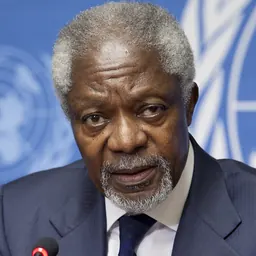
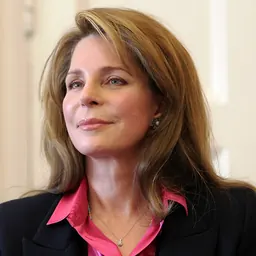
She delivered the keynote address at the United Nations' celebration of International Women's Day in 2002, speaking alongside U.N. Secretary General Kofi Annan, First Lady Laura Bush, and Queen Noor of Jordan.
She was also a speaker at the Ford Hall Forum in 1999 and 2009, and was a participant in the Dropping Knowledge project, among many other prestigious events and notable institutions.
Career In 2001, Sima Wali was one of only three female delegates at the U.N.-organized Bonn Agreement in Germany, which formed a new Afghan government, following the fall of the Taliban.
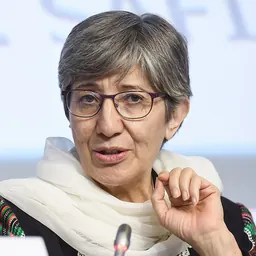
At the conference, Wali was pivotal in the creation of the Ministry of Women's Affairs, insisting that her male counterparts permanently include the ministry in the new administration. She was then nominated to lead that ministry, but declined in order to focus on her international activism. Wali went on to nominate Sima Samar to the position of Minister of Women's Affairs and also selected other women to serve in the interim government and ensured that gender-sensitive language was incorporated into the peace agreement. According to Equality Now, the Afghan Women’s Summit "adopted an historic expression of the long held dreams and aspirations of Afghan women, together with a list of concrete demands for immediate implementation relating to the reconstruction of Afghanistan."
According to the NGO Dropping Knowledge, "Wali has pioneered in developing program models aimed at empowering women affected by conflict, rebuilding post-conflict democratic civil society institutions, and advocating for human rights protection of women and their male counterparts."
She also played a key role in creating the Policy Council on Afghan Women, a coalition of non-governmental organizations that works to advance women's status in Afghanistan and to ensure that women there are equal recipients of U.S. development assistance funds.
While she was in Jalalabad, Afghanistan, in 2005 to launch a project on building democracy among women, Wali narrowly escaped death at the hands of Taliban, Al-Qaeda, and Pakistani militants. Although she had received a death threat from the Taliban before, this was the closest she had come to being killed by forces opposed to her work.
Since their ascent in the mid-1990s, Wali had been a vocal opponent of the Taliban's ideology. At the State of the World Forum in 1998, she said:
Sima Wali leads a training seminar for Afghan refugees at a camp in Peshawar, Pakistan, in 1998.
She had also been a bold critic of what she felt was the American government's abandonment of Afghanistan between the 12 years that the Soviet-Afghan War ended and the U.S.-led invasion of Afghanistan began.
"The United States helped create and support the 'Holy Warriors,' the most fanatic group that got the lion's share of the weapons from the U.S. It's played a major role in the Afghanistan situation by basically financing the war, and it now has a responsibility to help finance peace. The women and their children have borne the brunt, but the U.S. must now use its leverage to find peace and bring about a resolution."
Wali has made speeches, led conferences and sat on panels at many universities and institutions, which include the United Nations, the United States Congress, the U.S. State Department, Amnesty International, Ford Hall Forum, Yale University Law School, George Washington University Law School, Northeastern University, Woodrow Wilson Center, the Carnegie Council for Ethics in International Affairs, and the Dropping Knowledge project.
She has been interviewed and featured on various news programs on CNN, CBS News, ABC News, FOX News, Al Jazeera, NPR, and CBC.
Prior to her exile to the United States in 1978, Wali worked for the American Embassy in Kabul and the U.S. Peace Corps.
Wali died on September 22, 2017, in Falls Church, Virginia, from multiple system atrophy at the age of 66. Women's Commission for Refugee Women and Children, Women of Vision Award (1992) Women Donors Network, Resourceful Women Award (1992) Ms. Foundation for Women, Gloria Steinem Women of Vision Award (1989) National Conference for College Women Student Leaders, Women of Distinction Award (1988) Clairol Foundation, Take Charge Award (1987)
Consultancies Senior Technical Specialist, PADCO/AECOM, Alternative Livelihoods Project, Badakhshan, Afghanistan (2005-2006) Advisor, U.S. Agency for International Development (USAID), NGO/PVO leadership (2003) Advisor, Women for Women International (1997-2003) Advisor, U.S. Department of Health and Human Services, Office of Refugee Resettlement, Refugee Women's Task Force on programs and policies pertaining to domestic refugee women's programs (2002) Advisor, United Nations High Commissioner for Refugees on development programs and policies for refugee and displaced women (2001) Advisor, United Nations Division on the Advancement of Women in developing gender-sensitive programs and policies for uprooted women and for women and girls experiencing major civil and political transitions (2000) Board of Directors and Advisor, Harvard University's Refugee Trauma Center on development projects, policies and practices impacting women in societies undergoing socio-political transformations (1987-1989, 2000) Advisor, United Nations Special Envoy on Afghanistan and the Government of Norway on special consultation on Afghanistan (1999) Board of Directors, Fund for the Future of Our Children (1995-1999) Advisor, Developed Creative Associates International, Inc., programs on gender, human rights, and forced migration (1998) Board of Directors, Women's Commission for Refugee Women and Children (1990-1994)
Don’t just read it —
keep it.
Full-length biographies made to live with: read them, listen on the way to work, watch them tonight.
- E-book
- Audio
- Video
Instant download · yours to keep · every purchase keeps this site free
Important facts
People in Sima Wali's life
Named in this biography and alive at the same time



Related people
Same field, nearest in time

Contemporaries
People whose lives overlapped Sima Wali's

Frequently asked questions
Who was Sima Wali?
Afghan human rights activist
When was Sima Wali born?
Sima Wali was born on 7 April 1951 in Kandahar.
When did Sima Wali die?
Sima Wali died on 22 September 2017 in Falls Church.
What was Sima Wali's occupation?
Sima Wali was a human rights defender.
What nationality was Sima Wali?
Sima Wali was Afghan.
Sources & further reading
Cite this page
APA: Biography.guide. (2026). Sima Wali. https://biography.guide/sima-wali/
MLA: "Sima Wali." Biography.guide, https://biography.guide/sima-wali/.
Chicago: "Sima Wali." Biography.guide. https://biography.guide/sima-wali/.
Data last updated: 2026-09-25 · Spot an error? Report a correction.
Page generated 2026-09-27 05:11 UTC