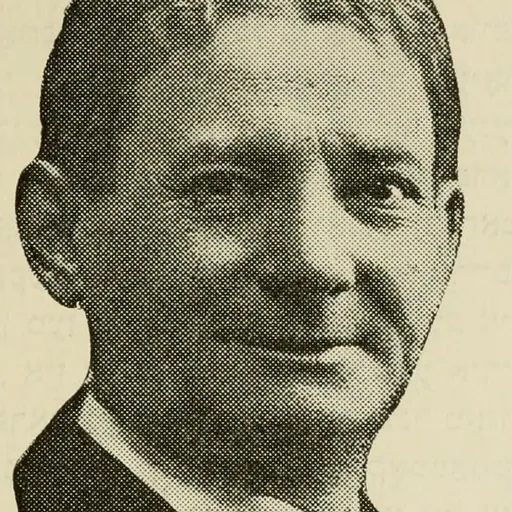
About Sigmund Mogulesko
Lived 1858 – 1914 (aged 55). Sigmund Mogulesko was an American poet, composer, stage actor, actor and yiddish.
Sigmund Mogulesko (16 December 1858 – 4 February 1914) — Yiddish: זעליק מאָגולעסקאָ Zelik Mogulesko, first name also sometimes spelled as Zigmund, Siegmund, Zelig, or Selig, last name sometimes spelled Mogulescu — was a singer, actor, and composer in the Yiddish theater in New York City. He was born in Kalarash, Bessarabia (now Călăraşi in Moldova) and began singing in the local synagogue choir. Before reaching adolescence, he was paid nearly three times what teachers made, to sing in the synagogue of Chişinău. Soon after moving to Bucharest, Romania, he was paid to sing in churches as well as synagogues, and started acting.
He was a star in Abraham Goldfaden's first Bucharest-based theater troupe — and the playwright wrote the title role of Shmendrik for him. Mogulesko soon founded his own troupe and dominated Yiddish theatre in Romania for a decade. After immigrating to the United States, he eventually founded the Rumanian Opera House on New York City's Lower East Side, one of the great venues of Yiddish theater. The Jewish Encyclopedia described him in 1904 as "the best comedian on the Yiddish stage… He is known also as a leading composer of music for the Yiddish stage."
His "signature tune" was "Khosn kale mazel tov", which became so widespread it was mistaken for a traditional song.
Life
Childhood and youth Sigmund Mogulesko was born in Kalarash, Bessarabia (now Călăraşi in Moldova). His father died when he was nine years old, and his mother received assistance for the family from the local Jewish community. He first became a meshoyrer (choir singer) in the choir of cantor Iosif Heller, He also sang at weddings and other parties in the style of the Broder singers, and imitated well-known Bucharest actors.
In 1877 Abraham Goldfaden arrived in Bucharest with his less-than-year-old troupe, the first professional Yiddish theater company. Intrigued, Mogulesko auditioned for him. His scene inspired Goldfaden's play Shmendrik, or the Comical Wedding. The title role, written for Mogulesko, is a clueless mama's boy; it is often considered the first great role in Yiddish theater. Mogulesko is believed to have written or arranged some of the music for that play.
Describing how Goldfaden came to engage Mogulesko as an actor, Nahma Sandrow remarks: "Meshoyrerim were sophisticated musically, and were notorious for being freethinking and irreverent. As soon as Goldfadn arrived in town he heard about a young cutup who was the life of local parties, imitating scenes from Rumanian comedies and mimicking the dignified cantor he sang for. Within a year Mogulesko had become the comic genius of his generation."
Mogulesko also played various other comic, musical roles for Goldfaden, including the granddaughter in Die Bubbe mitn Einikl (Grandmother and Granddaughter), and the lead in The Intrigue, or Dvoise Intrigued. In his first non-comic role, a play by August von Kotzebue, he so upstaged the star, Israel Grodner, that Grodner quit to start his own company. Grodner soon hired Mogulesko away from Goldfaden; and eventually Mogulesko would inherit Grodner's troupe. Grodner started another.
Romania, New York, and elsewhere R-L: Jacob Adler, Zigmund Feinman, Sigmund Mogulesko, Rudolf Marx, Mr. Krastoshinsky and David Kessler, 1888 in New York With his partner Moishe Finkel, over the next decade Mogulesko dominated Yiddish theater in Romania. The Jigniţa Theatre, its orchestra, and Mogulesko were lauded as comparable to the level of the National Theater. Performing in Romanian as well as Yiddish, Mogulesko drew an audience that went beyond the Jewish community. During this period, he gave David Kessler his start in theater.
At one point during this period, he and Finkel had a falling out, and he spent a summer doing garden cabaret with a quartet he formed; Finkel's troupe was unsuccessful without him, and they soon reached an understanding.
In 1886 or 1887, Mogulesko moved to New York, where he promptly became one of the first Yiddish theater stars in the New World. He later founded the Rumanian Opera House on Manhattan's Lower East Side. The New York Times remarked at the time of his funeral that: "There has never been among English-speaking peoples ... such an outpouring of sympathy over the death of an actor unknown outside of his profession".
Reputation Writing of Mogulesko's troupe in Romania in 1884, and probably referring to the plays of Moses Horowitz and Joseph Lateiner, Dr. Moses Gaster was generally impressed: Above all, we must assert that Jewish theater, through the pieces played on its stage, has indeed an educative and moral scope, because on the one hand it represents scenes from our history known by only a tiny minority, refreshing, therefore, secular memory; on the other hand, it shows us our defects, which we have like all men, but not with a tendency to strike at our own immorality with a tendency towards ill will, but only with an ironic spirit that does not wound us, as we are wounded by representations on other stages, where the Jew plays a degrading role.
Ernest Joselovitz wrote a play about the Mogulesko troupe, Vilna's Got a Golem, set in Vilna, Lithuania during the pogroms of 1899. It is a play that celebrates the importance of Mogulesko's troupe, and the more general importance of Yiddish theatre - born in Romania - in an environment of violent repression.
Footnotes
Don’t just read it —
keep it.
Full-length biographies made to live with: read them, listen on the way to work, watch them tonight.
- E-book
- Audio
- Video
Instant download · yours to keep · every purchase keeps this site free
Important facts
People in Sigmund Mogulesko's life
Named in this biography and alive at the same time




Related people
Same field, nearest in time

Contemporaries
People whose lives overlapped Sigmund Mogulesko's


Frequently asked questions
Who was Sigmund Mogulesko?
Yiddish theatre performer (1858–1914)
When was Sigmund Mogulesko born?
Sigmund Mogulesko was born on 16 December 1858 in Călărași.
When did Sigmund Mogulesko die?
Sigmund Mogulesko died on 4 February 1914 in New York City.
What was Sigmund Mogulesko's occupation?
Sigmund Mogulesko was a poet, composer, stage actor, actor and yiddish.
What nationality was Sigmund Mogulesko?
Sigmund Mogulesko was American.
Sources & further reading
· Wikipedia: Sigmund Mogulesko
Cite this page
APA: Biography.guide. (2026). Sigmund Mogulesko. https://biography.guide/sigmund-mogulesko/
MLA: "Sigmund Mogulesko." Biography.guide, https://biography.guide/sigmund-mogulesko/.
Chicago: "Sigmund Mogulesko." Biography.guide. https://biography.guide/sigmund-mogulesko/.
Data last updated: 2026-09-22 · Spot an error? Report a correction.
Portrait: Wikimedia Commons · author & licence
Page generated 2026-09-27 05:03 UTC