
About Moses Gaster
Lived 1856 – 1939 (aged 82). Moses Gaster was an Austrian, British and Romanian linguist, philologist, rabbi, literary critic, orientalist and theologian.
Moses Gaster (17 September 1856 – 5 March 1939) was a Romanian, later British scholar, the Hakham of the Spanish and Portuguese Jewish congregation, London, and a Hebrew and Romanian linguist. Moses Gaster was an active Zionist in Romania as well as in England, where in 1899 he helped establish the English Zionist Federation .
Biography Life in Romania Gaster was born in Bucharest into a renowned Jewish Austrian family which had settled in Wallachia at the beginning of the 19th century. He was the eldest son of Chevalier Abraham Emanuel Gaster, who was the consul of the Netherlands in Bucharest and the grandson of Asriel Gaster, a prosperous merchant and community leader. His mother, Pnina Judith Rubinstein, came from a rabbinical dynasty which included Rabbi Levi Isaac ben Meir.
After having taken a degree in his native city (1874), he proceeded to Leipzig, where he received the degree of PhD in 1878 and then to the Jewish Seminary in Breslau, where he gained the Hattarat Hora'ah (rabbinical diploma) in 1881. His history of Romanian popular literature was published in Bucharest in 1883.
He was lecturer on the Romanian language and literature at the University of Bucharest (1881–85), inspector-general of schools, and a member of the council for examining teachers in Romania. He also lectured on the Romanian apocrypha, the whole of which he had discovered in manuscript.
Gaster was a central figure of Hibbat Zion in Romania and played a central role in the 1882 establishment by Jews from Moinești of the Samarin (Zamarin) settlement, known since 1884 as Zichron Ya'akov.
Life in England Having been expelled from Romania by the Ion Brătianu government in 1885 for allegedly "being a member of an irredentist society", he went to England, where he held a lectureship, 1886 and 1891, in Slavonic literature at the University of Oxford, his lectures being later published as Greco-Slavonic Literature, London, 1886.
A few years after, the Romanian government cancelled the decree of expulsion, presented him with the Romanian Ordinul Naţional "Pentru Merit" of the first class (1891), and invited him to return; however, he declined the invitation, and in 1893 became a naturalised British citizen. In 1895, at the request of the Romanian government, he wrote a report on the British system of education, which was printed as a "green book" and accepted as a basis of education in Romania.
In 1887 Gaster was appointed hakham of the Spanish and Portuguese Congregation in London, in which capacity he presided over the bicentenary of Bevis Marks Synagogue. He was invited to give the Ilchester Lectures at Oxford which were published in 1887 as Ilchester Lectures on Greeko-Slavonic literature . Appointed as principal of Judith Lady Montefiore College, Ramsgate, from 1891 to 1896, he wrote valuable collection of essays accompanying the yearly reports of that institution. He was a member of the councils of the Folklore, Biblical, Archaeological, and Royal Asiatic societies, writing many papers in their interest. He was the only ordained rabbi ever to become president of The Folklore Society, in 1907–1908.
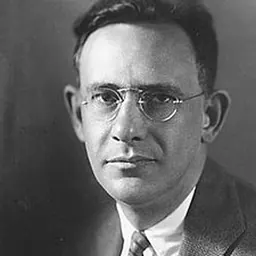
In 1925, Gaster was appointed one of the six members of the honorary board of trustees (Curatorium) of the Yiddish Scientific Institute (YIVO) in Vilnius alongside Simon Dubnow, Albert Einstein, Sigmund Freud, Edward Sapir and Chaim Zhitlowsky.
Visiting the Holy Land & Zionism Gaster made a special study of the Samaritans and became a recognised authority on their language and literature. He visited Nablus in the Ottoman Beirut Vilayet, the headquarters of the Samaritan community, and induced them to part with manuscripts covering the whole range of their literature. Where he could not secure the originals he had copies made for him by Samaritan priests. Gaster was among the most active leaders of the Zionist movement in England, and even while in Romania he assisted in establishing the first Jewish colony in Palestine, Zichron Ya'akov.
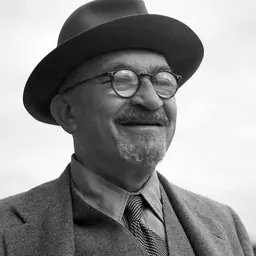
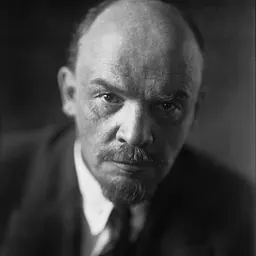
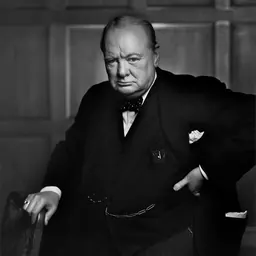
Rising in worldwide Jewish affairs he became vice-president of the First Zionist Congress in Basel, and was a prominent figure in each succeeding congress. Gaster's residence, "Mizpah" 193 Maida Vale in London served as the venue for early talks between prominent Zionists and the Foreign Office in 1917. The first draft of the Balfour Declaration was written at the Gaster home on 7 February 1917 in the presence of Chaim Weizmann, Nahum Sokolow, Baron Rothschild, Sir Mark Sykes and Herbert Samuel. Other visitors to the Gaster home included Winston Churchill, Vladimir Lenin, and Sigmund Freud.
Collector of manuscripts Gaster was a great collector of manuscripts, having over two thousand, mainly Hebrew, Samaritan and Slavonic. At the outbreak of the Second World War his collection was moved for safekeeping to cellars in the centre of London. However, water used to quench London fires saturated a large part of the collection, which made some of the items illegible in whole or in part. Fortunately many of them had previously been transliterated into Hebrew typescript.
The collection comprised over 10,000 fragments in Hebrew and Judaeo-Arabic from the Cairo Geniza (the genizah of the Ben Ezra Synagogue in Old Cairo); some 350 Hebrew codices and scrolls including prayer-books of many Jewish communities, apocryphal writings, commentaries, treatises, letters, marriage contracts, piyyutim, and thirteen scrolls of the Law; some 350 Samaritan manuscripts, among them manuscripts of the Pentateuch, commentaries and treatises, and liturgical, historical, chronological and astronomical codices, detailed census lists of the Samaritans and lists of manuscripts in their possession; and almost 1,500 uncatalogued Arabic fragments on paper from the Synagogue of Ben Ezra.
Collections In 1954 Gaster's manuscript collection was purchased by the John Rylands Library (since 1972 part of the University of Manchester), where it remains. The Rylands Cairo Genizah Project has been in progress for a number of years on the identification of fragments and digitisation of images of the texts.
The 'Gaster Collection,' a number of mainly Karaite and Yemenite manuscripts were purchased from the library of Dr. Moses Gaster in 1927, and are currently housed at the British Library. An important early Hebrew codex called the First Gaster Bible was also acquired by the British Library from his collection.
In 1974 Gaster's archive was given to University College London. The collection spans around 300 boxes and includes working papers from his posts on a variety of subjects including Jewish history, Zionism, Romanian Jewry and Anglo-Jewry.
Personal life Moses Gaster was the father of Jack and Theodor Gaster and the grandfather of Marghanita Laski. He was also son-in-law to Michael Friedländer and father-in-law to Neville Laski.
Literary works Gaster's major work, in which he invested ten years of his life, was a Romanian chrestomathy and glossary covering the period from the dawn of Romanian literature down to 1830. Gaster also wrote various text-books for the Jewish community of Romania, made a Romanian translation of the Siddur, and compiled a short Hebrew Bible history.
Gaster believed in a scientific study of folklore and did not sympathize with those believing that preserving folklore should mostly serve a political nationalist purpose. Moses Gaster, Memorii, corespondenţă, 1998, Editura Hasefer, Bucharest,
Don’t just read it —
keep it.
Full-length biographies made to live with: read them, listen on the way to work, watch them tonight.
- E-book
- Audio
- Video
Instant download · yours to keep · every purchase keeps this site free
Important facts
Family & relationships
People in Moses Gaster's life
Named in this biography and alive at the same time


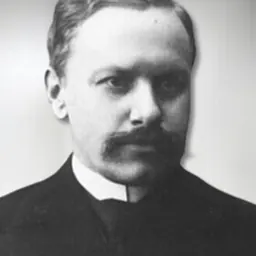
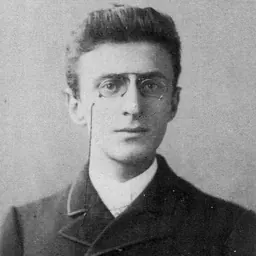
Related people
Same field, nearest in time

Contemporaries
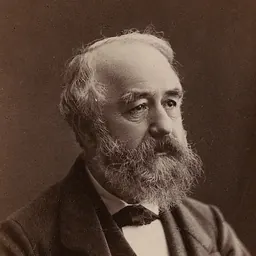
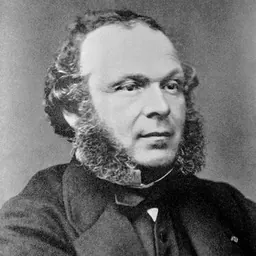
People whose lives overlapped Moses Gaster's




Frequently asked questions
Who was Moses Gaster?
British-Romanian academic and rabbi
When was Moses Gaster born?
Moses Gaster was born on 17 September 1856 in Bucharest.
When did Moses Gaster die?
Moses Gaster died on 5 March 1939 in Abingdon-on-Thames.
What was Moses Gaster's occupation?
Moses Gaster was a linguist, philologist, rabbi, literary critic, orientalist and theologian.
What nationality was Moses Gaster?
Moses Gaster was Austrian, British and Romanian.
Sources & further reading
Cite this page
APA: Biography.guide. (2026). Moses Gaster. https://biography.guide/moses-gaster/
MLA: "Moses Gaster." Biography.guide, https://biography.guide/moses-gaster/.
Chicago: "Moses Gaster." Biography.guide. https://biography.guide/moses-gaster/.
Data last updated: 2026-09-20 · Spot an error? Report a correction.
Page generated 2026-09-27 05:27 UTC