
About Sidney Kirkman
Lived 1895 – 1982 (aged 87). Sidney Kirkman was a British military officer.
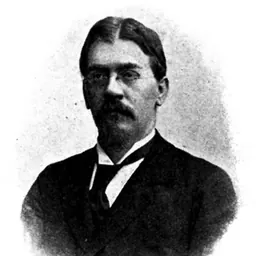
General Sir Sidney Chevalier Kirkman, (29 July 1895 – 29 October 1982) was a British Army officer, who served in both the First World War and Second World War. During the latter he commanded the artillery of the Eighth Army during the Second Battle of El Alamein, following which he commanded the 50th Division during the Allied invasion of Sicily and XIII Corps throughout most of the Italian Campaign. He later became Director General of Civil Defence in the Civil Defence Department from 1954 to 1960.
Early life and First World War Born in Bedford, Bedfordshire on 29 July 1895, the son of Judge John P. Kirkman and the eldest of two sons, Sidney Kirkman was educated at Bedford School, and later at the Royal Military Academy, Woolwich. During the First World War, Kirkman joined the British Army and, after passing out from Woolwich, was commissioned as a second lieutenant into the Royal Artillery on 10 February 1915. He served with the 72nd Brigade, Royal Field Artillery and was awarded the Military Cross during his time at the Western Front and later on the Italian Front. Promoted to lieutenant on 8 August 1916, he was made an acting captain on 4 January 1918, Kirkman ended the war with the rank of acting major while commanding a battery. He was awarded a Bar to his MC in 1918, and was twice wounded and mentioned in despatches.
Between the wars Between 1919 and 1930, Kirkman, having obtained a Regular Army commission in 1915, and unlike many others, remained in the army and served throughout the British Empire in Palestine, Malta and India during the interwar years. He was promoted to captain on 1 January 1925 (with seniority backdating to 3 November 1917).
On 21 October 1930 Kirkman relinquished his appointment as staff captain with Malta Command and returned to England. Between 1931 and 1932 he attended the Staff College, Camberley. a General Staff Officer Grade 3 (GSO3) at the War Office. Promoted to major in March 1935, he relinquished this appointment on 21 April 1936. He then completed a two-year staff posting to the Royal Air Force (RAF) School of Co-operation in January 1938.
Second World War During the Second World War, Kirkman served initially as Commanding Officer (CO) of the 65th Medium Regiment, Royal Artillery, a second line Territorial Army unit, which in 1940 was sent overseas to France to join the British Expeditionary Force (BEF), where it fought in the Battle of France, only to be evacuated at Dunkirk, along with most of the rest of the BEF. He was made an Officer of the Order of the British Empire (OBE) on 1 January 1941. He remained with the regiment until being promoted to acting brigadier on 23 March 1941 and being made Commander, Royal Artillery (CRA) successively in the 56th (London) Infantry Division, I Corps, VIII Corps, XII Corps and South-Eastern Command. Both XII Corps and South-Eastern Command were led by Lieutenant-General Bernard Montgomery, who came to form a very high opinion of Kirkman.
North Africa In August 1942 Montgomery was ordered to take command of the British Eighth Army in the Western Desert in North Africa. The following month, Kirkman followed him upon his new appointment as CRA of the Eighth Army (its chief gunnery officer). Montgomery, who thought very highly of Kirkman and requested him specifically, wanted to replace the Eighth Army's then CRA, Brigadier Noel Martin, and to replace him
Quote|I asked for Brigadier Kirkman from England whom I regarded as the best artilleryman in the British Army. and appointed as General Officer Commanding (GOC) of the 50th (Northumbrian) Infantry Division, succeeding Major General John Nichols, who had lost Montgomery's confidence following the Mareth Line offensive. The division − understrength with only two infantry brigades (69th and 151st) instead of the usual three − was a first line TA formation with extensive experience and was then engaged in the final stages of the Tunisian Campaign, serving in the Eighth Army's X Corps, then commanded by Lieutenant General Brian Horrocks, who had been one of Kirkman's fellow students at the Staff College in the early 1930s.
Kirkman led the 50th Division to Enfidaville it was relieved by elements of the newly arrived 56th Division, and was withdrawn into Eighth Army reserve, later moving to Egypt, where it commenced training in amphibious warfare, having been selected for participation in the Allied invasion of Sicily (codenamed Operation Husky). While there the division was reinforced with the addition of the 168th Brigade, detached from its parent 56th Division, with which Kirkman had served before, bringing the 50th up to a strength of three brigades. Kirkman's division was, by the time he became GOC, a highly experienced formation, having served in France and Belgium in 1940, in the Middle East from 1941 to 1942, and in many battles in North Africa in 1942 (there losing its 150th Brigade). For the invasion the division was part of XIII Corps, commanded by Lieutenant General Miles Dempsey, who Kirkman knew from the Staff College, although Dempsey had, like Nichols, been in the year senior to him.
Sicily Left to right: Brigadier R. H. Senior, Captain P. S. Smith and Major General S. C. Kirkman on the bridge and watching the early stages of the invasion of Sicily on board the troop transport WINCHESTER CASTLE, July 1943.
He led the division during the Allied invasion of Sicily in July–August. After the Sicilian campaign was over the division was sent to the United Kingdom to prepare for the Allied invasion of Normandy, planned for the spring of 1944. Shortly before the relatively brief Sicilian campaign ended Kirkman was, on 5 August 1943, made a Commander of the Order of the British Empire (CBE).
Italy Lieutenant General Leese, GOC Eighth Army, with his corps commanders, including Kirkman, GOC XIII Corps, standing closest to the camera, watching an Allied bombing raid on Cassino, Italy, 15 March 1944.
In mid-January, however, Kirkman handed over the 50th Division to Major-General Douglas Graham and received orders to proceed to Italy to succeed Lieutenant-General Miles Dempsey, who was to return home to take command of the British Second Army, with Kirkman succeeding him as GOC XIII Corps. Therefore, on 20 January 1944 Kirkman was promoted to the acting rank of lieutenant general (although he was still only a substantive lieutenant colonel). Kirkman was requested specifically by Lieutenant General Sir Oliver Leese, who in late December 1943 had succeeded Montgomery as GOC Eighth Army, having formed a high opinion of Kirkman in North Africa and Sicily. Kirkman's permanent rank was made colonel on 24 March 1944, and his rank of major-general was made temporary on 14 April 1944, and was made a war substantive colonel on the same date.
XIII Corps, under Eighth Army, played a key role in the fourth and final battle of Monte Cassino in May 1944 and later came under command of the U. S. Fifth Army, under Lieutenant General Mark W. Clark, fighting on its right wing in the assaults during the autumn and winter of 1944 on the Gothic Line and central Apennines. On 1 June 1944 Kirkman was made a Companion of the Order of the Bath (CB). XIII Corps later returned to Eighth Army command in January 1945 but Kirkman himself, whose rank of lieutenant general was made temporary on 20 January 1945, was invalided back to the United Kingdom with severe arthritis in March, command of XIII Corps going to Lieutenant General Sir John Harding, formerly Alexander's chief of staff. He was appointed a Knight Commander of the Order of the British Empire in July 1945.
Postwar Throughout the period of 1945 to 1950 Kirkman was a member of the Army Council, initially as General Officer Commanding-in-Chief (GOC-in-C) of Southern Command, then as GOC of I Corps in Germany He was promoted to full general on 22 August 1947, He was appointed a Knight Grand Cross of the Order of the Bath in December 1950.
He was honorary Colonel Commandant of the Royal Artillery from July 1947 until July 1957.
Kirkman became Special Financial Representative in Germany from 1951 until 1952. In 1954 he became Director General of Civil Defence and held this post until 1960. From 1957 until 1960 he was also Chairman of the Central Fire Brigades Advisory Council for England and Wales. He retired to Hampshire where he died on 29 October 1982, aged eighty-seven, over forty years after the Second Battle of El Alamein in which he played such a vital, if relatively unknown, role.
Don’t just read it —
keep it.
Full-length biographies made to live with: read them, listen on the way to work, watch them tonight.
- E-book
- Audio
- Video
Instant download · yours to keep · every purchase keeps this site free
Important facts
People in Sidney Kirkman's life
Named in this biography and alive at the same time





Related people
Same field, nearest in time


Contemporaries
People whose lives overlapped Sidney Kirkman's

Frequently asked questions
Who was Sidney Kirkman?
British Army general (1895-1982)
When was Sidney Kirkman born?
Sidney Kirkman was born on 29 July 1895 in Bedford.
When did Sidney Kirkman die?
Sidney Kirkman died on 29 October 1982 in London.
What was Sidney Kirkman's occupation?
Sidney Kirkman was a military officer.
What nationality was Sidney Kirkman?
Sidney Kirkman was British.
Sources & further reading
Cite this page
APA: Biography.guide. (2026). Sidney Kirkman. https://biography.guide/sidney-kirkman/
MLA: "Sidney Kirkman." Biography.guide, https://biography.guide/sidney-kirkman/.
Chicago: "Sidney Kirkman." Biography.guide. https://biography.guide/sidney-kirkman/.
Data last updated: 2026-09-25 · Spot an error? Report a correction.
Page generated 2026-09-27 05:13 UTC