
About Sidney Bechet
Lived 1897 – 1959 (aged 62). Sidney Bechet was an American composer, clarinetist, saxophonist, jazz musician, actor and musician.
Sidney Joseph Bechet (May 14, 1897 – May 14, 1959) was an American jazz saxophonist, clarinetist, and composer. He was one of the first important soloists in jazz, first recording in July 1923, a few months after trumpeter Louis Armstrong's recording debut with King Oliver's Creole Jazz Band. His erratic temper hampered his music career, and not until the late 1940s did he earn wide acclaim. Bechet spent much of his later life in France.
Biography
Early life Bechet was born in New Orleans in 1897 to a middle-class Creole of color family. Bechet's father Omar was both a shoemaker and a flute player, and all four of his brothers were musicians as well.
His older brother, Leonard Victor Bechet, was a full-time dentist and a part-time trombonist and bandleader. Bechet learned and mastered several musical instruments that were kept around the house (he began on the cornet), mostly by teaching himself; he decided to specialize in the clarinet (which he played almost exclusively until about 1919).
Musical development Bechet played in many New Orleans ensembles using the improvisational techniques of the time (obbligatos with scales and arpeggios and varying the melody). While working with Louis Armstrong, Bechet was one of the first musicians to develop the loose, fluid "swinging" rhythmic style that set jazz apart from ragtime.
He performed in parades with Freddie Keppard's brass band, the Olympia Orchestra, and in John Robichaux's dance orchestra. From 1911 to 1912, he performed with Bunk Johnson in the Eagle Band of New Orleans and in 1913–14 with King Oliver in the Olympia Band. From 1914 to 1917, he was touring and traveling, going as far north as Chicago and frequently performing with Freddie Keppard.
In the spring of 1919, he traveled to New York City and joined Will Marion Cook's Syncopated Orchestra. Soon after, the orchestra traveled to Europe, where they performed at the Royal Philharmonic Hall in London. The group was warmly received, and Bechet was especially popular. Armstrong and Bechet recorded together again in January 1925, on "Cake Walkin' Babies from Home", released under the Red Onion Jazz Babies billing. In 1924, Bechet worked with Duke Ellington for three months and made a significant impact on Ellington's early jazz style. However, he never learned how to read music in his lifetime of being a musician. in Paris on October 2. The show was an example of negrophilia in France at the time. He toured Europe with multiple bands, reaching as far as Russia in mid-1926. In 1928, he led his small band at Chez Bricktop (run by the popular Ada "Bricktop" Smith) in Montmartre, Paris.
In France, Bechet found that he was appreciated by a wider audience and had more general freedom than he did in the United States. In his autobiography, he wrote that he accidentally shot a woman when he was trying to shoot a musician who had insulted him. He had challenged the man to duel and said, "Sidney Bechet never plays the wrong chord." After his release, he was deported to the United States. He joined with Lorenzo Tio and also came to know trumpeter Roy Eldridge.
With jobs in music difficult to find, he opened a tailor shop with Ladnier. They were visited by musicians and played in the back of the shop. In the 1940s, Bechet played in several bands, but his financial situation did not improve until the end of that decade. By the end of the 1940s, Bechet had tired of struggling to make music in the United States. His contract with Jazz Limited, a Chicago-based record label, was limiting the events at which he could perform (for instance, the label would not permit him to perform at the 1948 Festival of Europe in Nice). He believed the jazz scene in the United States had little left to offer him and was getting stale.
Permanent settlement in Paris In 1951, he migrated to France permanently,
Autobiography and death Shortly before his death, Bechet dictated his autobiography, Treat It Gentle, to Al Rose, a record producer and radio host. He had worked with Rose several times in concert promotions and had a fractious relationship with him. In his autobiography, Bechet's view of himself was starkly different from the one Rose knew.
"The kindly old gentleman in his book was filled with charity and compassion. The one I knew was self-centered, cold, and capable of the most atrocious cruelty, especially toward women."
Though other internet sources have picked up the claim that Bechet dictated his autobiography to Al Rose, the autobiography itself—Treat It Gentle (Twayne, 1960)—notes that "Among those who helped record and edit the tapes on which this book is based are Joan Reid, Desmond Flower, and John Ciardi." The "Foreword" to the book by Desmond Flower explains in detail how the material from the various interviews was put together into book form, and there is no mention of any involvement by Al Rose in the interviewing or editing process.
Although embellished and frequently inaccurate, Treat It Gentle remains a staple account for the "insider's view of the New Orleans tradition".
Bechet died in Garches, near Paris, of lung cancer on May 14, 1959, on his 62nd birthday. He is buried in a local cemetery. Two other major jazz musicians died that year: Billie Holiday and Lester Young. The song was featured on her album Scene de Vie.
In 2013, a crater on Mercury was named after Bechet.
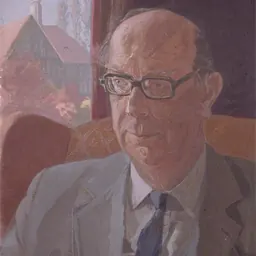
In the novel Steppenwolf by Hermann Hesse, Bechet was the inspiration for the character "Pablo". It is written about on the Philip Larkin Society website.
Van Morrison mentions Sidney Bechet in the song "See Me Through Part II (Just A Closer Walk With Thee)" from the 1990 album Hymns to the Silence: "...Sidney Bechet on Sunday afternoons in winter/Sidney Bechet, Sunday afternoons in winter..."
In Antibes, France, a small one-block park is named Sidney Bechet Square in his honor. The park contains a monument with a bust of Bechet and a plaque that reads, "To Sidney BECHET, one of the world's greatest jazz musicians, so honored by his new home. - Sidney J. BARTHELEMY, Mayor of New Orleans, April 16, 1994."
A fictionalized Sidney Bechet appears in two episodes of George Lucas's The Young Indiana Jones Chronicles portrayed by Jeffrey Wright.
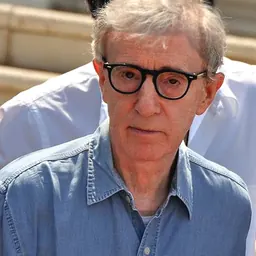
Additionally, in an interview with Woody Allen, when asked what "dead person he would like to have dinner with", he responded, "... I guess maybe Sidney Bechet." Bechet continues to live on in the movies of Allen.
Personal life Bechet was Catholic.
Bechet was known for having an abrasive attitude, which has been compared to that of Coleman Hawkins. They were both incredibly sure of their relative importance in the music industry during a time in which jazz was losing popularity. They were stubborn and lacked patience with younger artists with less experience or knowledge of the jazz industry. Bechet was inducted into the Big Band and Jazz Hall of Fame in 1983.
Discography
Singles "Texas Moaner Blues", with Louis Armstrong, 1924 "Cake Walkin' Babies from Home", with Red Onion Jazz Babies, 1925 "Got the Bench, Got the Park (But I Haven't Got You)", 1930 "Blues in Thirds", 1940 "Dear Old Southland", 1940 "Egyptian Fantasy", 1941 "Muskrat Ramble", 1944 "Blue Horizon", 1944 "Dutch Swing College Blues", 1954 "Kansas City Man Blues", 1954 French Movies, 2014
Movies
Bechet was featured in three films and played a jazz musician.
Série noire (1955) L'inspecteur connaît la musique (1956) Ah! Quelle équipe (1957)
Don’t just read it —
keep it.
Full-length biographies made to live with: read them, listen on the way to work, watch them tonight.
- E-book
- Audio
- Video
Instant download · yours to keep · every purchase keeps this site free
Important facts
People in Sidney Bechet's life
Named in this biography and alive at the same time






Related people
Same field, nearest in time




Contemporaries
People whose lives overlapped Sidney Bechet's

Frequently asked questions
Who was Sidney Bechet?
American jazz musician
When was Sidney Bechet born?
Sidney Bechet was born on 14 May 1897 in New Orleans.
When did Sidney Bechet die?
Sidney Bechet died on 14 May 1959 in Garches.
What was Sidney Bechet's occupation?
Sidney Bechet was a composer, clarinetist, saxophonist, jazz musician, actor and musician.
What nationality was Sidney Bechet?
Sidney Bechet was American.
Sources & further reading
Cite this page
APA: Biography.guide. (2026). Sidney Bechet. https://biography.guide/sidney-bechet/
MLA: "Sidney Bechet." Biography.guide, https://biography.guide/sidney-bechet/.
Chicago: "Sidney Bechet." Biography.guide. https://biography.guide/sidney-bechet/.
Data last updated: 2026-09-25 · Spot an error? Report a correction.
Page generated 2026-09-27 05:13 UTC