
About Freddie Keppard
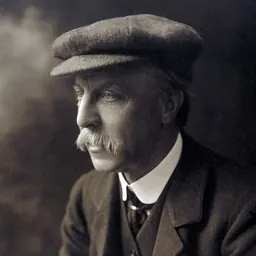
Lived 1889 – 1933 (aged 44). Freddie Keppard was an American jazz musician, cornetist and cornettist.
Freddie Keppard (sometimes rendered as Freddy Keppard; February 27, 1890 – July 15, 1933) was an American jazz cornetist who once held the title of "King" in the New Orleans jazz scene. This title was previously held by Buddy Bolden and succeeded by Joe Oliver.
Early life and career in New Orleans Keppard (pronounced in the French fashion, with relatively even accentuation and a silent d) was born in the Creole of Color community of downtown New Orleans, Louisiana.
As such, Keppard did not receive any formal musical training and may have been a non-reader who, instead of reading arrangements, most likely learned all of his parts by ear and used his powerful and imaginative abilities to improvise parts that were even better.
Freddie played violin, mandolin, and accordion before switching to cornet. By the time he was ten years old, Freddie had already learned to play mandolin and was performing in a duo with Louis around their neighborhood. He did not begin playing cornet until he was sixteen.
Keppard, who signed one photograph of himself with a caption describing himself as the "star cornetist" of the "Creole Ragtime Band," probably considered himself the star of the Original Creole Orchestra. Although he was the youngest member of the band, he is perhaps the most well-known of all of its members and is more often mentioned in histories of jazz. This is most likely because he was one of the few members to make surviving recordings. Because of his relative fame compared to the other band members, many assume that the Creole Band was led by Keppard. There is, however, no evidence that Keppard played any major role in the organization of the band (planning tours and events, choosing songs for the repertoire, signing contracts, etc.). As such, Bill Johnson was most likely the leader of the group. While playing a successful engagement in New York City in 1915, the band was offered a chance to record for the Victor Talking Machine Company. This would probably have been the first jazz recording. An often repeated story says that Keppard didn't want to record because then everyone else could "steal his stuff." This fear, however, was not too far-fetched if we think forward to the Alligators in Chicago taking King Olivers' material, such as in the case of the recording of Oliver's "Eccentric" by the New Orleans Rhythm Kings. Another well known story is that he was so worried about being copied that he sometimes played with a handkerchief over his hand to conceal his fingering. Keppard's famous tendency to hide his fingerings during performances, however, was most likely a publicity stunt intended only to amuse the crowd. After all, a real musician would steal by ear and not by eye. The reminiscences of the other members of the Creole Orchestra reveal that another factor was that the Victor representative had asked them to make a "test recording" without pay. The band balked, fearing it was a ploy to have them make records without being paid. Another popular rumor which traveled through some of the New York jazz circles for some time also suggested that Keppard had refused to record because he had been afraid of being cheated by the record company and had demanded the same fees as that of the Victor Company's highest paid and best-selling artist of the time, Enrico Caruso.
Don Pasqual, who played reed instruments for Doc Cook for some time, had much to say about Keppard's contributions to Doc Cook's band:
Keppard really gave the band a lift and then we really went to town. Later, Andrew Hilaire and Johnny St. Cyr joined the band. Doc Cook seldom wrote out any special parts for Freddie Keppard but would just give him his head and while we were playing the arrangements Keppard would do anything he wanted.|Don Pasqual
In the Victor Company files, there is a listing for an unnumbered test recording for a song called "Tack 'em Down" made by the "Creole Jass Band" on December 2, 1918 nearly two years after Keppard's first performance in New York. This recording may have been Keppard and the Original Creole Band. All the recordings quoted above are contained in the Retrieval CD at bottom.
Several musicians with clear memories of Buddy Bolden said that Freddie Keppard sounded the most like Bolden of anyone who recorded. This is how many jazz historians propose that Keppard got his fame but also how he lost it. Keppard did not have a sound of his own and he came up in between Buddy, Oliver, and Armstrong. Keppard was extremely talented but was not unique. Others, like Lawrence Gushee, insist that Keppard did have a unique approach to playing the cornet, which simply became overshadowed by Louis Armstrong's powerful influence. Gushee describes Keppard as "frequently on top of the beat or [anticipating] it," making his "phrasing excitable, even tense." Whereas "Armstrong seems to favor extended four or eight-measure structure, Keppard [built] his units out of shorter modules" underscored by vibrato. Gushee also argues that Keppard used a much more "rapid vibrato, more like an ornament, that could be used anyplace in a phrase."
Many contemporaries said that either Keppard was past his prime when he recorded or that his recordings do not do him justice, as Keppard's health was already declining by the time he recorded in 1926. While Oliver had more admirers, to some extent preference was a matter of taste. Jelly Roll Morton, Lil Hardin Armstrong, and Wellman Braud all thought Keppard superior to Oliver.
Keppard suffered from alcoholism and tuberculosis in his final years, although he continued performing despite illnesses. He was still playing loud in the early 1930s in Chicago, although, according to contemporaries, no longer very well. By 1932, Keppard was restricted in his employment most likely due to his continued physical degradation. According to medical records, he was unable to work by December 1932. He died in Chicago in 1933, largely forgotten. However, trumpet player Bob Shoffner recalled that in 1931 when Louis Armstrong's band had been preparing to leave Chicago on a tour bus, Armstrong instructed the bus driver to stop in front of Keppard's apartment. The band went up the stairs to offer their greetings to the "old-timer."
Don’t just read it —
keep it.
Full-length biographies made to live with: read them, listen on the way to work, watch them tonight.
- E-book
- Audio
- Video
Instant download · yours to keep · every purchase keeps this site free
Important facts
People in Freddie Keppard's life
Named in this biography and alive at the same time


Related people
Same field, nearest in time



Contemporaries
People whose lives overlapped Freddie Keppard's

Frequently asked questions
Who was Freddie Keppard?
American jazz Cornettist (1889-1933)
When was Freddie Keppard born?
Freddie Keppard was born on 27 February 1889 in New Orleans.
When did Freddie Keppard die?
Freddie Keppard died on 15 July 1933 in Chicago.
What was Freddie Keppard's occupation?
Freddie Keppard was a jazz musician, cornetist and cornettist.
What nationality was Freddie Keppard?
Freddie Keppard was American.
Sources & further reading
Cite this page
APA: Biography.guide. (2026). Freddie Keppard. https://biography.guide/freddie-keppard/
MLA: "Freddie Keppard." Biography.guide, https://biography.guide/freddie-keppard/.
Chicago: "Freddie Keppard." Biography.guide. https://biography.guide/freddie-keppard/.
Data last updated: 2026-09-20 · Spot an error? Report a correction.
Page generated 2026-09-27 05:30 UTC