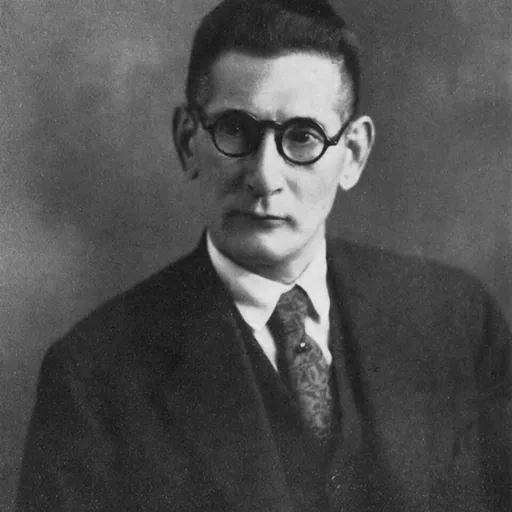
About Shūmei Ōkawa
Lived 1886 – 1957 (aged 71). Shūmei Ōkawa was a Japanese linguist, historian, translator, writer, university teacher and journalist, known for Kita Ikki, March Incident and October Incident.
was a Japanese nationalist and writer, known for his publications on Japanese history, philosophy of religion, Indian philosophy, and colonialism.
Ōkawa advocated a form of Pan-Asianism which promoted Asian solidarity as a cover for Japanese imperialism and beliefs in Japanese racial supremacy.
He briefly flirted with socialism in his college years, but in the summer of 1913 he read a copy of Sir Henry Cotton's New India, or India in Transition (1886, revised 1905) which dealt with the contemporary political situation. After reading this book, Ōkawa abandoned "complete cosmopolitanism" (sekaijin) for Pan-Asianism. Later that year articles by Anagarika Dharmapala and Maulavi Barkatullah appeared in the magazine Michi, published by Dōkai, a religious organization in which Ōkawa was later to play a prominent part. While he studied, he briefly housed the Indian independence leader Rash Behari Bose.
After years of study of foreign philosophies, he became increasingly convinced that the solution to Japan's social and political problems lay in an alliance with Asian independence movements, a revival of pre-modern Japanese philosophy, and a renewed emphasis on the kokutai principles.
Nationalist ideologue In 1918, Ōkawa went to work for the South Manchurian Railway Company, under its East Asian Research Bureau. Together with Ikki Kita he founded the nationalist discussion group and political club Yūzonsha. In the 1920s, he became an instructor of history and colonial policy at Takushoku University, where he was also active in the creation of anti-capitalist and nationalist student groups. Meanwhile, he introduced Rudolf Steiner's theory of social threefolding to Japan. He developed a friendship with Aikido founder Morihei Ueshiba during this time period.
In 1922, he published Fukkô Ajia no Shomondai in 1922. Ōkawa hailed the movements started by Mahatma Gandhi in India and Mustafa Kemal in Turkey as new types of Asian revival.
Ōkawa believed in a narrative of history based on a dichotomy between Eastern and Western civilizations, writing that "world history, in its true sense of the word, is nothing but a chronicle of antagonism, struggle and unification between the Orient and the Occident."
Coup attempts In the early 1930s, Ōkawa was involved in a number of attempted coups d'état by the Japanese military.
During the March Incident, Ōkawa was a leader in attempting to foment a riot outside the Diet Building in Tokyo, which was intended to initiate the coup. When the riot failed to occur, Ōkawa wrote a letter to General Kazushige Ugaki explaining the plot and asking for his cooperation. Ugaki declined, but when the plotters were arrested after making another attempt at the riot, he intervened to hush up the whole collapsed affair and ensured that the plotters received very mild punishments. For his role in the March incident, Ōkawa was sentenced to five years in prison in 1935. Released after only two years, he briefly re-joined the South Manchurian Railway Company before accepting a post as a professor at Hosei University in 1939.
Tokyo War Crimes Tribunal Ōkawa (seated in middle) in court. He had just slapped Tojo's (seated in front) head and is being restrained by a guard (standing behind).
In the Tokyo tribunal after the end of World War II, Ōkawa was prosecuted as a class-A war criminal based on his role as an ideologue. and said he had long agitated for a war between Japan and the West. For example, in his 1924 book Asia, Europe, and Japan, he had predicted an inevitable war to be fought between Eastern and Western civilizations, with Japan and the United States as the respective leaders, and discussed what he later described as "the sublime mission of Japan in the coming world war".
During the trial, Ōkawa behaved erratically, including dressing in pajamas, sitting barefoot, and slapping the head of former prime minister Hideki Tōjō while shouting in German "Inder! Kommen Sie!" (Come, Indian!). He also at one point shouted "This is act one of the comedy!" U.S. Army psychiatrist Daniel Jaffe examined him and reported that he was unfit to stand trial. The presiding judge Sir William Webb concluded that he was mentally ill and dropped the case against him. Some thought he was feigning madness. Ōkawa's writings were used by the prosecution and the final verdict as evidence for the crime of conspiracy to commit aggression. He was released from hospital in 1948, shortly after the end of the trial. He spent the final years of his life writing a memoir, Anraku no Mon.
In October 1957, Prime Minister of India Jawaharlal Nehru requested to meet with him during a brief visit to Japan. The invitation was delivered to Ōkawa's house by an Indian Embassy official, who found that Ōkawa was already on his deathbed and was unable to leave the house. He died on 24 December 1957.
Major publications Some Issues in Re-Emerging Asia (復興亜細亜の諸問題), 1922. A Study of the Japanese Spirit (日本精神研究), 1924. A Study of Chartered Colonisation Companies (特許植民会社制度研究), 1927. National History (国史読本), 1931. 2600 Years of the Japanese History (日本二千六百年史), 1939. History of Anglo-American Aggression in East Asia (米英東亜侵略史), 1941. Best-seller in Japan during WW2 Introduction to Islam (回教概論), 1942. Quran (Japanese translation), 1950.
Don’t just read it —
keep it.
Full-length biographies made to live with: read them, listen on the way to work, watch them tonight.
- E-book
- Audio
- Video
Instant download · yours to keep · every purchase keeps this site free
Important facts
People in Shūmei Ōkawa's life
Named in this biography and alive at the same time




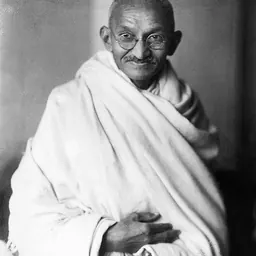
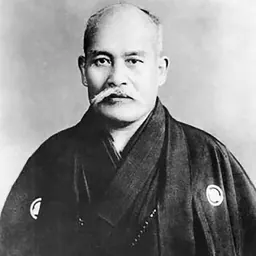
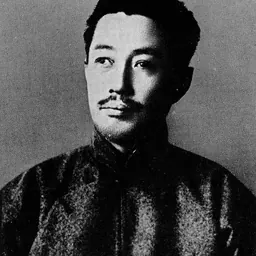
Related people
Same field, nearest in time

Contemporaries
People whose lives overlapped Shūmei Ōkawa's



Frequently asked questions
Who was Shūmei Ōkawa?
Japanese nationalist intellectual (1886–1957)
When was Shūmei Ōkawa born?
Shūmei Ōkawa was born on 6 December 1886 in Sakata.
When did Shūmei Ōkawa die?
Shūmei Ōkawa died on 24 December 1957 in Tokyo, Kominka Yamajū-tei.
What was Shūmei Ōkawa's occupation?
Shūmei Ōkawa was a linguist, historian, translator, writer, university teacher and journalist.
What was Shūmei Ōkawa known for?
Shūmei Ōkawa was known for Kita Ikki, March Incident and October Incident.
What nationality was Shūmei Ōkawa?
Shūmei Ōkawa was Japanese.
Sources & further reading
Cite this page
APA: Biography.guide. (2026). Shūmei Ōkawa. https://biography.guide/shumei-okawa/
MLA: "Shūmei Ōkawa." Biography.guide, https://biography.guide/shumei-okawa/.
Chicago: "Shūmei Ōkawa." Biography.guide. https://biography.guide/shumei-okawa/.
Data last updated: 2026-09-23 · Spot an error? Report a correction.
Portrait: Wikimedia Commons · author & licence
Page generated 2026-09-27 05:07 UTC