
About Shriram Sharma
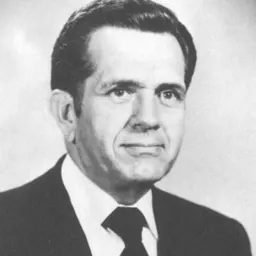
Lived 1911 – 1990 (aged 78). Shriram Sharma was an Indian religious leader, social reformer, indologist, philosopher and writer.
Shriram Sharma (20 September 1911 - 2 June 1990), also known as Acharya, was a renowned yugrishi who devoted his life to elevating human consciousness, culture, and civilization through the synthesis of science and spirituality. He founded the All World Gayatri Pariwar and the Brahmvarchas Shodh Sansthan.
His spiritual journey commenced at the age of fifteen, during which he completed 24 Mahapurushcharans—each involving the rhythmic recitation (japa) of 2.4 million Gayatri mantras. He subsequently played an active role in India's independence movement. Acharya also proposed the 100-point program of Yug Nirman Yojna (Campaign for Era Transformation) for societal upliftment and reformation of the era.
His endeavors encompassed extensive research on the syncretic relationships between science and spirituality, the revival of Rishi traditions, and the revelation of the philosophy and science underlying the Gayatri Mantra and Yajna. He supervised large-scale Gayatri sadhana and Yajna, interpreted entire Vedic scriptures, and authored over 3,000 books on various aspects of human life. His vision is encapsulated in the phrase, "Hum badlenge, Yug badlega. Hum sudhrenge, Yug sudhrega" ("We will change, the era will change. We will improve, the era will improve"), which continues to inspire successive generations.
Life
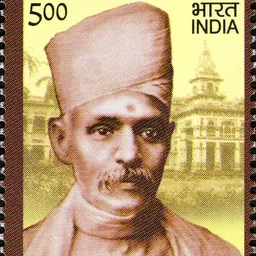
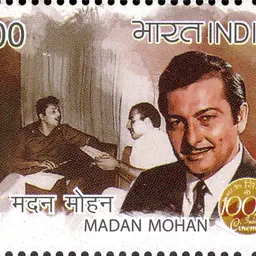
Early childhood Shriram Sharma Acharya, revered as "Gurudev" by his followers, was born in Anwalkheda village in the Agra district of Uttar Pradesh, India, on Ashwin Krishna Trayodashi Vikrami Samvat 1967 (September 20, 1911). He was the son of Pandit Rupkishore Sharma and Dhankunwari Devi. His early concern for the welfare of the underprivileged was evident even in his childhood; for example, as a young boy, he cared for an elderly woman afflicted with leprosy, despite disapproval from his family and society. His spiritual inclination also emerged at an early age. At the age of nine, he was initiated into the Gayatri mantra and underwent the sacred thread ceremony (yajnopavit), performed by Pandit Madan Mohan Malaviya.
First audience with Guru
The vision of “Thought Revolution Movement”
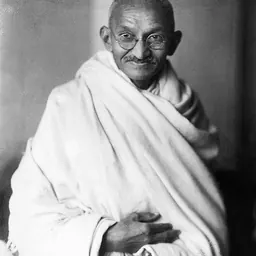
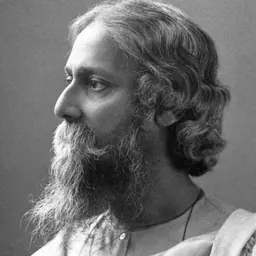
In 1933, Shriram embarked on extensive travels across India, marking a new phase in his life. During these journeys, he visited Shantiniketan to meet Rishivar Rabindranath Tagore, Arunachalam to meet Maharshi Ramana, Pondicherry to meet Sri Aurobindo, and Sabarmati Ashram to meet Mahatma Gandhi. (translated from the Hindi text) “...All the qualities of God are filled within humans. However, just as a lion cub living among sheep begins to see himself as a sheep, similarly, the condition of humanity has been ensnared by the influence of Maya (illusion). The mission of the Akhand Jyoti is for every lion to recognize his true nature...” This marked the beginning of the "Vichar Kranti Abhiyan" (translated as "Thought Revolution Movement"). The initiative was designed to gradually enlighten minds, transform attitudes, and elevate human psychology to a higher spiritual plane. In addition to the magazine, he advanced the movement through his writings. His first book, titled "Main Kya Hoon?" (translated as "What Am I?"), was intended to guide seekers in exploring the reality of the ‘Self’ through specific disciplines of meditation and contemplation.“There is only one highway to true happiness and peace in life, and that is ‘Self-Knowledge’.” In 1943, he married Bhagwati Devi, and together they devoted themselves to the mission of spiritual upliftment for humankind.
Following his second Himalayan journey, Acharya introduced the Yug Nirman Yojana manifesto and Yug Nirman Satsankalpa (Solemn Pledge of Reconstruction of Era) in 1963, declaring, "Hum badlenge, Yug badlega. Hum sudhrenge, Yug sudhrega.”, which translates as: “(If) I will Change Myself, (then) The Era will Change. (If) I will Correct Myself, (then) The World will Correct.” Today, the Global Gayatri Pariwar Fraternity (AWGP) comprises approximately 150 million members and 5,000 centers worldwide.
Rishi Traditions During his third journey to the Himalayas, Shriram Sharma Acharya received significant guidance regarding the revival of Rishi traditions. He pioneered efforts to restore the teachings and practices of various Vedic-era Rishis. By embracing the knowledge and wisdom of India’s divine cultural heritage—which has historically influenced civilizations worldwide—he re-established the foundational elements of Indian culture and its divine roots in a contemporary scientific context through the activities of the Gayatri Pariwar. Built on the site of Maharishi Vishwamitra’s penance, Shantikunj functions as a spiritual center for moral and spiritual awakening. There, he initiated the revival of ancient spiritual disciplines that were hallmarks of Indian culture, organizing sessions such as Prana-repatriation, Chandrayan, Kalp and Sanjeevani sadhana, Jeevan-sadhana, Yugshilpi sessions, etc., as well as conducting training programs for women's empowerment. In 2002, his followers realized this vision by establishing “Dev Sanskriti Vishwavidyalaya (University)” in Haridwar, India.
Sadhana for Era Transformation After returning from his fourth and final Himalayan journey, Shriram Sharma Acharya initiated the practice of Sukshmikaran sadhana (the peak of spiritual efforts) on Rama Navami in 1984 under the guidance of his Guru. This practice was intended to (1) purify the atmosphere, (2) refine the subtle environment, (3) usher in a new era, (4) neutralize the threat of mass destruction, and (5) create and develop divine humans (Dev-manav). The practice was successfully completed on Vasant Panchami in 1986. During Mahakumbh (Kumbh Mela) of 1986, he invoked and consecrated the seven sages—Bhagiratha, Parashurama, Charaka, Valmiki, Yajnavalkya, Vishwamitra and Vasishtha—at Shantikunj.
Mahaprayana In 1985, Shriram Sharma Acharya entered a state of heightened subtlety and announced his intention to conclude his activities within five years. On Gayatri Jayanti, June 2, 1990, he voluntarily shed his physical body while chanting the Gayatri mantra. Additionally, he reinstated the practice of yajna, along with its philosophical teachings and scientific principles, making them accessible to all. (translated from the Hindi text) “The essence of Indian culture is rooted in Gayatri, the source of righteous knowledge. Yajna is considered the father of Indian spirituality. Gayatri symbolizes virtuous thoughts, while Yajna represents righteous actions. Together, they promote goodwill and virtuous conduct, serving as pathways to global peace and human welfare, thereby enhancing the prospects for the well-being of all living beings.”
Rights of Women to the Gayatri Mantra In ancient India, women were allowed to recite Vedic hymns; however, during the medieval period, they were largely considered unfit for such recitations, a view supported by many prominent religious leaders. Acharya reinstated their participation by initiating them into the Gayatri Mantra and conducting their yajnopavit ceremony, enabling them to serve as priests. Despite facing strong opposition from orthodox religious leaders, he successfully formed a group of Brahmin women (Brahmavadini) across the country. This movement contributed to the widespread recitation of the Gayatri Mantra by millions of women today.
In Gayatri Mahavijnan, he cited various scriptures, including the Vedas, Upanishads, Puranas, Brahmanas, and Smritis, to support the inclusion of women in Vedic recitations and rituals, affirming their right to chant the Gayatri Mantra.
Revival of Rishi traditions Shriram Sharma Acharya is renowned for restoring the lost legacy of the Rishis at Gayatri Tirth – Shantikunj. and made yoga practices like hathayoga, asana, and pranayama accessible for health and well-being.
Scientific spirituality Shriram Sharma Acharya was convinced that modern individuals would only accept the values of ancient spirituality if they were shown to be scientifically valid for the welfare of both individuals and society. To support this goal, he established the Brahmvarchas Shodh Sansthan, which continues its work through the Dev Sanskriti Vishwavidyalaya. and Yajnopathy, total psychology, the science of mantra and its therapeutic applications, the philosophy and science of yoga, yajna, sadhana, mantra, tantra, and spirituality, Gayatri Mahashakti, the latent potential of the human beings, etc.
Writings In this era of intellectual evolution, Pandit Shriram Sharma Acharya chose writing as a key means to combat the prevailing evil tendencies and blind faith in society. He offered practical solutions to numerous contemporary issues. Gayatri Mahavidhya, scientific spirituality, life management, holistic health, self, family, social development, Indian culture, transformation of the era, women, etc. His complete works are compiled in 108 large volumes called Vaangmaya. The magazine focuses on the practical aspects of spirituality in daily life, aiming to enhance well-being and promote the integration of science with spirituality. Subsequently, he launched several other publications, including Yug Nirman Yojana in 1964 and Pragya Abhiyaan Pakshik, both of which emphasize family issues, social affairs, and women's empowerment.
1. Firmly believing in the Omnipresence of God and His Unfailing justice, we pledge to abide by the essential disciplines of divine principles (Dharma).
2. Regarding the body as the Temple of God, we will be ever watchful to keep it healthy and full of vitality by adopting the principles of self-restraint, order, and harmony in our daily lives.
3. With a view to keeping our minds free from the inrush of negative thoughts and emotions, we will adopt a regular program of study of ennobling and inspiring literature (swadhyaya) and strive to be in the company of saints/noble people (satsang).
4. We will vigilantly exercise restraint over the misuse of our senses, thoughts, emotions, time and resources (saiyama).
5. We will consider ourselves inseparable parts of the society and will see our good in the good of all.
6. We will abide by the basic moral code, refrain from wrongdoing and will discharge our duties as citizens committed to the well-being of the society.
7. We will earnestly and firmly imbibe in our lives the virtues of Wisdom, Honesty, Responsibility and Courage.
8. We will constantly and sincerely endeavor to create an environment of loving kindness, cleanliness, simplicity, and goodwill.
9. We will prefer failure while adhering to basic moral principles as against success obtained through unfair and foul means.
10. We will never evaluate a person's greatness by his worldly success, talents, and riches but by his righteous conduct and thoughts.
11. We will never do unto others what we would not like to be done unto us.
12. Men and women while interacting with each other will have feelings of mutual respect and understanding based on purity of thoughts and emotions.
13. We will regularly and religiously contribute a portion of our time, talents and resources for spreading nobility and righteousness in the world.
14. We will give precedence to wisdom over blind traditions.
15. We will actively involve ourselves in bringing together people of goodwill, in resisting evil and injustice, and in promoting reformation.
16. We will remain committed to the principles of national unity and equality of all human beings. In our conduct, we will not make any discrimination amongst people based on caste, creed, color, religion, region, language, or gender.
17. We firmly believe that each human being is the maker of his/her own destiny. With this conviction, we will uplift and transform ourselves and help others in doing so. We believe the world will then automatically change for the better.
18. We have complete faith in the dictum: 'We will change – the era will change', 'We will improve – the era will improve'.
Awards and Recognitions – Recognized as “Light of India” in All Religions' Meeting in Ludhiana, India in 1964.
– In 1995, former Prime Minister P. V. Narasimha Rao unveiled a memorial pillar at his birthplace in Awalkheda, Agra.
– As a member of the National Committee for Ayurveda Development in India, he was responsible for training health workers at Shantikunj.
– Shantikunj is recognized by the Government of India as a training center for social education, personality development, and scout guiding.
– A National Waterway Project training center was established at Shantikunj, where he was tasked with conducting programs for land and water conservation across 3600 blocks in 350 districts nationwide.
– Consultant for Natural Disaster Management.
Don’t just read it —
keep it.
Full-length biographies made to live with: read them, listen on the way to work, watch them tonight.
- E-book
- Audio
- Video
Instant download · yours to keep · every purchase keeps this site free
Important facts
People in Shriram Sharma's life
Named in this biography and alive at the same time

Related people
Same field, nearest in time


Contemporaries
People whose lives overlapped Shriram Sharma's






Frequently asked questions
Who was Shriram Sharma?
Indian Social Reformer (1911-1990)
When was Shriram Sharma born?
Shriram Sharma was born on 20 September 1911 in Agra district.
When did Shriram Sharma die?
Shriram Sharma died on 2 June 1990 in Haridwar, Shantikunj, Uttrakhand.
What was Shriram Sharma's occupation?
Shriram Sharma was a religious leader, social reformer, indologist, philosopher and writer.
What nationality was Shriram Sharma?
Shriram Sharma was Indian.
Sources & further reading
Cite this page
APA: Biography.guide. (2026). Shriram Sharma. https://biography.guide/shriram-sharma/
MLA: "Shriram Sharma." Biography.guide, https://biography.guide/shriram-sharma/.
Chicago: "Shriram Sharma." Biography.guide. https://biography.guide/shriram-sharma/.
Data last updated: 2026-09-20 · Spot an error? Report a correction.
Page generated 2026-09-27 05:17 UTC