
About Shohei Imamura
Lived 1926 – 2006 (aged 79). Shohei Imamura was a Japanese screenwriter, film director, film producer, teacher and director.
was a Japanese film director. His main interest as a filmmaker lay in the depiction of the lower strata of Japanese society. A key figure in the Japanese New Wave, who continued working into the 21st century, Imamura is the only director from Japan to win two Palme d'Or awards, doing so with The Ballad of Narayama and The Eel (1997).
Biography Early life Imamura was born to an upper-middle-class doctor's family in Tokyo in 1926. For a short time following the end of the war, Imamura participated in the black market selling cigarettes and liquor. He studied Western history at Waseda University, but spent more time participating in theatrical and political activities. While Imamura's films were to have a quite different style from Ozu's, Imamura, like Ozu, was to focus on what he saw as particularly Japanese elements of society in his films. "I've always wanted to ask questions about the Japanese, because it's the only people I'm qualified to describe," he said. He expressed surprise that his films were appreciated overseas, even doubting that they could be understood.
Studio director Imamura left Shochiku in 1954 to join the Nikkatsu studios, where he worked as an assistant director to Yūzō Kawashima. According to Donald Richie, Imamura shared with Kawashima an interest in depicting the "real" Japan with its "uncivilized", amoral protagonists, in opposition to the "official" version as depicted in the films of Ozu, Mizoguchi Kenji, and late career Kurosawa. He also co-wrote the screenplay to Kawashima's Sun in the Last Days of the Shogunate, and much later edited a book about Kawashima, entitled Sayonara dake ga jinsei da.
In 1958, Imamura made his directorial debut at Nikkatsu, Stolen Desire, about a travelling theater troupe which combines kabuki with striptease, a film which, according to Jonathan Rosenbaum, "characteristically finds some vitality in vulgarity". He continued to direct films the studio had assigned him to, including Nishi Ginza Station, a comedy based on a Frankie Nagai pop song, and the black comedy Endless Desire. These three "were studio assignments, and have rarely been screened outside of Japan". and Imamura's overrunning production time and costs, Nikkatsu did not allow Imamura to direct another project for two years, forcing him to concentrate on screenwriting. In 1967, he followed with the pseudo-documentary A Man Vanishes,
History of Postwar Japan as Told by a Bar Hostess and Karayuki-san, the Making of a Prostitute were two of these projects, both focusing on one of his favorite themes: Strong women who survive on the periphery of Japanese society. Two others followed Japanese ex-soldiers in Malaysia and Thailand reluctant to returning home, and speaking openly about their past war crimes on camera.
Imamura died on 30 May 2006, aged 79.
Themes Seeing himself as a cultural anthropologist, Imamura stated, "I like to make messy films", and "I am interested in the relationship of the lower part of the human body and the lower part of the social structure on which the reality of daily Japanese life supports itself ...I ask myself what differentiates humans from other animals. What is a human being? I look for the answer by continuing to make films".
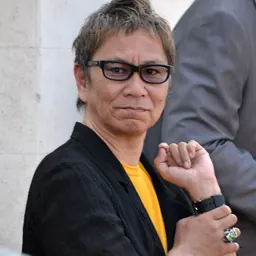
Legacy Imamura founded the Japan Institute of the Moving Image as the Yokohama Vocational School of Broadcast and Film (Yokohama Hōsō Eiga Senmon Gakkō) in 1975. While a student at this school, director Takashi Miike was given his first film credit as assistant director on Imamura's 1987 film Zegen.
Filmography (selected) All films are as director except where otherwise noted. Year Title Director Writer Producer Notes 1956 The Balloon Also second assistant director 1957 Sun in the Last Days of the Shogunate Also assistant director 1958 Stolen Desire Nishi Ginza Station Endless Desire 1959 My Second Brother 1961 Pigs and Battleships 1962 Foundry Town 1963 Samurai no ko Keirin shônin gyôjyôki The Insect Woman 1964 Unholy Desire 1966 The Pornographers 1967 A Man Vanishes 1968 Neon taheiki Higashi Shinakai Profound Desires of the Gods East China Sea 1970 History of Postwar Japan as Told by a Bar Hostess Television documentary 1971 In Search of the Unreturned Soldiers in Malaysia Television documentary In Search of the Unreturned Soldiers in Thailand Television documentary 1972 The Pirates of Bubuan Television documentary 1973 Outlaw-Matsu Comes Home Television documentary 1975 Karayuki-san, the Making of a Prostitute Television documentary 1976 The Youth Killer 1979 Vengeance Is Mine Japan Academy Film Prize for Picture of the YearJapan Academy Film Prize for Director of the Year 1981 Eijanaika 1983 The Ballad of Narayama Palme d'OrJapan Academy Film Prize for Picture of the Year 1986 Have You Seen the Barefoot God? 1987 The Emperor's Naked Army Marches On Documentary Zegen 1989 Black Rain Japan Academy Film Prize for Picture of the YearJapan Academy Film Prize for Director of the YearTechnical Grand Prize of the Cannes Film Festival 1997 The Eel Palme d'OrJapan Academy Film Prize for Director of the Year 1998 Dr. Akagi 2001 Warm Water Under a Red Bridge 2002 11'09"01 September 11 Anthology film episode "Japan"
Don’t just read it —
keep it.
Full-length biographies made to live with: read them, listen on the way to work, watch them tonight.
- E-book
- Audio
- Video
Instant download · yours to keep · every purchase keeps this site free
Important facts
People in Shohei Imamura's life
Named in this biography and alive at the same time




Related people
Same field, nearest in time


Contemporaries
People whose lives overlapped Shohei Imamura's



Frequently asked questions
Who was Shohei Imamura?
Japanese film director (1926-2006)
When was Shohei Imamura born?
Shohei Imamura was born on 15 September 1926 in Tokyo.
When did Shohei Imamura die?
Shohei Imamura died on 30 May 2006 in Tokyo.
What was Shohei Imamura's occupation?
Shohei Imamura was a screenwriter, film director, film producer, teacher and director.
What nationality was Shohei Imamura?
Shohei Imamura was Japanese.
Sources & further reading
Cite this page
APA: Biography.guide. (2026). Shohei Imamura. https://biography.guide/shohei-imamura/
MLA: "Shohei Imamura." Biography.guide, https://biography.guide/shohei-imamura/.
Chicago: "Shohei Imamura." Biography.guide. https://biography.guide/shohei-imamura/.
Data last updated: 2026-09-22 · Spot an error? Report a correction.
Page generated 2026-09-27 05:23 UTC