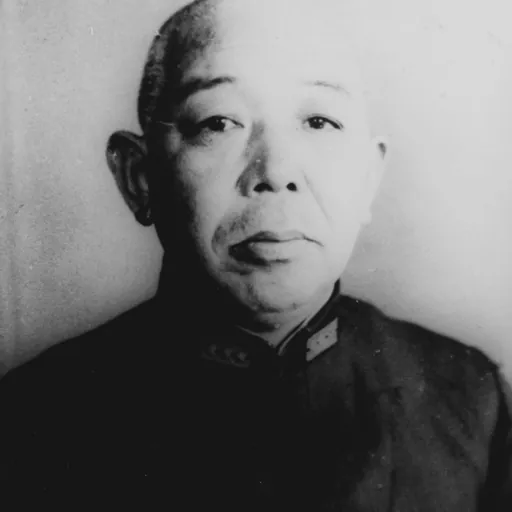
About Shiro Kawase
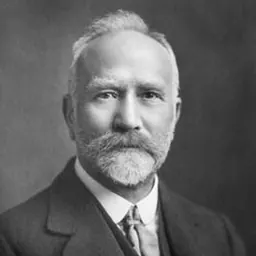
Lived 1889 – 1946 (aged 57). Shiro Kawase was a Japanese military personnel.
was a vice admiral in the Imperial Japanese Navy during World War II. He was a torpedo expert and his extensive experience as a commander of destroyers and destroyer formations made him more knowledgeable about the escort of convoys than most Japanese commanders of his time. He is best known for his command of the 5th Fleet during the latter stages of the Aleutians campaign in the spring and summer of 1943.
Biography
Kawase was born in Okayama Prefecture, Japan, on 7 July 1889. He graduated from the Imperial Japanese Naval Academy on 18 July 1910, ranked 22nd in a class of 149 cadets. By early May 1943, Japan had alerted the troops on Attu that an American invasion of the island was imminent. One of Kawases first priorities as the new fleet commander was to send reinforcements to Attu to aid in defense of the island. However, heavy losses in the Guadalcanal campaign and the ongoing Solomon Islands campaign had forced Japan to divert forces to the defense of the Solomon Islands and New Guinea, and Kawase was forced to inform the island commander, Imperial Japanese Army Colonel Yasuyo Yamasaki, that no reinforcements could arrive until late May, when increased fog in the Aleutians would help a reinforcement convoy avoid detection by American forces and by which time Japanese merchant ships earmarked for the reinforcement operation would have radar installed. Meanwhile, Kawase ordered Yamasaki to hold Attu with the forces he already had.
The Battle of Attu began on 11 May 1943, when the United States Army′s 7th Infantry Division landed on the island. Kawase put to sea from Paramushiro in his flagship, the heavy cruiser , accompanied by a destroyer to rendezvous with the seaplane tender , which was part of a small convoy carrying floatplanes to Attu. In response to Kawases urgent request for more warships with which to oppose the American landings, Combined Fleet commander-in-chief Admiral Mineichi Koga assigned a task force centered around a heavy cruiser and two light cruisers to the 5th Fleet, and it departed Paramushiro on 17 May to rendezvous with Kawase south of the Komandorski Islands. However, Kawase had received reports that the U.S. Navy task force of 40 ships included three battleships and an aircraft carrier, and – not knowing that the American ships were temporarily out of ammunition after providing gunfire support to American troops ashore – he ordered his outnumbered and outgunned task force to loiter west of Attu, hoping for a break that would allow him to get the reinforcements through. He was still circling there on 20 May when Imperial General Headquarters ordered him to attack U.S. Navy forces off Attu; when he responded that his force did not stand a chance against the superior U.S. Navy force around the island, Imperial General Headquarters changed its orders the same day, directing him instead to use submarines to evacuate the Attu garrison. Accordingly, Kawase ordered his submarine force to move toward the island, and on 23 May informed Yamasaki that no reinforcement convoy would arrive and that his troops should prepare to evacuate by submarine.
Plagued by bad weather, Japanese aircraft made their only appearance at Attu on 23 May 1943 when 16 Imperial Japanese Navy Air Service Mitsubishi G4M (Allied reporting name "Betty") bombers made an unsuccessful torpedo attack against American ships offshore, losing nine of their number. On 28 May, Kawase informed Yamasaki that the 5th Fleets submarine force had been recalled because of losses it had suffered to U.S. Navy destroyers, and Attu fell to the Americans on 30 May after the almost complete annihilation of the isolated Japanese garrison.
Kiska, July 1943
The loss of Attu placed American forces in between Paramushiro and Kiska, allowing them to blockade Kiska. United States Army Air Forces (USAAF) aircraft soon began to operate from Attu; USAAF aircraft staging through Attu even made the first airstrike against Paramushiro on 18 July 1943, causing a startled Kawase to wheel his office chair to a window to see what was happening after a string of bombs detonated on a taxiway. The USAAF aircraft on Attu strengthened the blockade of Kiska and made it impossible for Kawase to send supplies or reinforcements to Kiska in surface ships; only his submarine force made resupply runs there, completing 20 such trips by 9 June 1943. Imperial General Headquarters wanted the Kiska garrison withdrawn so that its troops could be employed in the defense of the Kurile Islands, and ordered Kawase to use his submarines to evacuate them. The pace of American operations in the Aleutians suggested that the Allies would invade Kiska by late July 1943, and Kawase doubted that his submarine force – originally 13 submarines, but reduced to eight thanks to combat losses since the Battle of Attu began – could complete the 40 to 50 trips necessary to complete an evacuation by then. By 21 June, when Kawase ordered an end to the submarine evacuation operations, the 5th Fleet had lost three more submarines, and Japanese submarines had managed to evacuate only 820 troops, of whom 300 had died in the sinking of the submarines carrying them.
An American naval bombardment of Kiska on 6 July 1943, the first in nearly a year, convinced Kawase that an American invasion was imminent, and that his submarines could never get the garrison off the island in time; he wrote, "We cannot be...dependent on the submarines any longer...the evacuation has to be completed as soon as possible before mid-July." He decided to gamble on a bold move: Running the American blockade by steaming a surface force to Kiska in what the Japanese designated as Operation Ke-Go. Ordering a screen of submarines to deploy south of Amchitka to cover the surface ships, he placed the commander of Destroyer Squadron 1, Rear Admiral Masatomi Kimura, in command of an evacuation force made up of the light cruisers , , and , ten destroyers, an escort vessel, and an oiler. With Kawase aboard Tama as an observer, the force departed Paramushiro on 21 July 1943 bound for a point south of Kiska, where it would refuel and await fog cover for its run to the island.
Receiving reports on 25 July that a U.S. Navy PBY Catalina flying boat had made radar contact on Japanese ships operating southwest of Attu, a force of U.S. Navy battleships, cruisers, and destroyers set off in search of it and on 26 July opened fire on phantom radar contacts ("pips") south of Amchitka in what became known as the "Battle of the Pips." The American ships then withdrew to refuel and replenish their ammunition. Kawases and Kimuras force was to the south at the time.
Five of the Japanese ships collided with one another on 26 July, and the escort vessel and a destroyer were so badly damaged that they could not make the final run in to Kiska Harbor, but Kawase and Kimura began a high-speed dash to Kiska that day with the remaining ships under cover of an advancing fog front. On 27 July, the Japanese ships steamed right through the area where the American force had "fought" the Battle of the Pips the day before; had the Americans preserved their ammunition supply and remained on station, they would have intercepted Kawases and Kimuras ships. Giving up on awaiting the arrival of a storm before entering port, Kawase ordered the ships forward on 28 July to make the final run in to Kiska. While Tama with Kawase on board waited offshore to cover the operation, Kimura and the remaining ships entered Kiska Harbor, took aboard all 5,183 Japanese troops in an hour, rendezvoused with Tama and Kawase, and made a high-speed dash back out of the area, arriving at Paramushiro on 31 July-1 August 1943.
Assisted by the weather and the American confusion that resulted in the Battle of the Pips, Kawase and Kimura completed Operation KE-GO without firing a shot – except when Abukuma fired a spread of four torpedoes at Little Kiska Island on 26 July in the mistaken belief that it was an enemy ship – or suffering any casualties and without being detected by Allied forces. In fact, American and Canadian forces earmarked for the invasion of Kiska were so unaware of the Japanese evacuation that they continued a heavy air and naval bombardment of the island and dropped propaganda leaflets there until their troops stormed ashore in Operation Cottage on 15 August 1943 expecting heavy combat with the Japanese – only to find the island uninhabited.
1943–1945 With the Aleutians campaign over, the Imperial Japanese Navy abolished the Northern Area Force on 4 August 1943, and replaced it the following day with a new Northeast Area Fleet combining the assets of the 5th Fleet and the 12th Air Fleet under the command of Vice Admiral Michitaro Tozuka. Kawase retained command of the naval surface component of Tozukas fleet, reduced to one heavy cruiser, two light cruisers, two destroyer divisions, seven troopships, and a number of patrol vessels and other small craft.
Kawase began another tour of duty with the Navy General Staff in Tokyo on 15 February 1944, then moved briefly to the position of assistant chief of staff of the Southwest Area Fleet – which coordinated naval, air, and ground forces for the occupation and defense of the Philippine Islands, French Indochina, the Malay Peninsula, and the Netherlands East Indies – on 5 June 1944. He became the commander of the 2nd Southern Expeditionary Fleet, responsible for operations in the Japanese-occupied Netherlands East Indies, on 18 June 1944; and January 1945. Kawase returned to the Navy General Staff on 29 January 1945.
Retirement
Kawase retired from the Navy on 20 March 1945, five months before World War II ended on 15 August 1945.
Death
Kawase died in Japan on 20 July 1946 at the age of 57.
Don’t just read it —
keep it.
Full-length biographies made to live with: read them, listen on the way to work, watch them tonight.
- E-book
- Audio
- Video
Instant download · yours to keep · every purchase keeps this site free
Important facts
People in Shiro Kawase's life
Named in this biography and alive at the same time

Related people
Same field, nearest in time




Contemporaries
People whose lives overlapped Shiro Kawase's



Frequently asked questions
Who was Shiro Kawase?
Japanese admiral (1889-1946)
When was Shiro Kawase born?
Shiro Kawase was born on 7 July 1889 in Japan.
When did Shiro Kawase die?
Shiro Kawase died on 20 July 1946 in Japan.
What was Shiro Kawase's occupation?
Shiro Kawase was a military personnel.
What nationality was Shiro Kawase?
Shiro Kawase was Japanese.
Sources & further reading
Cite this page
APA: Biography.guide. (2026). Shiro Kawase. https://biography.guide/shiro-kawase/
MLA: "Shiro Kawase." Biography.guide, https://biography.guide/shiro-kawase/.
Chicago: "Shiro Kawase." Biography.guide. https://biography.guide/shiro-kawase/.
Data last updated: 2026-09-24 · Spot an error? Report a correction.
Portrait: Wikimedia Commons · author & licence
Page generated 2026-09-27 05:08 UTC