
About Shigeru Mizuki
Lived 1922 – 2015 (aged 93). Shigeru Mizuki was a Japanese mangaka, writer, lyricist, comics creator and draftsperson.
, best known by his pen name , was a Japanese manga artist, illustrator and folklorist. He is best known for popularizing and reviving interest in yōkai, supernatural creatures from Japanese folklore, especially through his most famous series GeGeGe no Kitarō.
Raised in Sakaiminato, Mizuki developed an early interest in art and the supernatural. Drafted during World War II, he lost his left arm in combat, an experience that deeply shaped his later antimilitarist works, including Onward Towards Our Noble Deaths.
Mizuki began his career in kamishibai (paper theater) and transitioned to manga in the late 1950s. His signature style contrasted cartoonish characters with highly detailed backgrounds and grotesque depictions of yōkai. Deeply influenced by oral folklore, especially stories told by a woman he called "Nonnonba," he also engaged in extensive ethnographic research. His works often combined autobiography, history, and fantasy to critique modernization, nationalism, and imperialism. A recipient of numerous awards, his legacy extends into global pop culture through translations, adaptations, and homages in media.
Life
Early life
Mizuki was born Shigeru Mura in the city of Osaka, the second of three sons. He was raised in the coastal city of , where he spent much of his childhood as a 'scrapper': picking fights and participating in childish warfare with the neighbouring children. He displayed from an early age a particular talent for art. During his time in elementary school, Mizuki's teachers were so impressed by his skills with a pencil that they organised an exhibition of his work, and he later went on to be featured in the Mainichi newspaper as something of an artistic prodigy.
However, in 1942, he was drafted into the Imperial Japanese Army and sent to New Britain Island in Papua New Guinea. His wartime experiences affected him greatly, as he contracted malaria, watched friends die from battle wounds and disease, and dealt with other horrors of war. Finally, in an Allied air raid, he was caught in an explosion and lost his left arm. Regarding this life-changing event, a November 30, 2015, NHK announcement of his death showed excerpts of a video interview with him at age 80, in which he said that as the only survivor of his unit, he was 'ordered to die' — a prospect he considered ridiculous. The result of Mizuki's wartime experience was a concurrent sense of pacifism and goodwill. In the same interview, he explained that his yōkai characters can be seen only in times of peace, not war, and that he purposely created these supernatural creatures to be of no specific ethnicity or nationality as a hint of the potential for humanity. While in a Japanese field hospital on Rabaul, he was befriended by the local Tolai tribespeople, who offered him land, a home, and citizenship via marriage to a Tolai woman. Mizuki acknowledged that he considered remaining behind, but was shamed by a military doctor into returning home to Japan first for medical treatment to his arm and to face his parents, which he did reluctantly.
Mizuki married his wife Nunoe in 1960 through an arranged marriage.
The same year, he began to redo a series called , which he had published as a rental manga adaptation of the kamishibai of the same name in 1960. In 1965, it was renamed Hakaba no Kitarō and began serialization in Weekly Shōnen Magazine, before being renamed again to GeGeGe no Kitarō in 1967. He achieved lasting fame with the series. Though early Kitarō stories were dark and political, the franchise eventually achieved widespread popularity and shaped the landscape of Japanese pop culture. The work serves as a counterpoint to revisionist manga like the works of Yoshinori Kobayashi and by extension a way for Mizuki to express his anger at those responsible for all of Japan's victims. From 1989 until 1998 he worked on Showa: A History of Japan, which follows the same approach and conveys Mizuki's view of the Shōwa era through a mixture of personal anecdotes and summaries of major historical events. His character Nezumi Otoko often appears as the narrator in these works.
In addition to his creative output, Mizuki was a prolific folklorist. His 12-volume series Mujara earned him membership in the Japanese Society of Cultural Anthropology. He also advocated for the Shōkeikan archive-museum, which documents the lives of disabled and wounded veterans. A brief explanation about his works also is mentioned in the film. In 2010, NHK broadcast an asadora about his married life, Gegege no Nyōbō, based on his wife's autobiography.
Throughout most of his life, Mizuki's work was relatively unknown outside Japan due to not having been translated. This changed in the 2010s when translations in several European languages of his Showa, Kitaro, Nonnonba and Hitler series began to appear, leading to an increasing interest in Mizuki and his work (and that of his gekiga peers) among Westerners.
On November 30, 2015, Mizuki died of heart failure in a Tokyo hospital after collapsing at his home from a heart attack. His Dharma name is 大満院釋導茂 (Daiman-In-Shaku-Domo). He is buried at in Chofu, Tokyo.
Style and themes
Working style Mizuki's manga career was marked by extraordinary productivity, especially during the 1960s when he employed up to seven or eight assistants. These included future famous artists like Yoshiharu Tsuge and Ryoichi Ikegami. Tsuge, already an accomplished manga creator at the time, contributed ideas and even drew female characters for Mizuki, who struggled with depicting them himself. Assistants lived in rooms Mizuki added to the family house, and his wife would cook for everyone during busy periods.
Mizuki rarely read other people's manga, focusing instead on creating his own and conducting extensive research, even traveling abroad to study supernatural traditions. His studio was filled with books on global folklore, religion, dance, and especially ghosts and yōkai from various cultures.
Mizuki's approach suggests that yōkai are not only folkloric entities but affective, perceptual experiences. Illustrating them becomes a form of emotional expression, requiring what he calls a "yōkai sense". a heightened sensitivity to elusive presences that escape ordinary perception.
One example is the Bake ichō no sei (ばけいちょうのせい, monster ginkgo spirit) or Bake ichō no rei (ばけいちょうのれい), a yōkai described by Mizuki as having a yellow face and limbs, wearing a kimono dyed with inkstick and striking a gong; in Japanese folklore, planting a Ginkgo biloba tree in a home garden is considered inauspicious and said to bring ill fortune. Mizuki draws this monster picture based on the "Kamakura Wakamiya Hachiman Ginkgo Tree Ghost" in Yosa Buson's Buson yōkai emaki.
Critique of modernization and nationalism Mizuki was deeply interested in history, notably producing a multi-volume manga series on the Showa era. He was critical of the postwar modernization and industrialization of Japan, which he felt damaged the natural environment and disrupted traditional human relationships. He lamented the loss of this sensitivity in modern Japan, where industrialization and long work hours extinguished people's ability to perceive the mysterious: "In the past, life was interesting primarily because there was time enough to sense such things as kehai".
Reception and legacy By the 1960s, yōkai were largely regarded as outdated folklore with little relevance to modern urban life. Mizuki's work is credited with reviving public interest in traditional Japanese folklore and reshaping how yōkai are understood in modern culture, most notably through the series Gegege no Kitarō. His influence can be seen in franchises like Pokémon, Digimon, Spirited Away, My Neighbor Totoro, Neon Genesis Evangelion, and Bleach. Artist Takashi Murakami cited Mizuki as a formative influence.
Sakaiminato, Mizuki's childhood home, has a street dedicated to the ghosts and monsters that appear in his stories. One hundred bronze statues of the story's characters line both sides of the road. There is also a museum featuring several of his creations and works.
Mizuki has won numerous awards and accolades for his works, especially GeGeGe no Kitarō. Among these are: 1965 Received Kodansha Jido Manga Award for Terebi-kun (テレビくん?). 1990 Received Kodansha Manga Award for Komikku Shōwa-Shi. 1991 Received Shiju Hōshō Decoration. 1995 For the 6th Annual Tokyo Peace Day, he was awarded with an exhibition of his paintings, entitled "Prayer for Peace: Shigeru Mizuki War Experience Painting Exhibition" 1996 Received Minister of Education Award. 1996 His hometown of Sakaiminato honored him with the Shigeru Mizuki Road, a street decorated with bronze statues of his Ge Ge Ge no Kitaro characters and other designs relating to his works. 2003 Received Kyokujitsu Shō Decoration. 2003 Sakaiminato honored him again with the Shigeru Mizuki International Cultural Center. 2003 Tezuka Osamu Cultural Prize Special Award for his works. 2007 Received the Best Comic Book award for NonNonBā at the Angoulême International Comics Festival. 2008 Asahi Prize for contribution to the manga comic culture through portrayals of the horrors of war. 2010 Received the Person of Cultural Merit award. 2011 Received the commendation. Recognized by Emperor Akihito, Empress Michiko, Crown prince Naruhito, Crown Prince Fumihito, and Crown Princess Kiko at the held by the Imperial Household Agency. 2012 Received the Eisner Award for Onward Towards Our Noble Deaths, in the category Best U.S. Edition of International Material – Asia. The award was shared with translator Zack Davisson
Selected works
Manga
Books Colorized Yōkai Gadan, 1992, published by Iwanami Shinsho Shigeru Mizuki's Yōkai Artbook: Mujara, 1998 Mizuki, Shigeru. 水木しげるの日本妖怪めぐり (Hepburn: Mizuki Shigeru no Nihon Yōkai Meguri, lit. "Shigeru Mizuki's Japanese Ghost Tour".) Rabauru Senki (Memories of Rabaul) Mizuki, Shigeru. "Graphic World of Japanese Phantoms". 講談社, 1985. (4-06-202381-4) Yokaï, Éditions Cornélius, 2017, full color, hardcover, 80 pages. Illustration book. À l'intérieur des yôkai, 2018, bi-color, hardcover, 80 pages. Éditions Cornélius. À l'intérieur de Kitaro, hors d'oeuvre publication, bi-color, 16 pages, 2018. Éditions Cornélius.
Don’t just read it —
keep it.
Full-length biographies made to live with: read them, listen on the way to work, watch them tonight.
- E-book
- Audio
- Video
Instant download · yours to keep · every purchase keeps this site free
Important facts
People in Shigeru Mizuki's life
Named in this biography and alive at the same time
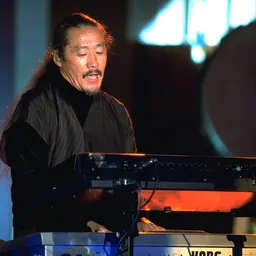
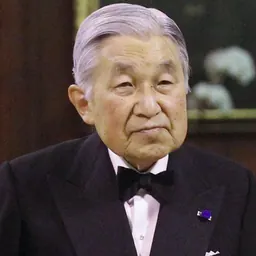



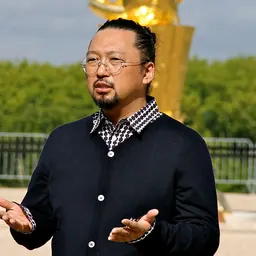


Related people
Same field, nearest in time



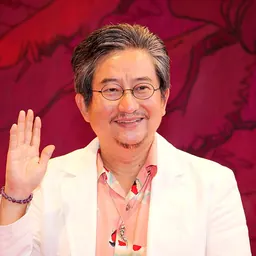


Contemporaries
People whose lives overlapped Shigeru Mizuki's




Frequently asked questions
Who was Shigeru Mizuki?
Japanese manga artist (1922-2015)
When was Shigeru Mizuki born?
Shigeru Mizuki was born on 8 March 1922 in Kohama.
When did Shigeru Mizuki die?
Shigeru Mizuki died on 30 November 2015 in Kyorin University Hospital.
What was Shigeru Mizuki's occupation?
Shigeru Mizuki was a mangaka, writer, lyricist, comics creator and draftsperson.
What nationality was Shigeru Mizuki?
Shigeru Mizuki was Japanese.
Sources & further reading
Cite this page
APA: Biography.guide. (2026). Shigeru Mizuki. https://biography.guide/shigeru-mizuki/
MLA: "Shigeru Mizuki." Biography.guide, https://biography.guide/shigeru-mizuki/.
Chicago: "Shigeru Mizuki." Biography.guide. https://biography.guide/shigeru-mizuki/.
Data last updated: 2026-09-20 · Spot an error? Report a correction.
Page generated 2026-09-27 05:18 UTC