
Shields Green
Man enslaved in United States
About Shields Green
Lived 1836 – 1859 (aged 22–23). Shields Green was an American abolitionist, waiter and slave, known for John Brown's raid on Harpers Ferry.
Shields Green (1836? – December 16, 1859), who also referred to himself as "Emperor", was, according to Frederick Douglass, an escaped slave from Charleston, South Carolina, and a leader in John Brown's raid on Harpers Ferry, in October 1859. He had lived for almost two years in the house of Douglass, in Rochester, New York, and Douglass introduced him there to Brown.
Although Green survived the raid unwounded, he was tried, convicted, and executed by hanging on December 16, 1859, together with three other raiders. All the trials and executions took place in Charles Town, West Virginia (at the time Charlestown, Virginia), county seat of Jefferson County. At John Brown's execution two weeks prior, very few spectators were permitted, for security reasons. Now there were no restrictions, the judge wanted the executions to be seen by the public, and there were 1,600 spectators. At the time, legal as well as illegal hangings were entertainment.
Green was the only one from the raid on Harpers Ferry that Frederick Douglass mentioned alongside iconic rebels Nat Turner and Denmark Vesey; Douglass "eulogized [him] with rare pathos". In Silas X. Floyd's Floyd's Flowers, or Duty and Beauty for Colored Children, Green is a Black hero like Crispus Attucks, Toussaint l'Ouverture, or Benjamin Banneker. Floyd calls him a martyr.
Lack of information about Green Information about Green is fragmentary and inconsistent. As with Nat Turner, there is a single source that everyone has used, Frederick Douglass, yet the reliability of that source has been questioned by Louis DeCaro, author of the only book on Green.
Of the seven men who were tried, convicted, and executed after the raid—five white and two Black—less information is available about Green than about any of the others. He was a good shot, according to two separate eyewitnesses; he used his rifle and revolver "rapidly and diligently", according to another. —"very illiterate" as the Richmond Dispatch put it —although one newspaper reports him reading the Bible. He neither wrote nor received letters during his two months in the Jefferson County jail. (He could easily have gotten someone to write letters for him.) No one visited him, or even tried to; there was no one to bury his body. The press and the legal system were far more concerned about the white prisoners than about the Blacks. The other Black prisoner, John Copeland, was a fountain of information, in comparison, and his skin was much lighter, which at the time gave him more credibility than Green. Although we have good evidence that Green had at least one son, in South Carolina, he kept this a secret and so far as we know had no contact with him. Of the five Black members of John Brown's raiders, Green was the only one of whom, in 2009, no descendants could be located.
"A man of few words", according to Douglass; there was no particular attempt to extract information from him by either the press or the legal system. They were far more interested in the white prisoners; Cook, in his published confession, seldom refers to "negroes", and never by name. Of the five Black members of Brown's party, Green is the only one of whom there is no daguerreotype image,
Green's life is in essence divided into two parts: before Douglass and after Douglass. He enters written history when he started living in Douglass's house, in Rochester, New York, about two years before Brown's raid. Douglass gives us essential information—were it not for him, we would not know that Green was an escaped slave.
But one interviewer considered Green as "not much inferior to Fred. Douglass" in education, and a Virginia physician, who believed Green showed no evidence of education, nevertheless added that he was "said to be finely educated." He was particularly abused in cross-examination by Prosecutor Andrew Hunter,
He was described as "small in stature and very active in his movements".
The other rebels also referred to him as "Emperor". However appealing, there is no evidence to support these hypotheses. Green grew up in Charleston, South Carolina. The nickname may reflect his status as leader among other Blacks. In harmony with this is a link between the name and Green's bearing: "very officious..., evidently conscious of his own great importance in the enterprise". To the hostages he was "very impudent"; he told a hostage to "shut up". "The negro called 'Emperor of New York' taken prisoner is said to be the black man who was upon the stage with Douglass the night he lectured in this place [Chambersburg]." It may simply be a mishearing of "Emperor".
Green's speech Like other aspects of Green's life, the evidence about his speech is also somewhat contradictory.
In the first place, Green had no problem with understanding speech. He was present at the lengthy Brown-Douglass meeting in Chambersburg, and there is no comment that Green had any trouble understanding it. Nor is there such a comment anywhere else. He was not hard to talk to.
However, Green was "a man of few words, and his speech was singularly broken", as Douglass put it.
In a reminiscence in later life, John Brown's daughter Anne Brown Adams recalled an incident that took place when she and her sister-in-law, Martha, were being sent home to New York shortly before the raid. According to Anne, this man of few words felt moved to deliver "a farewell speech," which she called "the greatest conglomeration of all the big words in the dictionary, and out, that was ever piled up." According to Anne, even fellow raider Osborne Anderson jested that "God himself could not understand that".
We have a number of sentences reported that Green said in different contexts. Aside from the attempt of Douglass, and Douglass alone, to reproduce a rural or uneducated pronunciation, the sentences are adequate, even eloquent:
"Oh, what a poor fool I am!" said Green to his companion on the way. "I had got away out of slavery, and here I have got back into the eagle's claw again!" "Death from the hands of the law for no offense save for believing in liberty for myself and my race, would not be a degradation." Information about Green's life before that is fragmentary.
According to Douglass, Green was an escaped slave from Charleston, South Carolina; ' On the other hand, Green told a reporter after his trial that he was born of free parents, while a reporter covering Green's trial for The New York Herald wrote that "the count of treason was abandoned since it was not proven that Green was a free person." Douglass did not reveal Green's true status until long after his death.
Different accounts have his age from 23 to 30. According to the Charleston Daily News of June 7, 1870, a son of his was living in Charleston. The names of his wife and his son are unknown. His owner and occupation are unknown. There may have been more than one son, but aside from this nothing else is known of his life in South Carolina. It was not easy to get away; Strangely, there is no newspaper advertisement seeking recovery of a Black so easily recognizable (because of his speech defect, as well as his skin color).
Governor Wise, when he came to Harpers Ferry to interview participants in the raid, said "I immediately examined the leader. Brown, his lieutenant, Stevens, a White man named Coppie, and a negro from Canada. They made full confessions."
As Green was not talkative, and uncaptured fugitive slaves do not leave much of a paper trail, there is not much reliable information on Green before he met Douglass. News stories after the raid said he was from Iowa, Harrisburg, Pennsylvania, On the same front page of The New York Times just cited, another dispatch says he was from Iowa. Pittsburg , Pennsylvania, and Rochester, New York, A single story says in one paragraph that Green was from Harrisburg, and in another that he was from Pittsburg . Another lists "a negro named Shields Green who came to join Brown from Pittsburgh", but later on the same page says that "Emperor" was from "New York—formerly of South Carolina". "Shields Green alias Emperor, New York, raised in South Carolina" "Emperor, of New York, raised in South Carolina, not wounded, a prisoner—the latter was elected a member of Congress of the Provisional Government some time since"
"Emperor, New York—formerly of South Carolina" "Emperor, also negro, is in chains at Harper's Ferry" Mistakenly calling him "Gains", one of the first reports relates that "the negro...says he lived in Harrisburg, Pennsylvania," adding that "Gains is a bad fellow, and no truth in him. He told several palpable lies while telling his story."
In Robert E. Lee's report he is called "Green Shields (alias Emperor)" Copeland, after his arrest, was asked who else from Oberlin was at Harpers Ferry, and he said that besides himself, only Leary. The Oberlin Evangelist of November 9 says two of Brown's men were from Oberlin. An Ohio man said that "the negro Green and Edwin Coppic at one time lived near Salem." Salem, Ohio, is east of Oberlin. He continues: "I think Copeland was the only man who went to John Brown from Oberlin."
The reference to Green having lived in Oberlin is from Oberlin College professor James Monroe. At the request of Copeland's parents, who as free Blacks were barred from entering Virginia, he travelled to Winchester, Virginia, just after the December 16, 1859, execution of Green, Copeland, and two others. As there was no one protecting their graves, the bodies of Green and Copeland were dug up within hours by students and faculty of the Winchester Medical College, for use in anatomy classes, in which the corpses were dissected. At the time, this was a common way of using or disposing of unclaimed bodies.
Monroe tried but failed to recover Copeland's body so his parents could bury it; students threatened violence, and they stole the body from the College and hid it. However, as he had a few hours free, a medical college professor gave him a tour, and in the dissecting rooms: No one other than anatomy students was interested in Green's body, not even Monroe.
Upon Monroe's return to Oberlin he gave a public report of his trip at a coffinless funeral for Copeland. Green met John Brown in Douglass's house; Brown stayed in Douglass's house at the same time, for weeks, so Brown had ample opportunities to get to know him.
Presumably Green came to Rochester because he was thinking of emigrating to Canada, as most Blacks entering Rochester were. But finding Douglass's Underground Railroad house, Douglass took a liking to him. Douglass knew the law well and could have coached Green on what to say, and Green was pretty quiet anyway. Living with Douglass, he worked as a waiter, launderer, and barber.
Osborne Anderson described him as "the Zouave of the band", Green requested when in the Charles Town jail that he have as few visitors as possible.
Frederick Douglass said:
Lewis Washington, interviewed by the Senate Select Committee, discussed him thus after the raid:
Green was similarly defiant at an encounter with a White while travelling from Hagerstown to the Kennedy farm.
Douglass: "When, by and by, a monument is built to John Brown, a niche must be reserved in it for Shields Green."
"Of the bravery exhibited at Harpers Ferry, no doubt Shields Green was foremost. Anderson wrote that 'Newby was a brave fellow' and when he was shot through the head by the trooper who took advantage of a mutual withdrawal, 'his death was promptly avenged by Shields Green,' who raised his rifle in an instant and 'brought down the cowardly murderer. Wiser and better men no doubt there were, but a braver men never lived than Shields Green'... [Ellipsis in the original.] Frederick Douglass said, 'If a monument should be erected to the memory of John Brown, as there ought to be, the form and name of Shields Green should have a conspicuous place on it.'"
Brown's son John Brown, Jr., who like his father met Green at Douglass's house, called him a "young friend". However, we have only a single source for this interview, Frederick Douglass, and his reliability has been questioned by Louis DeCaro, author of the only book-length study of Green.
Green first met John Brown at the house of the abolitionist Frederick Douglass in Rochester, where Green was living; Brown spent some weeks there, working on his Provisional Constitution from morning to night. Green and Douglass travelled together from Rochester via New York to Chambersburg, Pennsylvania, to meet with Brown and his second in command, John Henry Kagi. Brown, who knew "the stuff Green was made of", as Douglass put it, had asked Douglass to bring Green with him. The meeting took place in Chambersburg, an Underground Railroad stop, because it was the "staging ground" for Brown's raid; just from the Maryland border, it was the closest city in the (free) North. Brown was incognito. Jerry Anderson, Owen Brown, and Oliver Brown were also in Chambersburg, but did not participate in the meeting.
Brown tried in this meeting to get Douglass to join in the raid, because Douglass, a national Black leader, would have added credibility to it, motivating the enslaved to rise up and run away, as Brown would propose. Frederick Douglass wrote the only description of this meeting in his third and final autobiography, conflating the chronology of events in 1859, including the fact that his disagreement with Brown over the seizure of the Harper's Ferry armory dated to earlier in 1859.
Owen Brown escorted Green on his difficult 20 miles from Chambersburg to the Kennedy Farm; it was difficult and dangerous because of the many slave catchers watching the roads. Owen has left us a 20-page report on the trip. He describes Green as "more mindful and alert" than he was himself, spotting Whites first, telling Owen to remove his too visible white summer coat and put on Green's black cloak instead. According to Douglass, Osborne Anderson (not Jeremiah Anderson
"Newby and Green, negroes, were stationed at the junction of High and Shenandoah rivers."
Washington said: "Shields Green was one of the men who took my carriage from my place."
After taking refuge in the "engine house", as it was called, Green's job was to supervise the hostages. "Mr. Griswold appeared as his counsel, Judge Russell, of Boston, is also on his way here to take part in the defence of the prisoners."
Green, like all criminal defendants in Virginia at the time, could not testify. He did not say a word during the trial, according to one source, but court records do not support this: in response to the same question John Brown was asked (see John Brown's last speech), if he had anything to say before sentencing, his reply was "nothing but what he had before said", whereas his cellmate John Copeland remained mute. (A different report has Green mute as well. ) Steven Lubek has pointed out that Green obviously did not disclose that Brown and Douglass knew each other, as that would have been a bombshell and all over the papers.
Green's trial ended November 5, and was followed by that of Copeland. According to a reporter, "a large number of the spectators wept, as did the Judge".
On December 2, the morning of John Brown's execution, Green sent word to Brown that he was glad to have fought with him, and awaited his death willingly.
Coppock and Cook attempted to escape from the jail using a knife they got from Green, but he did not try to escape himself. "The bodies of the negroes, after being cut down, were placed in poplar coffins and carried back to the jail. They will be interred tomorrow on the spot where the gallows stand, though there is a party of medical students here from Winchester who will doubtless not allow them to remain there long."
After a burial which may have lasted no more than an hour, their corpses were dug up—the grave-robbing students carried guns, in part to keep away other medical students that also wanted the corpses. They were taken to the nearby Winchester Medical College for dissection by students. A letter from Black residents of Philadelphia to Virginia Governor Wise, requesting their bodies so as to bury them, had no effect. Professor James Monroe of Oberlin College, a friend of Copeland's family from Oberlin, Ohio, searched for Copeland's body, but found only Green's. He was unable to retrieve Copeland's body, as the medical students hid the corpse and threatened him with violence if he continued his quest. It did not occur to him to retrieve Green's body; no one wanted it, in Oberlin or anywhere else. This is the last news we have of it, on a dissecting table. There is no report on what was done with the bones found.
Legacy and honors Monument honoring Copeland, Green, and Leary in Oberlin, Ohio.
On December 25, 1859, a memorial service was held in Oberlin for Copeland, Green, and Lewis Sheridan Leary, who died during the raid. A cenotaph was erected in 1865 in Westwood Cemetery to honor the three "citizens of Oberlin." The monument was moved in 1971 to Martin Luther King Jr. Park on Vine Street in Oberlin. The inscription reads:
The Green–Copeland American Legion Post 63 was founded in Charles Town, West Virginia in 1929. It joined with another Black post after the Second World War. At the centennial in 1959, a columnist expressed frustration that no school or anything else had been named for either Green or Copeland. A 1983 play by Alf Pratt, When My Bees Swarm (words of Brown), dramatizes the Brown–Douglass–Green meeting in Chambersburg. It has never been produced. He was called "Rochester's first black martyr" by Shirley Clark Husted, in her Monroe County, New York, Civil War anthology, Sweet Gift of Freedom (1986). The Brown–Douglass–Green meeting is the subject of the play Ten Thousand Mornings by T. P. Bancroft. It was produced non-professionally in 1990. African-American storyteller David Anderson expanded the known facts of Green's life into a story, "Being of a Reckless Disposition" (1994). He Who Endures, by Bill Harris, is a one-act play in seven scenes about Green, Douglass, and Brown, that puts on the stage Douglass's Chambersburg meeting with Brown. Henry Highland Garnet is also a character. It was published in 1996. Shields Green and the Gospel of John Brown is a 1996 screenplay by Kevin Willmott and Mitch Brian which "tells the story of Green, an ex-slave and disciple of Frederick Douglass[,] who accompanied Brown to Harper's Ferry, where he died." In Shields Green, "there's a reluctant leader/hero. It's like The 70's in the sense that there's a kid—Shields Green, in this case—who is running from reality, and he ends up embracing the reality of race and assuming the mantle of leadership. I mean, at first Green only wants to get his family free from slavery, but then he grows into a person who believes that all slaves need to be free." It was purchased by Chris Columbus for 20th-Century Fox, but was not produced. Denzel Washington was offered the part of Shields, with Harrison Ford playing John Brown. Paul Newman considered the part of Brown, but withdrew "because of ideological differences with the late Rupert Murdoch" (part owner of Fox Entertainment Group, which was undertaking the project). On August 19, 2001, the Jefferson County Black Historical Preservation City had a small memorial service for Green and Copeland, at the site of the former "Colored Cemetery" in Charles Town. The study Five for Freedom. The African American Soldiers in John Brown's Army, by Eugene L. Meyer, was published in 2018. Dayo Okeniyi portrays Green in the 2020 film Emperor. In the film, Green does not have a speech defect, survives Harpers Ferry, and his son writes a book about him. Louis A. DeCaro's book The Untold Story of Shields Green was published by New York University Press in 2020. Quentin Plair portrays Green in the 2020 Showtime miniseries The Good Lord Bird''.
Don’t just read it —
keep it.
Full-length biographies made to live with: read them, listen on the way to work, watch them tonight.
- E-book
- Audio
- Video
Instant download · yours to keep · every purchase keeps this site free
Important facts
People in Shields Green's life
Named in this biography and alive at the same time
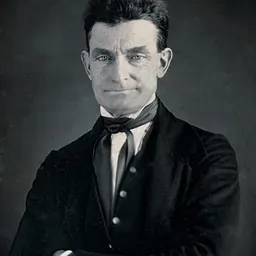


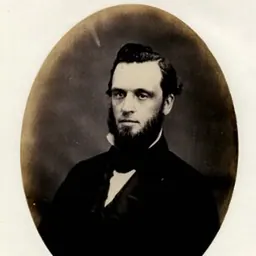
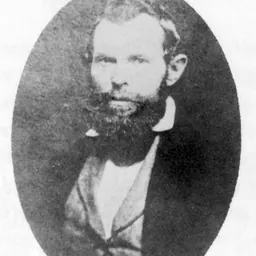

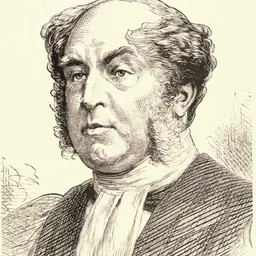
Related people
Same field, nearest in time



Contemporaries
People whose lives overlapped Shields Green's



Frequently asked questions
Who was Shields Green?
man enslaved in United States
When was Shields Green born?
Shields Green was born in 1836 in South Carolina.
When did Shields Green die?
Shields Green died on 16 December 1859 in Charles Town.
What was Shields Green's occupation?
Shields Green was an abolitionist, waiter and slave.
What was Shields Green known for?
Shields Green was known for John Brown's raid on Harpers Ferry.
What nationality was Shields Green?
Shields Green was American.
Sources & further reading
Cite this page
APA: Biography.guide. (2026). Shields Green. https://biography.guide/shields-green/
MLA: "Shields Green." Biography.guide, https://biography.guide/shields-green/.
Chicago: "Shields Green." Biography.guide. https://biography.guide/shields-green/.
Data last updated: 2026-09-20 · Spot an error? Report a correction.
Page generated 2026-09-27 05:24 UTC