
Sherman Coolidge
Episcopalian priest and a founder and leader of the Society of American Indians
About Sherman Coolidge
Lived 1862 – 1932 (aged 69). Sherman Coolidge was an American priest.
Sherman Coolidge (February 22, 1862 – January 24, 1932), an Episcopal Church priest and educator, helped found and lead the Society of American Indians (1911–1923). That first national American Indian rights organization run by and for Native Americans pioneered twentieth-century Pan-Indianism, the philosophy and movement promoting unity among American Indians regardless of tribal affiliation.
Coolidge spent twenty-six years preaching and teaching Shoshone and Arapaho people at the Wind River Reservation at Fort Washakie, Wyoming. He traveled throughout United States lecturing on behalf of Native Americans. In 1923, Coolidge served on President Calvin Coolidge's "Committee of One Hundred" to review and advise on American Indian policy. In the 1920s, Coolidge was transferred to Colorado where he served as Canon at the Cathedral of St. John in the Wilderness in Denver, Colorado, and in Colorado Springs, Colorado.
Early life On February 22, 1862, Coolidge was born near present-day Sheridan, Wyoming. They moved with the seasons to hunting grounds and to places where they gathered food, while in competition with Eastern Shoshone for the resources. In 1870, a white mob attacked Arapaho at Camp Brown (now Fort Washakie). They were aided by the Shoshone and Bannocks, who captured Coolidge.
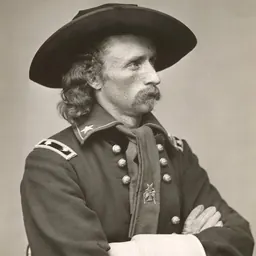
In 1876, Lt. Col. George Armstrong Custer was killed during the Battle of Little Big Horn against the Lakota. Charles Coolidge's unit buried the dead. His adoptive father had hoped that Coolidge would take on a military career and brought him along on expeditions against the Lakota. His experiences during the Great Sioux War convinced Coolidge that he did not want to become a soldier. He studied at the Shattuck-Saint Mary's, an Episcopalian-run institution, in Faribault, Minnesota from 1877 to 1880. with the assistance of President Eliphalet Potter.
Career Missionary and ministry Wyoming
Coolidge traveled west by stagecoach to Wyoming after he graduated from Seabury Divinity School. Called "Arapaho Whiteman", Coolidge reunited with his mother Ba-ahnoce at Wind River Reservation in the fall of 1884,;she had learned of his impending return. Over the past fifteen years since he was separated from his mother, his people had a difficult time finding a place to live and a means to preserve their culture. Under the "restrictive control" of the Indian Bureau. The Northern Arapaho needed to make peace with the Eastern Shoshone at Wind River to survive. Since Ba-ahnoce was parted from her sons, she was subject to near starvation, raids and war. When Coolidge arrived at the reservation, he was met by his mothers and other relatives, including Chief Sharp Nose, who was his uncle.
Soon after he entered the priesthood in 1885, Rev. Coolidge traveled to the Wind River Reservation where Shoshones and Arapahos attempted to coexist on opposite ends of the reservation. Besides his primary role of priest and missionary, he was also a mediator, government clerk and a school teacher. in which Coolidge and Grace worked together. They had progressive ideas and worked hard to convert people to Christianity, which was off-putting to some. In 1923, he moved with his wife and two children to Colorado Springs. He was the rector at the Good Shepherd church.
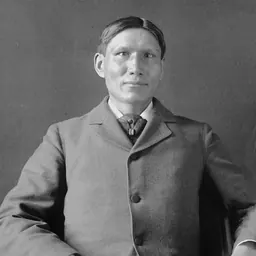
Society of American Indians First conference of the Society of American Indians, Ohio State University, Columbus, Ohio, 1911. Coolidge center. Coolidge and Dr. Charles Eastman founded and led the Society of American Indians (1911-1923), the first national American Indian rights organization developed and run by American Indians. Of all the Society leaders, Coolidge's association with the Society was the longest. The society pioneered twentieth-century Pan-Indianism, the philosophy and movement promoting unity among American Indians regardless of tribal affiliation.
Believing in the strength of numbers, Coolidge believed that Native Americans must "stand solid and united", curb "clannish spirit", and end intertribal rivalries. He said to a group of Native Americans, "I have heard friends of mine say I was educated because... the Arapaho... had a quicker intellect than the Sioux and the Chippewa who were educated in the same schools. I believe that there are many Chippewas, many Sioux, just as smart as I am!" The delegates from different tribes laughed at the barb aimed at intertribal rivalries.
The Society was a forum for a new generation of American Indian leaders known as Red Progressives who shared the enthusiasm and faith of white reformers in the inevitability of progress through education and governmental action. They included prominent people from a number of backgrounds, including clergy, activists, professionals, writers, entertainers, and speakers. Some were political allies and some were staunch critics.
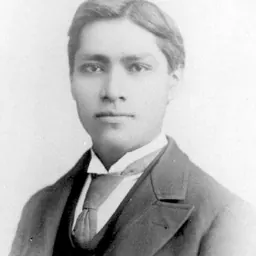
The Society of American Indians was the first national American Indian rights organization run by and for American Indians. Arthur C. Parker was the editor-general. Coolidge, John M. Oskison, Carlos Montezuma, Howard Gansworth, and Henry Roe Cloud were contributing editors. The Society met at academic institutions, maintained a Washington headquarters, conducted annual conferences, and published a quarterly journal of American Indian literature by American Indian authors. Among the first proponents of an "American Indian Day", it also fought for Native American citizenship as well as opening the U.S. Court of Claims to all tribes and bands in the United States. A forerunner of modern organizations such as the National Congress of American Indians, the Society anticipated by decades important Indian reforms: a major reorganization of the Indian school system in the late 1920s, the codification of Indian law in the 1930s, and the opening of the U.S. Court of Claims to Indians in the 1940s.
At the 1915 annual Congress of the American Indian Association, he issued a declaration calling for the second Saturday of May to be known as "American Indian Day".
Marriage and family
Sherman met Grace D. Wetherbee, the daughter of an affluent New York City couple Mr. and Mrs. Gardner Wetherbee, on an Arapaho reservation in Wyoming in 1899. He was working as a missionary at the time. by Rev. F. J. Roberts at Fort Washakie, Wyoming. There were also reported to have been married at Cheyenne, Wyoming They also had Sarah, who was born in 1907 in Utah,
Grace Wetherbee Coolidge wrote extensively about her experiences working amongst the Indians. Collier's Weekly and The Outlook Magazine published her accounts. In 1917, a collection of her works was published as "Teepee Neighbors", a series of touching brief stories of life on the Wind River Reservation in the early twentieth century.
Death and legacy While visiting Los Angeles, he died on January 24, 1932, and was buried at Evergreen Cemetery in Colorado Springs. His wife Grace died five years later and was also buried there. She left $7,000 to the Wind River mission.
Coolidge was nominated as a candidate for Wyoming Citizen of the Century, among others who distinguished themselves in their life by their character, contributions, and accomplishments as Wyoming citizens during the twentieth century. As an advocate for Native American interests, he helped "launch two of the basic types of secular Pan-Indian movements".
Don’t just read it —
keep it.
Full-length biographies made to live with: read them, listen on the way to work, watch them tonight.
- E-book
- Audio
- Video
Instant download · yours to keep · every purchase keeps this site free
Important facts
People in Sherman Coolidge's life
Named in this biography and alive at the same time




Related people
Same field, nearest in time

Contemporaries
People whose lives overlapped Sherman Coolidge's




Frequently asked questions
Who was Sherman Coolidge?
Episcopalian priest and a founder and leader of the Society of American Indians
When was Sherman Coolidge born?
Sherman Coolidge was born on 22 February 1862 in Sheridan.
When did Sherman Coolidge die?
Sherman Coolidge died on 24 January 1932 in Los Angeles.
What was Sherman Coolidge's occupation?
Sherman Coolidge was a priest.
What nationality was Sherman Coolidge?
Sherman Coolidge was American.
Sources & further reading
Cite this page
APA: Biography.guide. (2026). Sherman Coolidge. https://biography.guide/sherman-coolidge/
MLA: "Sherman Coolidge." Biography.guide, https://biography.guide/sherman-coolidge/.
Chicago: "Sherman Coolidge." Biography.guide. https://biography.guide/sherman-coolidge/.
Data last updated: 2026-09-25 · Spot an error? Report a correction.
Page generated 2026-09-27 05:11 UTC