
About Shep Fields
Lived 1910 – 1981 (aged 70). Shep Fields was an American bandleader, conductor, clarinetist, jazz musician, saxophonist and musician.
Shep Fields (born Saul Feldman, September 12, 1910 – February 23, 1981) was an American bandleader who led the Shep Fields and His Rippling Rhythm orchestra during the 1930s. His distinctive Rippling Rhythm sound was featured on big band remote broadcasts from historic hotels nationwide and remained popular with audiences from the 1930s into the early 1960s.
Biography Early life Shep Fields was born Saul Feldman in Brooklyn, New York, on September 12, 1910, and his mother's maiden name was Sowalski. His brother, Edward Fields, was a carpet manufacturer, and his younger brother, Freddie Fields, was a respected theatrical agent and film producer who helped to establish Creative Management Associates in 1960. Their father died at 39.
Fields began his musical career by playing clarinet and tenor saxophone in bands during college. His "Shep Fields Jazz Orchestra" made frequent appearances at his father's resort hotel, the Queen Mountain House in the Catskill Mountains, which featured such noted singers as Al Jolson and Eddie Cantor. His highly successful "Rippling Rhythm" society dance band was subsequently featured regularly on the hotel's big band remote concerts, which were transmitted over the radio to audiences throughout the country.
Shep Fields soon attracted national attention, and he was subsequently invited to entertain audiences with Veloz and Yolanda at the Cocoanut Grove nightclub at the Ambassador Hotel in Los Angeles. Confident in his success, Fields withdrew from his association with Veloz, Yolanda, and MCA Inc. He decided, instead, to return east to his former position at the Hotel Pierre in New York City. During this return trip to New York, Fields stumbled upon the distinctive sound effect that would serve as the introduction to his "Rippling Rhythm" sound for years to come.
Fields' light and elegant musical style remained popular among audiences throughout the 1930s and into the 1950s. Based upon his widespread popularity, Fields received a contract with Bluebird Records in 1936. His hits included "Cathedral in the Pines", "Did I Remember?", and "Thanks for the Memory". His performances at Broadway's Paramount Theater consistently broke attendance records. While appearing at the posh "Star-light Roof" atop the Waldorf-Astoria Hotel in 1937,
As the decade of the 1930s came to a close, Fields remained popular with audiences nationwide. In 1939, he appeared with his orchestra at the Academy Awards ceremony in the historic Biltmore Hotel in Los Angeles, California. The orchestra's size was increased dramatically to embellish the results, which Paul Whiteman had recorded. Fields now presented an orchestra that blended over 35 instruments, including: one bass saxophone, one baritone saxophone, six tenor saxophones, four alto saxophones, three bass clarinets, 10 standard clarinets, and nine flutes including an alto flute and a piccolo. Noted singers such as Ralph Young were also engaged. The resulting band produced a rich ensemble sound under the guidance of such arrangers as Glenn Osser, Lew Harris, and Freddy Noble, who also served as the band's musical director. The critic Leonard Feather applauded the new band's beautiful sound, and Shep embarked upon a series of USO tours to entertain the troops during World War II. By 1945, his orchestra was also featured in performances at the famed Copacabana nightclub which were broadcast live on the WOR-Mutual radio network.
After World War II ended, Fields reverted to his ever popular "Rippling Rhythm" style in 1947 and continued to perform in hotels long after other bands of his era had disappeared. He was buried in Mount Hebron Cemetery in New York.
Legacy During the course of an artistic career, which extended from 1931 through 1963, Shep Fields compiled an extensive musical legacy that has been preserved on such record labels as: Bluebird Records, Mercury Records, MGM, and RCA Victor. His discography includes over three hundred arrangements of popular songs from this era and includes such hits as: "It's De-Lovely" (1937), "I've Got You Under My Skin", "The Jersey Bounce" (1942), "Moonlight and Shadows" (Bluebird 6803), "That Old Feeling" (Bluebird 7066), and "Thanks for the Memory" (Bluebird 7318, 1938). Noted musical arranger and editor Joseph Schillinger observed that over the course of his career, Shep Fields had assembled "one of the most colorful bands" of his time. Ken Curtis vocals 1942–1949 Joe Negri (1926- ), guitar The Three Beaus and a Peep, vocals circa 1947–1948 Bob Johnstone (1916–1994), singer circa 1947–1948 Toni Arden, singer, circa 1945 Bob Shapley, accordion, circa 1948–1950 Carl Frederick Tandberg (1910–1988), bass fiddle, circa 1940 Lou Halmy (1911–2005), trumpet, music arranger, circa 1935 Sid Caesar (1922–2014), saxophone, circa 1940 John Serry Sr. (1915–2003), accordion, 1937–1938. Pat Foy, singer 1941
Live broadcasts
Palmer House Hotel: Empire Room in Chicago during the late 1930s Any Little Girl, That's a Nice Little Girl - Bluebird (B-7606-A) - Song by Fred Fisher played by Shep Fields Rippling Rhythm Orchestra & accordionist John Serry (1938) Cathedral In the Pines - Bluebird (B-7553-A) - Song by Charles Kenny played by the Shep Fields Rippling Rhythm Orchestra & accordionist John Serry (1938) Easy To Love - Bluebird (B-6592-A) - Song by Cole Porter played by the Shep Fields Rippling Rhythm Orchestra (1936) If It Rains Who Cares? - Bluebird ( B-7579-A) - Song performed by the Shep Fields Rippling Rhythm Orchestra with the accordionist John Serry (1938) It's De-Lovely - Montgomery Ward (M-7074-A) - Song by Cole Porter performed by the Shep Fields Rippling Rhythm Orchestra (1936) In The Merry Month Of May - Bluebird (B-7606-B) - Song by Ed Haley played by the Shep Field Rippling Rhythm Orchestra with the accordionist John Serry (1938) I've Got My Love to Keep Me Warm - Bluebird (B-6769-A) - Song by Irving Berlin performed by the Shep Fields Rippling Rhythm Orchestra (1937) I've Got You Under My Skin - Bluebird (B-6592-B) - Song by Cole Porter performed by the Shep Fields Rippling Rhythm Orchestra (1936) You're Laughing at Me - Bluebird (B-6769-B) - Song by Irving Berlin performed by the Shep Fields Rippling Rhythm Orchestra (1937)
Filmography Various Soundies (1941–1946) You Came To My Rescue (1937) - director Dave Fleischer The Big Broadcast of 1938 (1938) - director Mitchell Leisen with W.C. Fields, Martha Raye, Dorothy Lamour, and Bob Hope Kreisler Bandstand (1951) - TV series director Perry Lafferty Handle with Care (1977 film) (Citizens Band) - executive producer
Don’t just read it —
keep it.
Full-length biographies made to live with: read them, listen on the way to work, watch them tonight.
- E-book
- Audio
- Video
Instant download · yours to keep · every purchase keeps this site free
Important facts
People in Shep Fields's life
Named in this biography and alive at the same time

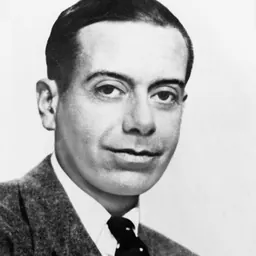




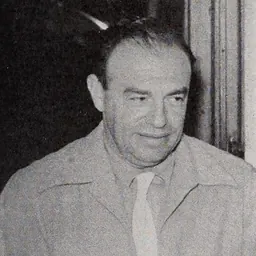

Related people
Same field, nearest in time


Contemporaries
People whose lives overlapped Shep Fields's






Frequently asked questions
Who was Shep Fields?
American jazz bandleader (1910–1981)
When was Shep Fields born?
Shep Fields was born on 12 September 1910 in Brooklyn.
When did Shep Fields die?
Shep Fields died on 23 February 1981 in Los Angeles.
What was Shep Fields's occupation?
Shep Fields was a bandleader, conductor, clarinetist, jazz musician, saxophonist and musician.
What nationality was Shep Fields?
Shep Fields was American.
Sources & further reading
Cite this page
APA: Biography.guide. (2026). Shep Fields. https://biography.guide/shep-fields/
MLA: "Shep Fields." Biography.guide, https://biography.guide/shep-fields/.
Chicago: "Shep Fields." Biography.guide. https://biography.guide/shep-fields/.
Data last updated: 2026-09-20 · Spot an error? Report a correction.
Page generated 2026-09-27 05:23 UTC