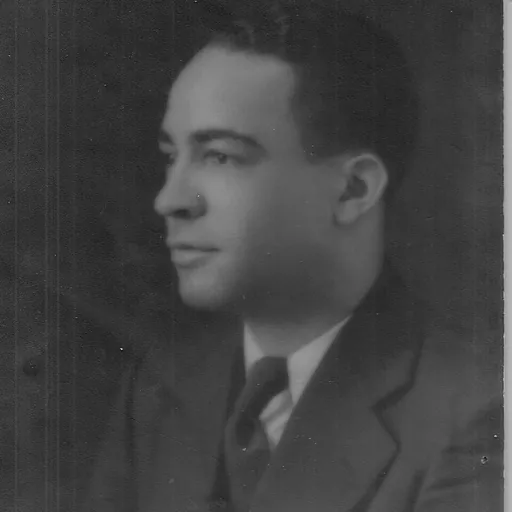
About Frank Fairfax
Lived 1899 – 1972 (aged 72). Frank Fairfax was a bandleader and trade unionist.
Frank Thurmond Fairfax (25 November 189925 January 1972) was the organizer of Philadelphia's Protective Union Local 274 (1935–1971), a charter of the American Federation of Musicians (AFM/AFofM) for black musicians. Fairfax was also a bandleader, musician, music arranger and songwriter, performing in Philadelphia and other northeastern cities.
Background
Born in Bessemer, Virginia on November 25, 1899, Frank Thurmond Fairfax was sixth of the eleven offspring of Matthew L. Fairfax, a preacher, and Maria Elizabeth Cash. The family later moved to Huntington, West Virginia. He learned to play the trumpet, trombone, tenor saxophone, and drums.
Career When Frank Sr. joined Phil Edwards' Collegians, a West Virginia territory touring orchestra, in 1929, he left his family with his mother and some siblings in Huntington, West Virginia. His wife and children joined him when he settled in Philadelphia in 1935.
Organizer of Protective Union Local 274
During the summer of 1933, Edwards' Collegians migrated to Pennsylvania for a dance tour. Upon arriving in Philadelphia in the fall of 1933, the band signed for a steady gig at The Rafters in West Philadelphia and "ran straight into union trouble." He wrote, "The musicians needed new union cards. The dues of (white) Local 77, AFM were then $15 a year, over and above a stiff initiation fee that the members of Edward's Collegians simply could not afford. Each musician received only $3 for a night's work." it was agreed that a charter would be granted under certain conditions satisfactory to Local 77 (prices, etc. must be the same) when $2.00 from each of the 75 musicians was collected and tendered.
During the last few days of 1934, Fairfax received the charter, local seal and all other necessary materials for starting the new Local 274. He called the first meeting for nomination of officers (2nd floor, Little Harlem Bar, 400 block of south 18th Street). The charter was dated for January 6, 1935. Fairfax acted as chairman for this meeting. Their first election was held at the YMCA, 1924 Christian Street. Below are the elected officers of the new Local:
President............................George W. Hyder Vice President....................Harry Monroe Secretary............................Frank Fairfax Assistant Secretary.............Harold Allen Treasurer............................Wesley Fitzgerald Sergeant-at-arms................Damon Fisher
The configuration of officers changed periodically, throughout the duration of Local 274's existence, and Fairfax always held official positions, including president but primarily executive secretary. Regarding union membership, bass player William Oscar Smith wrote, "The union opened an entire new dimension for the expansion and recognition of our art. I was one of the charter members of Local 274, American Federation of Musicians. Little did I realize the impact that membership would have on the rest of my life."
Local 274 received many commendations from civic and community groups for outstanding work, even, on numerous occasions, by the Federation itself, for running an organized and "good" Local. Throughout the years, Local 274's conduct was considered "exemplary" and their efforts on the part of the Federation were well recognized. When the predominantly black local refused to obey the order to merge, The executive board of the AFofM ordered its expulsion in March, 1971. However, in April, 1971, Judge Edward R. Becker stayed the March, 1971 expulsion.
Following the expulsion of Local 274 from the AFofM in April, 1971, the musicians from Local 274 eventually joined Local 77, which, according to Diane Turner Ph.D., diminished Black musicians' power and status in the music industry.
In May, 1971, Frank Fairfax moved to Local 77, AFofM and began serving as Assistant to the Project Chairman of the Music Performance Trust Fund. Concurrently, he served as Secretary of the Philadelphia Clef Club of the Performing Arts, Inc. until his death.
Musician
Frank Fairfax's documented career as a professional musician began in 1928, when he played bass horn and trumpet alongside singer/trombonist Clyde Bernhardt (1905–1986) and many other musicians in Henry P. McClane's Society Orchestra, a West Virginia-based dance band. At some point in the first half of 1930, Edwards' Collegians landed a job as the house band for Cincinnati's Greystone Ballroom, from whence it regularly broadcast over WLW for a least eighteen months. Such was its reputation that in 1931 it earned eighth place in the Pittsburgh Courier's'' Most Popular Band Contest, a consequence, at least in part, of its presence on the airwaves. In 1932 and 1933, still led by Phil Edwards but managed by Frank Fairfax, the Collegians made an extensive tour of the southeastern United States. Hicks also recalled that the group embarked on an extensive tour of the eastern United States, extending down the East Coast into the Deep South, through Georgia, Florida, Alabama, Mississippi, Louisiana, Texas, and Arkansas. Being able to sight-read new tunes was an important component of performing with the band. By late 1934 the band broke up. By December 1934, after Chappie Willet's band disbanded, Fairfax was leading his own band, called the Frankie Fairfax Campus Club Orchestra. Fairfax soon returned to The Rafters, where his band had a violin trio, a trumpet quartet, trombone quartet, sax and clarinet quartet, and a very polished vocal ensemble.
A delegation of CEPA members led by Mr. Garland Dempsey, International President Max Weiner, executive director, attended the services held on January 30 at the Emmanuel Johnson Funeral Home. The Rev. J. Quinton Jackson, pastor of Mt. Zion Baptist Church, Germantown, officiated for the services, and Dr W. Cholmondeley, of St Paul's Church, Plainfield N. J., assisted. (6) Musicians that had been friends and co-workers supplied soft music during the funeral services. Some of the local musicians on hand were Charlie Gaines, LeRoy Bostic, Jimmy Shorter, Agnew Gary, Danny McCune and Thomas Fleming, who directed the group.
Don’t just read it —
keep it.
Full-length biographies made to live with: read them, listen on the way to work, watch them tonight.
- E-book
- Audio
- Video
Instant download · yours to keep · every purchase keeps this site free
Important facts
People in Frank Fairfax's life
Named in this biography and alive at the same time





Related people
Same field, nearest in time


Contemporaries
People whose lives overlapped Frank Fairfax's

Frequently asked questions
Who was Frank Fairfax?
(1899-1972)
When was Frank Fairfax born?
Frank Fairfax was born on 25 November 1899.
When did Frank Fairfax die?
Frank Fairfax died on 25 January 1972.
What was Frank Fairfax's occupation?
Frank Fairfax was a bandleader and trade unionist.
Sources & further reading
Cite this page
APA: Biography.guide. (2026). Frank Fairfax. https://biography.guide/frank-fairfax/
MLA: "Frank Fairfax." Biography.guide, https://biography.guide/frank-fairfax/.
Chicago: "Frank Fairfax." Biography.guide. https://biography.guide/frank-fairfax/.
Data last updated: 2026-09-24 · Spot an error? Report a correction.
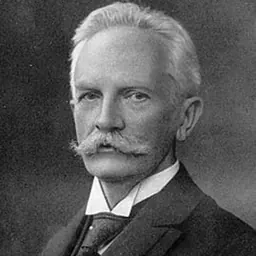
Portrait: Wikimedia Commons · author & licence
Page generated 2026-09-27 05:08 UTC