
About Shenoi Goembab
Lived 1877 – 1946 (aged 68). Shenoi Goembab was a linguist, writer and activist.
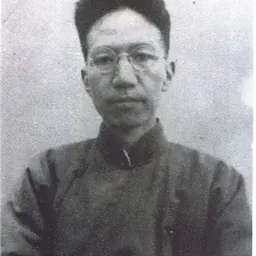
Waman Raghunath Shennoi Varde Valaulikar (23 June 1877 – 9 April 1946), better known as Shenoi Goembab, was a Goan writer and activist of the Konkani language.
Early life Waman Raghunath Shennoi Varde Valaulikar was born on 23 June 1877 at Bicholim, Goa, which was part of Portuguese India during the Portuguese Empire (now in India). He came from a notable family which boast the presence of diplomats. One of his progenitors was a diplomat of a local potentate in the court of the Portuguese in Goa, while another is reported to have been was Delegate or Ambassador of the Portuguese Government at the Court of the Peshwas in Poona, British India.
Goembab's father, however, was not a successful man, who was reported to have held the position of manager in the household of a rich relative and subsequently a poor shopkeeper in Bicholim.
Career Valaulikar returned to Goa in 1899 and took up a job as a school teacher, but later left it as he wasn't satisfied. He went to Karachi, British India and worked there for some time as a clerk in the Lahore Municipality. He returned to Bombay where he got married and later got a job with the Italian Consulate. Later he joined a German company, Meister Lucius & Bruening, as a stenographer.
Due to World War I, the Germans had to leave and Valaulikar was left in charge of the company. He managed the company well in the absence of its management and on their return, he earned their praise. Later he was promoted to the post of a secretary of the company. However, due to some disgruntled employees he was accused of mismanagement and left the company.
Another historical book he wrote was "Albuquerquan Goen Kashe Jikle" (How Albuquerque Won Goa). "Mhaji Baa Khai Gelli?" is regarded as the first modern Konkani short-story. It was published in "Gomantopnishat", which is a two-volume collection of fiction and non-fiction. The second volume contained "Sonvsar Budti" (The drowning of the world). It used the story of the Great Flood to discuss various philosophies and includes parts from various religious works such as the Upanishads, Bible, Qur'an and Talmud.
He believed that Konkani language was awaiting a revolution and it could only be brought about by its youth. This was revealed in his essays "Amrutacho Pavs" (The Rain of Nectar) and "Konkani Vidyarthiank" (For Konkani Students). One of his major contribution was towards children's literature. "Bhurgianche Vyakran" (Children's Grammar) was written in a series of question-answers that he used to teach his son and "Bhurgianlo Ishtt" was a collection of short stories.
Valaulikar has also translated many works into Konkani, the chief among them being Molière's Le Médecin malgré lui, which he translated as "Mogachen Logn" (Love Marriage) and Shakespeare's Othello, Hamlet and King Lear. He is most remembered for his translation of the Bhagavad Gita into Konkani: "Bhagwantalem Geet".
At the time the Morão, was the Inspector of Schools in Goa. In that book, Goembab indicates that he had introduced lessons covering grammatical rules, meanings of words and sentences for teaching the art of translation. In the Portuguese introduction, he recounts "I had, in my ignorance, referred to Marathi as "Lingua Vernacular" i.e., local language. After reading that introduction, Morão pointed to my mistake saying, "the local language of Goa is Konkani, how can it be Marathi?". I saw the truth in that statement. And I have not forgotten that incident till this day."
He had observed how Konkani had diminished in status among Goans and Marathi and Portuguese had taken the place of respect among the educated, upper class Hindus and Christians respectively. Konkani was used only to communicate with their employees, the poor and downtrodden castes. He believed that no matter how many languages a person could communicate in to earn a living, he was lost if he could not communicate in his mother tongue, the "language of your soul" as he called it.
Awards On 9 April 2000, Goembab was posthumously awarded the Konkani Person of the Millennium award by Mandd Sobhann (a Mangalore based Konkani organisation), on his 54th death anniversary.
Don’t just read it —
keep it.
Full-length biographies made to live with: read them, listen on the way to work, watch them tonight.
- E-book
- Audio
- Video
Instant download · yours to keep · every purchase keeps this site free
Important facts
Related people
Same field, nearest in time

Contemporaries
People whose lives overlapped Shenoi Goembab's




Frequently asked questions
Who was Shenoi Goembab?
Indian writer (1877–1946)
When was Shenoi Goembab born?
Shenoi Goembab was born on 23 June 1877 in Bicholim.
When did Shenoi Goembab die?
Shenoi Goembab died on 9 April 1946 in Mumbai.
What was Shenoi Goembab's occupation?
Shenoi Goembab was a linguist, writer and activist.
Sources & further reading
Cite this page
APA: Biography.guide. (2026). Shenoi Goembab. https://biography.guide/shenoi-goembab/
MLA: "Shenoi Goembab." Biography.guide, https://biography.guide/shenoi-goembab/.
Chicago: "Shenoi Goembab." Biography.guide. https://biography.guide/shenoi-goembab/.
Data last updated: 2026-09-20 · Spot an error? Report a correction.
Page generated 2026-09-27 05:19 UTC