
About Shemsi Pasha
Lived 1846 – 1908 (aged 61–62). Shemsi Pasha was a Turkish military personnel and ferik (rank).
Shemsi Pasha (, , ; 1846–1908) was an Ottoman general active in the Balkans.
Biography Early life and military career Shemsi was born in the village of Biševo near Rožaje in 1846. Biševo was a small village within the İpek Sanjak of the Kosovo Vilayet. His father was hajji Destan Čolović and his mother was from the Hankušić family. His paternal family had distant origin in Kuči and his maternal family belonged to the Hoti tribe of Peja. Although apparently of "mixed Albanian-Bosnian background", he was known as an Albanian, according to G. Gawrych (2006).
Originating from a humble background and being unschooled, he began his military career first as a private and later was promoted to ferik (general). An Albanian, Süleyman Külçe, the adjutant and personal secretary of Shemsi thought that Abdul Hamid II was mistaken in selecting officers whom lacked an education like the General for resolving problems of the area. During the start of the Muslim religious holiday Bayram, Shemsi got a telegram in early September 1907 about an incident in Smolicë regarding the profanation of the village mosque with a dead pig. Edith Durham, a British traveler present in the region commented that the priest was held by Muslims whom demanded that Ottoman authorities release a relative of one of the captors in exchange for the hostage. In January 1908, an order was received by Shemsi to go with soldiers to Yakova.
Tensions continued in the region and the sultan thought that the events in Kosovo had supposed links to Ismail Kemal and his activities.
Another conflict in 1908 occurred in Yakova between local chieftains and the Curri family with Shemsi instructed to resolve the dispute. He convinced all sides to sign an agreement which stated an end to persecution of the peasantry, that trade would be unhindered and concerns held by people would be brought to government officials and not consuls of foreign powers. In the agreement Shemsi attempted to sever the links between Christians and the Great Powers through use of Ottoman government channels for conflict resolution. Külçe, Shemsi's secretary also commented that the General was unable to apply policy as suggested by the Grand Vezir and Inspector General due to the stance of the local Vali who was more in line with the sultan's position of not intervening against Muslims. The position of Shemsi was also undermined according to Külçe as the General brought soldiers and did not use them. Toward the end of June the situation was not settled and Shemsi had to go back to Prizren.
Shemsi was seen by Abdul Hamid II as a political and loyal General who could maintain a certain amount of order in Kosovo through his connections with Northern (Gheg) Albanians and notables of the area and functioned as the sultan's cultural intermediary. His intervention in conflicts within Kosovo were part of the wider geopolitical situation encompassing the region and Ottoman Empire at the time.
Young Turk Revolution and death On 3 July 1908 adjutant-major Ahmed Niyazi Bey deserted the Ottoman army, fled into the mountains with a guerrilla band and initiated the Young Turk Revolution calling for the restoration of the constitution of 1876 with other officers like Enver Bey following his example. During that summer Shemsi encouraged a pro-government gathering at Firzovik (modern Ferizaj) and subsequent events at the meeting took an unexpected turn when demands for constitutional restoration were made. Shemsi at Prizren was telegraphed by the palace First Chamberlain and told to gather local troops during the wait for the Anatolian soldiers and to march his combined force against the insurgents. Half an hour later a second cable was received by Shemsi from the sultan. Abdul Hamid II instructed Shemsi to take as many regiments as he wanted from the Mitroviçe Division and gather as many volunteers as he was able and dress them in uniform to act against the insurgents without waiting for the Anatolian troops to arrive.
Moving quickly Shemsi got two mobilised battalions from the Mitroviçe Division to board a train for Monastir (modern Bitola). He managed to draft a small group of Albanian volunteers into a unit, told them that Muslims were being massacred by Christians and that they would be fighting them. Kamçıl, as he fled from the location was wounded in the leg. The Albanian bodyguards of Shemsi had been swayed by the CUP to their side that during the incident they only shot their firearms into the air, did not chase after Kamçıl and later fled from the scene themselves.
For the revolution the murder of Shemsi was a turning point that demoralised the palace and it removed a dangerous opponent for the CUP that could have mobilised Albanians against their forces. Lieutenant-colonel Re'fet Bey, the son-in-law of Shemsi and gendarme commander of Monastir was ordered to pursue the insurgents with the military forces gathered by his father-in-law. Unknown to the government was that Re'fet Bey was a CUP member and that the CUP Monastir branch told him to stall for time while CUP leaders understood that forces assembled by Shemsi would not conduct an attack. After his death Shemsi was replaced with Marshal Osman Tatar Pasha and the CUP gained a major advantage in the conflict as the assassination galvanised people to their cause. During these events Ismail Mahir Pasha, a relative of Shemsi was also assassinated.
Don’t just read it —
keep it.
Full-length biographies made to live with: read them, listen on the way to work, watch them tonight.
- E-book
- Audio
- Video
Instant download · yours to keep · every purchase keeps this site free
Important facts
People in Shemsi Pasha's life
Named in this biography and alive at the same time

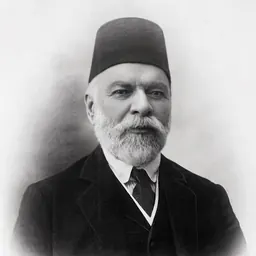
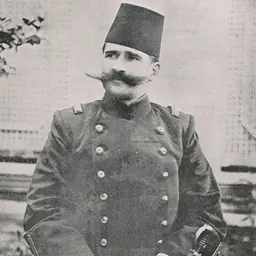
Related people
Same field, nearest in time
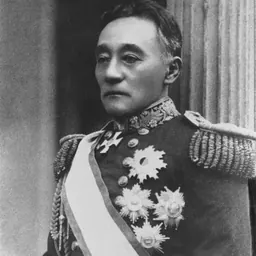
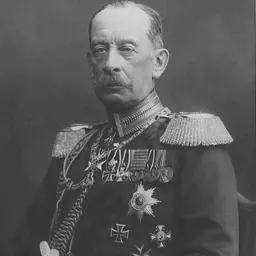


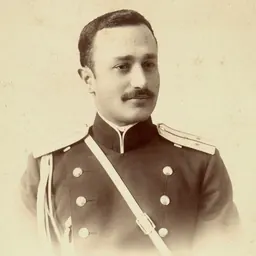
Contemporaries
People whose lives overlapped Shemsi Pasha's



Frequently asked questions
Who was Shemsi Pasha?
Ottoman general
When was Shemsi Pasha born?
Shemsi Pasha was born in 1846 in Rožaje.
When did Shemsi Pasha die?
Shemsi Pasha died on 7 July 1908 in Bitola.
What was Shemsi Pasha's occupation?
Shemsi Pasha was a military personnel and ferik (rank).
What nationality was Shemsi Pasha?
Shemsi Pasha was Turkish.
Sources & further reading
· DBpedia: Shemsi Pasha (general)
Cite this page
APA: Biography.guide. (2026). Shemsi Pasha. https://biography.guide/shemsi-pasha/
MLA: "Shemsi Pasha." Biography.guide, https://biography.guide/shemsi-pasha/.
Chicago: "Shemsi Pasha." Biography.guide. https://biography.guide/shemsi-pasha/.
Data last updated: 2026-09-26 · Spot an error? Report a correction.
Page generated 2026-09-27 05:15 UTC