
About Shelomo Bekhor Hussein
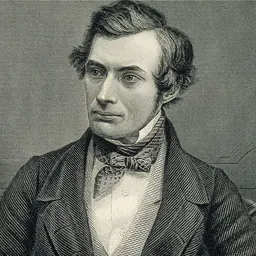
Lived 1843 – 1892 (aged 48–49). Shelomo Bekhor Hussein was a journalist, rabbi and writer.
Rabbi Shelomo Bekhor Ḥutzin (; 1843, Baghdad – 1892, Baghdad), also known as the Rashbaḥ, was an Baghdadi Jewish posek, liturgical poet, journalist, translator, and publisher.
Biography Shelomo Bekhor Ḥutzin was born to a prominent rabbinic family in Baghdad, Ottoman Iraq, a descendant of Rabbi Sadqa Bekhor Hussein (1699–1743), author of the work Sedaka Umishpat. He studied at the Midrash Bet Zilkha under Rabbi Abdallah Somekh.
Ḥutzin had wide-ranging interests and engaged in a diversity of activities in his life. He wrote regularly for the contemporary Hebrew press, including periodicals that were published in Baghdad, India, Ottoman Palestine, and Eastern Europe. Over the years he wrote more than 150 articles for various newspapers, such as , Hamagid, Ha-Tsefirah, , Hadover (Baghdad), Hamevaser (Calcutta), and others. His articles covered topics such as Jewish communal life in Iraq, Kurdistan, and Persia; as well as Jewish law, ethics, culture, world politics, and current events. His articles are a vital primary source on the cultural life and travails of the Jews of Iraq and Iran in his day. Over the years he also translated several works from Hebrew to Judeo-Arabic, including sections of the Passover Haggada and the Siddur.
In 1867 he founded a Hebrew press in Baghdad (the third such enterprise in the city). This publishing house continued to function through his son even after his death. Among the books he published were anthologies of stories of ethical and personal development that he collected himself. He also invested in securing subscriptions for various Hebrew periodicals (like Hamagid) among Baghdadi Jews. Rabbi Hussein dreamed of establishing a bilingual journal in Hebrew and Arabic in Baghdad but was unable to secure permission for such a project from the Ottoman Sultanate.
Ḥutzin served as principal of the Midrash Talmud Torah in Baghdad, and as a Talmud teacher at the Alliance Israélite Universelle school. As a posek he ruled on Halakhic questions from across Iraq, from the Baghdadi community in India, and from other countries.
In 1874, Ḥutzin began publishing in the first Polish Jewish newspaper, Ha-Tsfira, in which he eventually published more than 40 articles.
Partial bibliography Passover Haggada, Leghorn 1887 Ma'ase Nisim, Baghdad 1889 Ma'asim Tobim, Baghdad 1889 Ma'asim Mefo'arim, Baghdad 1890
Don’t just read it —
keep it.
Full-length biographies made to live with: read them, listen on the way to work, watch them tonight.
- E-book
- Audio
- Video
Instant download · yours to keep · every purchase keeps this site free
Important facts
People in Shelomo Bekhor Hussein's life
Named in this biography and alive at the same time

Related people
Same field, nearest in time
Contemporaries
People whose lives overlapped Shelomo Bekhor Hussein's

Frequently asked questions
Who was Shelomo Bekhor Hussein?
19th century rabbi
When was Shelomo Bekhor Hussein born?
Shelomo Bekhor Hussein was born in 1843 in Baghdad.
When did Shelomo Bekhor Hussein die?
Shelomo Bekhor Hussein died in 1892 in Baghdad.
What was Shelomo Bekhor Hussein's occupation?
Shelomo Bekhor Hussein was a journalist, rabbi and writer.
Sources & further reading
· Wikipedia: Shelomo Bekhor Hussein
· DBpedia: Shelomo Bekhor Ḥutzin
Cite this page
APA: Biography.guide. (2026). Shelomo Bekhor Hussein. https://biography.guide/shelomo-bekhor-hussein/
MLA: "Shelomo Bekhor Hussein." Biography.guide, https://biography.guide/shelomo-bekhor-hussein/.
Chicago: "Shelomo Bekhor Hussein." Biography.guide. https://biography.guide/shelomo-bekhor-hussein/.
Data last updated: 2026-09-20 · Spot an error? Report a correction.
Page generated 2026-09-27 05:24 UTC