
About Shastriji Maharaj
Lived 1865 – 1951 (aged 86). Shastriji Maharaj was a religious leader.
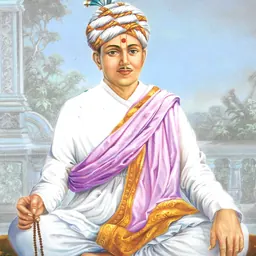
Shastriji Maharaj (31 January 1865 – 10 May 1951), born Dungar Patel and ordained Shastri Yagnapurushdas, was a swami of the Swaminarayan Sampradaya and founder of the Bochasanwasi Akshar Purushottam Swaminarayan Sanstha (BAPS). Several branches accept him as the third spiritual successor of Swaminarayan in the lineage of Aksharbrahma Gurus through whom Swaminarayan manifests, which began with Gunatitanand Swami. Born in a family of farmers in central Gujarat, India, he became a swami within the Vadtal diocese of the Swaminarayan Sampradaya at the age of 17 where he was given the name Yagnapurushdas Swami.
Shastriji Maharaj is credited with establishing BAPS on 5 June 1907 CE in Bochasan, Gujarat
In the early 1950s, having successfully laid the foundations of BAPS, he appointed Pramukh Swami Maharaj as its administrative head to serve under Yogiji Maharaj, whom he appointed as his spiritual successor. His parents, Dhoribhai and Hetba Patel had 4 other children, Mathurbhai, Laldas, Sonaba and Raliatben, of which Dungar was the youngest. and an impromptu recital of the Mahabharata to the entire village. and Gordhanbhai Kothari (Chief Administrator of the Vadtal diocese), Thereafter, Bhagatji Maharaj began explaining the Akshar-Purushottam Upasana to Shastri Yagnapurushdas. One important discourse involved Vachnamrut Loya 12, dictated by Swaminarayan and fear of some officials that Shastriji Maharaj would install an image of Gunatitanand Swami in the main shrine of the Vadtal temple led to increased harassment. Matters came to a head on 8 November 1905, when several swamis of the Vadtal diocese attempted to murder Shastri Yagnapurushdas by administering poison. The following day, another attempt was made on his life. Despite the danger to his life, Shastriji Maharaj was reluctant to separate from the Vadtal diocese. Instead he decided to go on a preaching tour to nearby villages, thereby putting some distance between himself and the dangerous elements in Vadtal. However, Acharya Lakshmiprasad attempted to spite Shastrji Maharaj for his previous reprimands on the Acharya's immoral liaisons by refusing to grant Shastriji Maharaj permission to leave the temple and preach in the villages. Shastriji Maharaj maintained his reluctance to leave Vadtal. However, Krishnaji Ada, a respected lay leader of the Swaminarayan Sampradaya, met with Shastriji Maharaj and quoted a verse in the Shikshapatri in which Swaminarayan instructs his followers to leave any place where their life is in danger. Krishnaji Ada argued that, in light of the threats to his life in Vadtal, Shastriji Maharaj would be disobeying the commands of Swaminarayan if he did not leave. Unable to deny this argument, Shastriji Maharaj eventually decided to leave the Vadtal temple with five swamis and a select number of devotees. Although he told everyone that he was not splitting with Vadtal, but just going to preach in the villages, his departure gave his detractors the excuse they were looking for, and Shastri Yagnapurushdas was, as Prof. Raymond Williams observes, "expelled from the fellowship by a hastily called meeting of swamis" of the Vadtal diocese. This event marked the beginning of what would become an interminable controversy over Shastri Yagnapurushdas's official status as a part of the Vadtal diocese. Shastri Yagnapurushdas's opponents had convened this meeting to transform his departure from the Vadtal mandir into an official excommunication from the Vadtal diocese. However, his supporters asserted that their order of expulsion was morally illegitimate and legally invalid. They argued that the expulsion was illegitimate as the meeting was held under the leadership of Acharya Lakshmiprasadji, who only a short time later was himself expelled when his immoral activities came to light. Moreover, they asserted that the expulsion was legally invalid since the Chief Administrator of the Vadtal diocese, Gordhanbhai Kothari, had refused to sign the order of expulsion. Without his signature, the order was simply a worthless piece of paper with no legal standing.
As the debate raged, Shastriji Maharaj paid it no heed, but continued to preach in the villages and propagate the Akshar-Purushottam doctrine. Soon, he began to plan and construct a temple in which Akshar-Purushottam Maharaj would be installed in the central shrine. On 5 June 1907, Shastri Yagnapurushdas consecrated the murtis of Swaminarayan and Gunatitanand Swami in the newly constructed mandir in the village of Bochasan. This marked the beginning of BAPS as an organization since it was the first mandir to have both murtis of Akshar and Purushottam in the central shrine. Shastriji Maharaj continued to propagate the Akshar-Purushottam doctrine and build mandirs, while the coterie of his detractors in the Vadtal diocese continued to attempt to validate his excommunication. Years after the event, they attempted to pressure Gordhanbhai Kothari, then 90 years old and blind, to sign the order of excommunication, but he bluntly refused. Finally, in 1935, an incident in Swaminarayan mandir in the village of Ishnav led to a lawsuit against Shastriji Maharaj by the Acharya of Vadtal that brought the dispute of Shastriji Maharaj's standing in the Vadtal diocese to its "legal conclusion". A group of Shastriji Maharaj's swamis had visited the village of Ishnav and stayed at the local mandir "with the approval of some villagers but against the wishes of the trustee" Consequently, the Acharya of Vadtal filed a lawsuit aiming to prohibit swamis of the Akshar-Purushottam Sanstha from using properties belonging to the Vadtal diocese on the grounds that they had been officially excommunicated. Although a local judge upheld the legality of Shastri Yagnapurushdas' expulsion, the verdict was appealed and the District judge, Mr. J.D Kapadiya ruled in favor of Shastri Yagnapurushdas when he stated, "The laws of natural justice have clearly been broken in these proceedings [of 1906], and I have no hesitation in holding that as far as the law courts are concerned they would not recognize the excommunication of defendant No. 1 [Yagnapurushdas]." Thus, Judge Kapadiya overturned the ruling of the lower court and validated that Shastri Yagnapurushdas had not been legally excommunicated from the Vadtal diocese. However, he cited an affidavit from Shastri Yagnapurushdas to rule that he had succeeded from the Vadtal diocese, and was now the head of an organization independent of "the holders of the Vadatal[sic] or Ahmedabad Gadi. Ultimately, the judge ruled that BAPS swamis did not have the right to stay or preach in the Swaminarayan Sampradaya and he restrained Shastri Yagnapurushdas from sending his swamis to that temple."
Subsequent activities and later life
An important meeting that would have a significant impact on the future of BAPS occurred on 12 August 1910 when Shastriji Maharaj met his eventual spiritual successor, Jhina Bhagat (Yogiji Maharaj ). This meeting in Rajkot ultimately resulted in several swamis from the Vadtal diocese including Yogiji Maharaj and Krishnacharandas Swami, leaving to join Shastriji Maharaj.
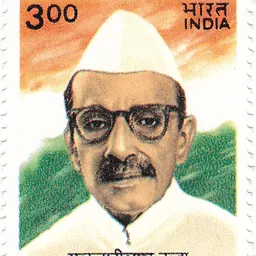
Shastriji Maharaj continued to nurture the fledgling BAPS organization and facilitated its growth by consecrating the murtis of Swaminarayan and Gunatitanand Swami in four further mandirs in the towns of Sarangpur, Gondal, Atladra and Gadhada. Furthermore, Shastriji Maharaj's captivating discourses and determination enabled BAPS to establish itself in Africa. During this period, Shastriji Maharaj interacted with various Indian freedom fighters such as Mohandas Karamchand Gandhi and Gulzarilal Nanda. In the case of Gandhi, Shastri Yagnapurusdas blessed the efforts of the Mahatma during a meeting that took place at the time of the 1930 Dandi Salt March. Notable devotees of Shastriji Maharaj included Gulzarilal Nanda himself and Dolatram Kripashankar Pandya, a member of the Vadtal temple committee and famous Sanskrit scholar who started supporting Shastriji Maharaj after listening to a discourse on the Akshar-Purushottam upasana by him.
In the last few years of his life, Shastriji Maharaj took steps to preserve the growth and future of BAPS by registering BAPS as a charitable trust under India's new legal code in 1947. In 1950, he appointed Shastri Narayanswarupdas (Pramukh Swami Maharaj) as the administrative head of the organization and instructed him to work under Yogiji Maharaj who would become the spiritual head of the organization. Shastriji Maharaj died on 10 May 1951 in Sarangpur.
Legacy and Ideals Shastriji Maharaj (right) with the young Narayanswarupdas Swami (Pramukh Swami Maharaj) (left). Shastriji Maharaj's most enduring legacy is the founding of BAPS. His unwavering belief in the Akshar-Purushottam upasana was the chief reason for his departure from Vadtal and is an indication of his conviction towards this philosophy. Under his leadership, there was a "focused emphasis on the building of shikharbaddha mandirs as a means of conveying Swaminarayan upasana."
His administrative and organizational abilities were apparent during his work as the de facto Kothari of Surat mandir and Kim observes that, "Shastri Maharaj and his small group of followers are revered by satsangis for their resourcefulness and indefatigable efforts to build temples." Further insights into his character reveal that "Shastri Maharaj expected his followers to demonstrate, by their thoughts and actions, their commitment to a peaceful devotional tradition, one that idealizes gestures that directly serve Bhagwan and Guru." Shastriji Maharaj played an integral part in laying the foundation for the establishment of BAPS overseas through discourses and communication with devotees in Africa. In one such letter, Shastriji Maharaj emphasized his adherence to truth by stating a verse in the Gita-"Nasatyat Param Papam", Untruth is the greatest sin-as one of his important maxims and gave a succinct reasoning for his belief in the Akshar-Purushottam upasana.
As a charismatic and determined leader, he "overcame obstructions to land acquisition, temple construction, and the dissemination of his teachings and acquired a loyal and growing group of devotees, admirers, and political supporters, many of whom were formerly associated with the original Vadtal Swaminarayan Sampradaya." Having laid the foundations of BAPS, he secured the spiritual and administrative future of the organization through the appointments of Yogiji Maharaj and Pramukh Swami Maharaj, respectively.
Don’t just read it —
keep it.
Full-length biographies made to live with: read them, listen on the way to work, watch them tonight.
- E-book
- Audio
- Video
Instant download · yours to keep · every purchase keeps this site free
Important facts
People in Shastriji Maharaj's life
Named in this biography and alive at the same time




Related people
Same field, nearest in time





Contemporaries
People whose lives overlapped Shastriji Maharaj's



Frequently asked questions
Who was Shastriji Maharaj?
Spiritual guru of the BAPS Swaminarayan Sanstha
When was Shastriji Maharaj born?
Shastriji Maharaj was born on 31 January 1865 in Gujarat, India.
When did Shastriji Maharaj die?
Shastriji Maharaj died on 10 May 1951 in Salangpur.
What was Shastriji Maharaj's occupation?
Shastriji Maharaj was a religious leader.
Sources & further reading
· Wikipedia: Shastriji Maharaj
Cite this page
APA: Biography.guide. (2026). Shastriji Maharaj. https://biography.guide/shastriji-maharaj/
MLA: "Shastriji Maharaj." Biography.guide, https://biography.guide/shastriji-maharaj/.
Chicago: "Shastriji Maharaj." Biography.guide. https://biography.guide/shastriji-maharaj/.
Data last updated: 2026-09-20 · Spot an error? Report a correction.
Page generated 2026-09-27 05:22 UTC