
Gunatitanand Swami
Spiritual guru of the BAPS Swaminarayan Sanstha
About Gunatitanand Swami
Lived 1785 – 1867 (aged 81).
Gunatitanand Swami (28 September 1784 – 11 October 1867), born Mulji Jani, was a paramhansa of the Hindu Swaminarayan Sampradaya who was ordained by Swaminarayan and is accepted as the first spiritual successor of Swaminarayan by the Bochasanwasi Akshar Purushottam Swaminarayan Sanstha (BAPS). Born into a religious family in the small farming community of Bhadra in Gujarat, India, he first received religious education under his father's guru, Ramanand Swami, before encountering Swaminarayan and becoming a swami under him at the age of 25.
For the BAPS, he embodies an essential element of the doctrine of Akshar and Purushottam. Gunatitanand Swami died in 1867, and a shrine known as the Akshar Deri was built upon the spot his cremation rites were performed. situated near the river Und in what is now Gujarat, India. His father's guru, Ramanand Swami, named him Mulji. Even from a young age, it was evident that Mulji had a "disinclination towards material objects" and would exhibit a perspicacity that was rare for a child of his age, often claiming while playing with his younger brother Sundarji that he would become a swami and inspire Sundarji to become one.
Meeting With Swaminarayan Mulji’s first meeting with Swaminarayan Bhagwan occurred in the village of Piplana. Ramanand Swami invited Mulji and Lalji Suthar amongst others to the Bhagvati Diksha ceremony of Neelkanth Varni (Swaminarayan) to be held on 28 October 1800.
Over the next few years, Gunatitanand Swami continued serving under Swaminarayan and became a core member of the 500 Paramhansas, a group of swamis respected for their spiritual enlightenment and renunciation of worldly pleasures. He further gained renown as a preacher and a summary of his teachings would later be published under the title Swamini Vato. One of his legacies was the temple at Junagadh. He played a prominent role in its construction, served as the mahant for forty years and provided a template for the administrative development of future religious establishments in the Swaminarayan Sampradaya. firstly through various discourses and spiritual teachings and secondly through his identification of Bhagatji Maharaj as the next personal form of Akshar. It was this principle that would lead to the eventual formation of the BAPS branch of the Swaminarayan Sampradaya. Similar to Swaminarayan before him, Gunatitanand Swami also instituted various social projects, from building wells and educating villagers to establishing guidelines for social behavior and preventing practices such as sati and infanticide. His obsequies were performed the next day on the banks of the River Gondali Multitudes of people from around the world visit Akshar Mandir each year and circumambulate Akshar Deri (perform pradakshina) seeking peace of mind and fulfillment of their auspicious desires, making it one of the most visited places of pilgrimage in the region. The Akshar Purushottam Upasana is the central theological tenet upon which the BAPS denomination of Swaminarayan Hinduism is based. The personal form of Akshar is understood to serve Purushottam within his divine abode and also when God incarnates on earth. Although certain leaders of the Vadtal diocese historically understood Gunatitanand Swami to be Akshar, over time their position on the issue has been reversed and currently they do not accept Gunatitanand Swami as Akshar. However, while the leadership of the Vadtal and Ahmedabad dioceses currently repudiate Gunatitanand Swami as Akshar, various groups within the Vadtal and Ahmedabad dioceses continue to understand Gunatitanand Swami to be Akshar.
So, while this doctrinal understanding of Gunatitanand Swami as Akshar had been present from the time of Swaminarayan, and it was explained as such by Gunatitanand Swami and later Bhagatji Maharaj,
Thus according to Swaminarayan's statements in the Vachanamrut, there is an Akshar present on earth with Purushottam and as described previously, Gunatitanand Swami is believed by BAPS followers to be the first personal manifestation of Akshar in the Guru Parampara, an unbroken line of "perfect devotees" who provide "authentication of office through Gunatitanand Swami and back to Swaminarayan himself." It has also been referred to as a "comprehensive commentary" on the Vachanamrut.
Don’t just read it —
keep it.
Full-length biographies made to live with: read them, listen on the way to work, watch them tonight.
- E-book
- Audio
- Video
Instant download · yours to keep · every purchase keeps this site free
Important facts
People in Gunatitanand Swami's life
Named in this biography and alive at the same time
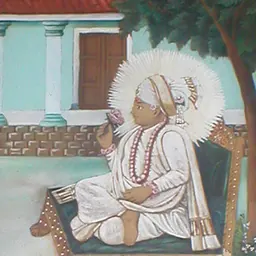
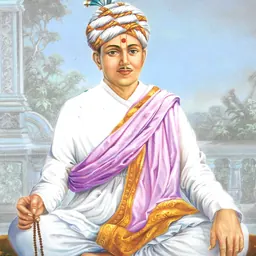
Contemporaries
People whose lives overlapped Gunatitanand Swami's
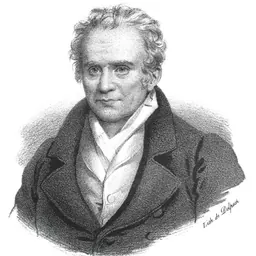



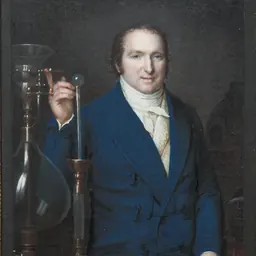
Frequently asked questions
Who was Gunatitanand Swami?
Spiritual guru of the BAPS Swaminarayan Sanstha (1785-1867)
When was Gunatitanand Swami born?
Gunatitanand Swami was born on 17 October 1785 in Gujarat, India.
When did Gunatitanand Swami die?
Gunatitanand Swami died on 11 October 1867 in Gondal.
Sources & further reading
· Wikipedia: Gunatitanand Swami
Cite this page
APA: Biography.guide. (2026). Gunatitanand Swami. https://biography.guide/gunatitanand-swami/
MLA: "Gunatitanand Swami." Biography.guide, https://biography.guide/gunatitanand-swami/.
Chicago: "Gunatitanand Swami." Biography.guide. https://biography.guide/gunatitanand-swami/.
Data last updated: 2026-09-20 · Spot an error? Report a correction.
Page generated 2026-09-27 05:20 UTC