
About Sharan Rani Backliwal
Lived 1929 – 2008 (aged 78). Sharan Rani Backliwal was an Indian music educator.
Sharan Rani (also known as Sharan Rani Backliwal, née Mathur) (9 April 1929 – 8 April 2008) was an Indian classical sarod player and music scholar.
Her private collection of 379 musical instruments ranging from the 15th to the 19th century is now part of the "Sharan Rani Backliwal Gallery of Musical Instruments" at the National Museum, New Delhi.
Early life and training She was born Sharan Rani Mathur in the walled city of Old Delhi to a conservative Hindu family of well-known businessmen and educationists. In 1953, she did her M.A from Delhi University, and studied at Indraprastha College for Women.
Musical career From the late 1930s, Sharan Rani presented her sarod recitals on the concert stage in India for over seven decades. She was one of the first to record for UNESCO and to release musical recordings with major record companies in the United States, Britain and France. According to Jawaharlal Nehru, she was the "Cultural Ambassador of India" Dr. Zakir Husain said about her, "Sharan Rani has achieved perfection in music. She will therefore get the love of the entire world”. Noted Musician Yehudi Menuhin said about her : "I hasten to add my voice to the many admiring and grateful ones which would try to express the love and respect we feel for this great artiste”
Concerned that the rich Dhrupad tradition was fading away, some of her solo recitals were accompanied by both Tabla and Pakhawaj.
Rani was one of the earliest artists of All India Radio and Doordarshan. She was popularly known as 'Sarod Rani' (The Queen of Sarod). Sharan Rani was the first woman Instrumentalist of India who achieved international acclaim.
Musical authorship and teaching Backliwal also wrote a history of the sarod, titled The Divine Sarod: Its Origin, Antiquity and Development, which was released in 1992, by K. R. Narayanan, the then Vice President of India. Mayuri Sitar (1850) acquired from a royal family in Rajasthan Tiger Head Rabab from Kashmir Durbari Sitar (1850) Vina (1825)
Personal life
In 1960, she married Sultan Singh Backliwal who belonged to a prominent Digamber Jain business family of Delhi. In 1974, they had a daughter, Radhika Narain. Sahitya Kala Parishad Award (1974) 'Acharya' and 'Tantri Vilas' (1979) Sangeet Natak Akademi Award (1986) Rajiv Gandhi award for Vocational Excellence (1993) Distinguished Alumni award by Delhi University (1997) National Excellence award (1999) Padma Bhushan (2000)
The Great Sarod Virtuoso (1967)
Musique Classique Indienne (1967)
Don’t just read it —
keep it.
Full-length biographies made to live with: read them, listen on the way to work, watch them tonight.
- E-book
- Audio
- Video
Instant download · yours to keep · every purchase keeps this site free
Important facts
People in Sharan Rani Backliwal's life
Named in this biography and alive at the same time



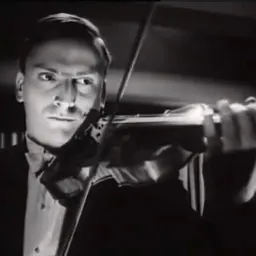


Related people
Same field, nearest in time
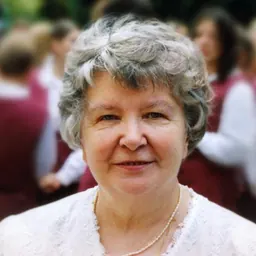



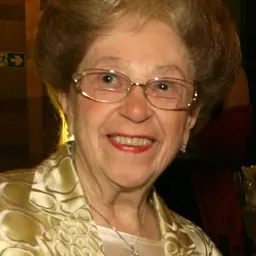
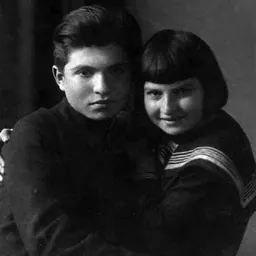
Contemporaries
People whose lives overlapped Sharan Rani Backliwal's


Frequently asked questions
Who was Sharan Rani Backliwal?
Indian singer (1929-2008)
When was Sharan Rani Backliwal born?
Sharan Rani Backliwal was born on 9 April 1929 in Delhi.
When did Sharan Rani Backliwal die?
Sharan Rani Backliwal died on 8 April 2008 in Delhi.
What was Sharan Rani Backliwal's occupation?
Sharan Rani Backliwal was a music educator.
What nationality was Sharan Rani Backliwal?
Sharan Rani Backliwal was Indian.
Sources & further reading
· Wikipedia: Sharan Rani Backliwal
· DBpedia: Sharan Rani Backliwal
Cite this page
APA: Biography.guide. (2026). Sharan Rani Backliwal. https://biography.guide/sharan-rani-backliwal/
MLA: "Sharan Rani Backliwal." Biography.guide, https://biography.guide/sharan-rani-backliwal/.
Chicago: "Sharan Rani Backliwal." Biography.guide. https://biography.guide/sharan-rani-backliwal/.
Data last updated: 2026-09-20 · Spot an error? Report a correction.
Page generated 2026-09-27 05:09 UTC