
About Frederick Swann
Lived 1931 – 2022 (aged 91). Frederick Swann was an American music educator, organist, choir director, music director, composer and docent.
Frederick Lewis Swann (July 30, 1931 – November 13, 2022) was an American church and concert organist, choral conductor, composer, and president of the American Guild of Organists. His extensive discography includes both solo organ works and choral ensembles he has conducted.
Swann began playing the organ for church services as a ten-year old at a Methodist church in Winchester, Virginia, where his father was pastor. He graduated from Northwestern University with a degree in music and later studied at the School of Sacred Music of Union Theological Seminary in New York City. One of the best-known organists of the early 21st century, Swann was the former Director of Music and Organist at New York City's Riverside Church and Organist Emeritus of the Crystal Cathedral and the First Congregational Church of Los Angeles. Playing the Crystal Cathedral organ on the weekly Hour of Power television program, he was seen by an estimated audience of viewers in 165 countries.
Swann began taking piano lessons as a from the organist at Market Street Methodist Church in Winchester, Virginia. One day he arrived early for a lesson and saw his teacher playing the organ. He told an interviewer in later years that he was "mesmerized when I saw the organ console for the first time" and soon began taking organ lessons. Madeline W. Riley, the church's Minister of Music, was of significant influence in helping him develop the service playing skills for which he has become so well known. In a 2014 interview in The Diapason magazine, Swann recalled his excitement playing on Easter Sunday, when he was allowed to use the Moller organ's "great big Open Diapason" for the first time, saying, "I thought, 'This is heaven', since I had not been allowed to make that much noise before". It was at that church that Swann was captivated by the denomination's liturgy and music, becoming confirmed in the Episcopal church at age 13.
After graduating from Robert E. Lee High School, where he played the piano for the school's chorus, Swann attended Northwestern University's School of Music. Living in New York at the time, he recalled, exposed him to a plethora of great church music around town: on any given Sunday afternoon, one could hear choral programs and concerts at such prominent venues as St. Thomas Church or St. Bartholomew's. Upon the retirement of Richard Weagly as Choir Director in 1966, Swann became Director of Music and Organist through 1982. He directed the 75-voice paid choir from the organ bench for Sunday services and oratorios, such as Ralph Vaughan Williams's Hodie and Stabat Mater by Polish composer Karol Szymanowski. Swann told the Los Angeles Times years later that he was initially criticized in some professional organist quarters for leaving the prestigious, Gothic cathedral-like Riverside Church in New York for the Crystal Cathedral, saying he was "practically blackballed", but that he felt quite comfortable with his decision and found the Christian theology at both churches differing only in emphasis. Swann delighted in playing the gargantuan organ there, saying, "The congregation just loved that organ and would remain motionless and utterly quiet during preludes and postludes". Past appearances include Notre Dame Cathedral in Paris, St Paul's Cathedral and Westminster Abbey in London, and Cologne and Passau Cathedrals in Germany.
Swann is known for dedicating new organs in churches, concert halls, and auditoriums during his career, such as Orchestra Hall in Chicago, Illinois, with the Chicago Symphony in 1981 and at Davies Symphony Hall in San Francisco, California, with the San Francisco Symphony in 1984. A month later, he performed at the largest pipe organ in the island nation of Bermuda, playing the 88-rank organ of St. Paul's Anglican Church there in a concert broadcast by Sacred Classics.
At age 85 in 2016, Swann announced his retirement as a concert organist with a series of programs beginning in August of that year at the Kotzschmar Organ in Portland, Maine. His performance was praised by music critic Allan Kozinn of the Portland Press Herald as possessing a "commanding sense of pace and color". Swann's playing of Bach's Prelude and Fugue in G (BWV 541) was called "masterly ... notable for both the vigor he brought to the Prelude and the textural transparency with which he illuminated the fugue". His final recital on the retirement tour took place at the First Presbyterian Church of Kilgore, Texas, fittingly on the 50th anniversary of his dedicatory recital on that very organ.
Swann died at his home in Palm Desert, California, on November 13, 2022, at the age of 91. He continued to serve as Artist-in-residence at St. Margaret's Episcopal Church in Palm Desert, California, until his death. A memorial service for Swann was held at St. Margaret's on January 25, 2023 with music by the St. Margaret's Choir, and organists David Higgs, Nathan Laube, and Todd Wilson.
Teaching Swann served on the adjunct faculties of New York City's Guilmant Organ School, the Union Theological Seminary School of Sacred Music, and Teacher's College of Columbia University. For ten years, he chaired the Organ Department of the Manhattan School of Music.
American Guild of Organists leadership Swann joined the American Guild of Organists (AGO) in 1946. By 1998, a past-president of the AGO, Margaret McElwain Kemper, said of him, "There is no one in the field more respected and well-liked than Fred Swann". Also in 2002, he was named "International Performer of the Year" by the New York City Chapter of the AGO. In receiving the award, conferred biennially for outstanding leadership, Swann said to the thousands of delegates in the audience:
Critical acclaim and awards Critics such as Tim Smith have called Swann "one of the country's most distinguished organists". Other critics have praised his playing as "brilliant".
In 2015, the Royal Canadian College of Organists named Swann a Fellow, honoris causa and in 2018 the AGO honored him as the organization's first honoris causa recipient of its "Fellow" degree (i.e., FAGO). Comprising 82 ranks and 4,949 pipes, the 1948 Aeolian-Skinner organ was originally at Beverly Hills' First Church of Christ Scientist, but was removed following severe damage to that church in the 1994 Northridge earthquake. It was eventually installed in the Arboretum building on the Crystal Cathedral's campus, under Swann's guidance. It was subsequently performed by organist Christopher Creaghan at Riverside Church on January 10, 2021.
Published works Swann's published compositions include more than three dozen anthems for choir, such as Let the Whole Creation Cry, as well as numerous organ works based on hymn tunes, such as Hymns of Praise and Power. His arrangements of familiar hymns include Amazing Grace, Great is Thy Faithfulness, How Great Thou Art, Fairest Lord Jesus and O God Our Help in Ages Past. His widely performed Trumpet Tune in D Major was composed in 1991. When a magazine writer complimented him for his "wonderful" Trumpet Tune, Swann replied with characteristic modesty, "I don’t know how wonderful it is, but people seem to enjoy it".
Riverside Church The Riverside Years – Organ The Riverside Years, Vol. 2 – Choir Riverside Revisited Music from Riverside (4 LP volumes) Easter: "The Way to Emmaus" (with Louise Natale, soprano soloist) Christmas at Riverside God of Grace and God of Glory (hymns and choral anthems) Swann plays Franck at Riverside Church
Crystal Cathedral Four Masterworks for Organ Hymns on the Crystal Cathedral Organ O Magnify the Lord (Choir, organ, and carillon) Sing We Now of Christmas (Choir) We Sing the Power (Choir)
First Congregational Church, Los Angeles The Great Organs of First Church Hymns of Vaughan Williams (choir conducted by Thomas Somerville)
Basilica of the National Shrine of the Immaculate Conception Swann at the Organ of the National Shrine The Mystic Organ
Hawaii Frederick Swann In Hawaii Vol. 1 Frederick Swann In Hawaii Vol. 2
Don’t just read it —
keep it.
Full-length biographies made to live with: read them, listen on the way to work, watch them tonight.
- E-book
- Audio
- Video
Instant download · yours to keep · every purchase keeps this site free
Important facts
People in Frederick Swann's life
Named in this biography and alive at the same time

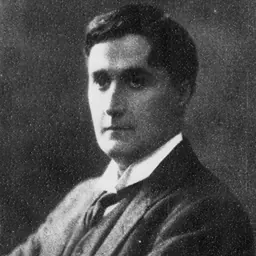

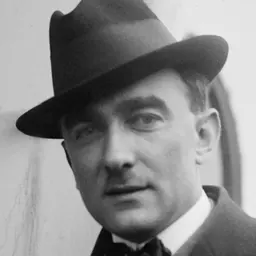

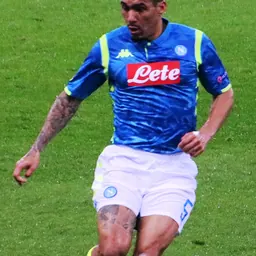

Related people
Same field, nearest in time
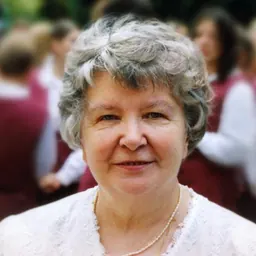

Contemporaries
People whose lives overlapped Frederick Swann's

Frequently asked questions
Who was Frederick Swann?
American musician
When was Frederick Swann born?
Frederick Swann was born on 30 July 1931 in Lewisburg.
When did Frederick Swann die?
Frederick Swann died on 13 November 2022 in Palm Desert.
What was Frederick Swann's occupation?
Frederick Swann was a music educator, organist, choir director, music director, composer and docent.
What nationality was Frederick Swann?
Frederick Swann was American.
Sources & further reading
Cite this page
APA: Biography.guide. (2026). Frederick Swann. https://biography.guide/frederick-swann/
MLA: "Frederick Swann." Biography.guide, https://biography.guide/frederick-swann/.
Chicago: "Frederick Swann." Biography.guide. https://biography.guide/frederick-swann/.
Data last updated: 2026-09-20 · Spot an error? Report a correction.
Page generated 2026-09-27 05:21 UTC