
About Shapurji Saklatvala
Lived 1874 – 1936 (aged 61). Shapurji Saklatvala was a British politician.
Shapurji Dorabji Saklatvala (28 March 1874 – 16 January 1936) was a communist and British politician of Indian Parsi heritage. He was the first person of Indian heritage to become a British Member of Parliament (MP) for the Labour Party and was also among the few members of the Communist Party of Great Britain (CPGB) to serve as an MP.
Early years Shapurji Saklatvala was born on 28 March 1874 in Bombay (now Mumbai), India, the son of a merchant, Dorabji Saklatvala, and his wife Jerbai, a sister of Jamsetji (aka J.N.) Tata, the owner of India's largest commercial and industrial empire. He was educated at St. Xavier's School in Bombay before moving to St. Xavier's College for his collegiate education.
He worked briefly as an iron and coal prospector for Tata successfully unearthing iron ore and coal deposits in the states of Jharkhand and Odisha (previously called Orissa). His health suffered with malaria which led to his moving to England in 1905 to convalesce and run Tata's Manchester office.
Political career
Saklatvala was a committed socialist, and first joined the Independent Labour Party (ILP) in Manchester in 1909. When the affiliation drive by Saklatvala and the ILP's left-wing failed in the party's March 1921 national conference, Saklatvala left the organisation with the others in the Left Wing Group to join the new Communist Party of Great Britain (CPGB). Saklatvala ran in the Battersea North district of London, one of two Communists to receive the official endorsement of the Labour Party Also elected running as a Communist, without official Labour Party support, was J. Walton Newbold, capturing a plurality of the vote in Motherwell.
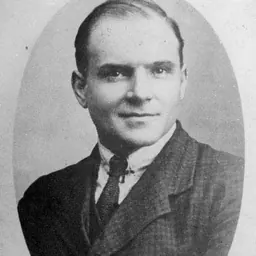
Saklatvala was accepted into the Labour Party's parliamentary caucus, but while Newbold applied for the same, he was rejected. This did not stop Saklatvala and Newbold from joint activity, however, and the pair attempted to raise the demands of the unemployed and the cause of cheap housing and lower rents whenever possible. Newbold wound up being suspended from the House in May 1923 over his actions concerning the Curzon ultimatum during the French occupation of the Ruhr. Although not all the Communist candidates were endorsed by the Labour Party, they all were the recipients of support from local Labour activists. All Communist candidates were defeated in the 1923 election, however, including Saklatvala in Battersea North. The Labour Party saw a net loss of 42 seats despite contesting more constituencies than ever before.
Saklatvala was arrested during the 1926 General Strike following a speech he made in support of striking coal miners and was jailed for two months on the charge of sedition.
He was active in the League Against Imperialism from the time of its formation in 1927.
During the 1935 general election Saklatvala was active in the electoral campaigns of Harry Pollitt and Willie Gallacher.
Personal life On 14 August 1907 Saklatvala married an English woman, Sarah Elizabeth Marsh (born 1888). She was working as a hotel waitress when he met her while staying at Matlock, Derbyshire. The couple had three sons; Dorab, Beram, and Kaikhoshro (also called Kaiko), and two daughters; Dhunbar and Jevanbai (also known as Candida or Candy and Sehri). He was once censured by the non-religious CPGB for holding a Zoroastrian navjote initiation ceremony for his children at Caxton Hall, Westminster, which he defended on the grounds it was to ensure benefit from a Tata family trust fund. He flew most frontline aircraft, including Mosquitos, Spitfires and Lancasters.
Death and legacy
Saklatvala died, from another heart attack, on 16 January 1936 at his London home, 2 St Albans Villas, St Albans Road.
In January 1937, British, Irish and Dominion volunteers in the International Brigades were formed into an English-speaking battalion, that was formally named after Saklatvala. However, the name never caught on, and it was normally known as the "British Battalion".
The Communist Party of Great Britain (Marxist–Leninist)'s hall is named after Shapurji Saklatvala. Saklatvala Hall is located in Southall, London. The hall is used for CPGB-ML's meetings and celebrations.
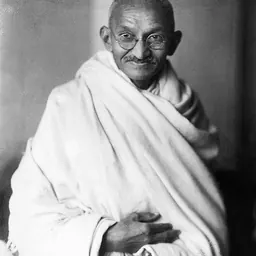
Works The Empire Labour. 1919. For British Trade Unionists and British Indian Labour: Two Articles on British Capital and Indian Labour. Manchester: National Labour Press, n.d. . India in the Labour World. London: Labour Publishing Co. for the Workers' Welfare League of India, n.d. [c. 1921]. Saklatwala on India. Lahore: G.L. Puri, 1923. The Class Struggle in Parliament: On Communism, Egyptian Indemnity, the Supplementary Reserve, the Prince's Tour, the Air Force. London: S. Saklatvala, n.d. [c. 1925]. British Imperialism in India: Speech Delivered in the House of Commons, 9 July 1925. Chicago: Daily Worker Publishing Co., n.d. . Is India Different? The Class Struggle in India: Correspondence on the Indian Labour Movement and Modern Conditions. With Mahatma Gandhi. London: Communist Party of Great Britain, 1927. Socialism and "Labouralism": A Speech in the House of Commons. London: Communist Party of Great Britain, 1928. With the Communist Party in Parliament: Exposure of Parliamentary Hypocrisy: Saklatvala's Great Speech on King's Address, 7 November 1928. London: Communist Party of Great Britain, n.d. [c. 1928].
Don’t just read it —
keep it.
Full-length biographies made to live with: read them, listen on the way to work, watch them tonight.
- E-book
- Audio
- Video
Instant download · yours to keep · every purchase keeps this site free
Important facts
People in Shapurji Saklatvala's life
Named in this biography and alive at the same time


Related people
Same field, nearest in time





Contemporaries
People whose lives overlapped Shapurji Saklatvala's
Frequently asked questions
Who was Shapurji Saklatvala?
British politician (1874-1936)
When was Shapurji Saklatvala born?
Shapurji Saklatvala was born on 28 March 1874 in Mumbai.
When did Shapurji Saklatvala die?
Shapurji Saklatvala died on 16 January 1936 in London.
What was Shapurji Saklatvala's occupation?
Shapurji Saklatvala was a politician.
What nationality was Shapurji Saklatvala?
Shapurji Saklatvala was British.
Sources & further reading
· Wikipedia: Shapurji Saklatvala
· DBpedia: Shapurji Saklatvala
Cite this page
APA: Biography.guide. (2026). Shapurji Saklatvala. https://biography.guide/shapurji-saklatvala/
MLA: "Shapurji Saklatvala." Biography.guide, https://biography.guide/shapurji-saklatvala/.
Chicago: "Shapurji Saklatvala." Biography.guide. https://biography.guide/shapurji-saklatvala/.
Data last updated: 2026-09-20 · Spot an error? Report a correction.
Page generated 2026-09-27 05:31 UTC