
About Sesto Pals
Lived 1913 – 2002 (aged 89). Sesto Pals was a Romanian and Israeli mining engineer, train driver, poet, philosopher, illustrator and writer.
Sesto Pals, pen name of Simion (also Simon, Semion) Șestopali (born Шестопаль, also rendered as S(h)estopal, Sestopaly, or Sestopali; ca. 1912 – October 27, 2002), was a Russian-born Romanian and Israeli writer. Primarily a poet-philosopher, he also earned recognition as a graphic artist. He first became known in his teenage years, when, as a friend and associate of Gherasim Luca, he put out the review Alge. Its avant-garde aesthetics and its testing of censorship resulted in their prosecution. While Luca endured as a public intellectual and a founder of the Romanian surrealist cell, Pals became a recluse.
Forgotten by the general public, exposed to antisemitic and later communist persecution, he continued to write for himself and an intimate circle of friends. He had a successful career in civil and railway engineering, but political nonconformity resulted in his marginalization for part of the 1960s.
Moving to Haifa in 1970, Pals was rediscovered by later generations of Romanian and Israeli readers, known to them for the moderate surrealism of his poetry and prose, and, to a lesser degree, for his take on Hegelian philosophy. His editorial debut came well into his 80s, when Pals was already bedridden and contemplating death. This led to his rediscovery as a contributor to both Romanian and Israeli literature.
Biography
Early life Simion "Senia" Shestopal, the scion of a Ukrainian Jewish family, was born in Odessa, officially on September 18, 1913, but more likely on September 5, 1912. The writer's father, known later in life as "Emanoil Șestopali", was a Stambuliote Jew who had taken Italian citizenship. According to literary historian Ovid Crohmălniceanu, the poet's own familiarity with Jewish mythology and the Hebrew language can be read as a clue that he was enlisted in a cheder. S. Sfarti, who worked with the poet-engineer in the 1950s, notes that his name was unusual in his adoptive Romania, making his ethnicity hard to pin down, and never discussed at his office. The family name probably originated in a Russian moniker for "six fingers" or "six toes", and Simion bragged that he himself had inherited an extra toe. Nevertheless, all three young men made a habit of deriding cultural conventions: Pals was almost expelled from school when he burst out laughing during a lecture on poet-laureate Vasile Alecsandri. and then, for the first time ever, Sesto Pals. A quasi-anagram of his Romanian name-and-initial, it was sometimes corrected to Șesto Pals in later reference, but the poet always signed his work sans diacritic.
Obscenity scandal Underfunded, Alge only put out six or seven issues in this 1930 edition. and sent to Văcărești Prison, where his colleagues were also rounded up. Pals later recalled being subjected to a thorough interrogation by the examining magistrate, and sharing a cell with a known communist. Taking his instructions from Iorga, the coroner alleged that the Șestopalis were themselves communists, sent in from the Soviet Union to subvert Romanian society.
Antisemitic persecution and communist oppression Pals graduated in 1940, just as the National Renaissance Front dictatorship had barred Jews from employment in most fields, including technical. Pals was singled out for compulsory labor, and sent to work as a "Jewish engineer" for the State Railways. Making occasional returns to Bucharest,
In 1946, engineer Șestopali parted with Lucy and married Valentina Berman. This created controversy: Valentina was Pals' first cousin and his junior by 15 years. Although he still refrained from an open affiliation, Pals continued to visit Luca and the surrealists, introducing his wife to them. Pals accepted the informal separation, resuming his love affair with Lucy Metsch, Pals himself wrote a statement denouncing both Valentina and Caraion, accusing the latter of having seduced and beguiled his wife. He accuses Caraion of having networked for far-right elements in the anti-communist underground, and specifically for the Iron Guard; he claimed that Valentina was cynically used by Caraion, to support a movement that had been "responsible for [her] past suffering". By his own account, the latter was living a quiet and exceptionally fulfilling life, down to 1970: caught up in his work during daytime, he turned to writing literature at night, and reconnected with his avant-garde friends.
Caraion, who had agreed to collaborate with the Securitate in return for his freedom, was repeatedly blackmailed by his former supervisors. During the backlash that followed his departure, in April 1982 the national-communist weekly Săptămîna published Sestopali's statements against the Caraions, as part of a series called "Ion Caraion as seen by his family".
Working from his home, a small apartment in Bnei Brak, and a new set of visual poetry pieces. He reluctantly agreed to have samples of these works published in Romanian diaspora magazines—including Caraion's Don Quijote and Alexandru Lungu's Argo. Interviewed about his work by journalist Solo Har-Herescu in 1993, Pals was oblique: "I am not fit to answer, as my head is filled with those snake-like questions, poisoning my replies, eating them up as they [...] bite into their own tails, making it hard to know where tails begin and heads end." His only reason for writing was "an inner urging", as "so much better poems" already existed, which were still "of no use to the reading public". Just days before this happened, the Romanian review Tribuna hosted three of his final poems. Interest in Pals' work and personality was kept alive by the philosopher-physicist Michäel Finkenthal, who also collected some of the lesser known prose works into a 2014 anthology.
Work
In 1969, commenting on the Pană anthology, literary critic Nicolae Manolescu opined that Pals, like Grigore Cugler and Filip Corsa, belonged to the most artistically irrelevant section of the Romanian avant-garde, and suggested that his name was not worth mentioning in any larger panorama of Romanian literature. Other, tamer, pieces were directly inspired by the hermetic Ion Barbu
By the mid-1950s, when he settled for a format of blank verse and haikus, Pals was prone to philosophical meditation, and explored much deeper into lyrical themes. As argued by Finkenthal, this change was prompted by his separation from Valentina: "From now on, the poet finds himself locked in a world where things happen, things change, where there is no longer room for any refuge into love or wisdom." According to Voncu, there was another cultural layer: like Gellu Naum and other late arrivals on the avant-garde scene, Pals was moving away from the sheer negativity of Alge, and attempting to construct instead a post-philosophical surrealism. Cernat sees Pals' surrealism as having "a familiar face", with classical-format quatrains like those of Tristan Tzara, H. Bonciu, and Jacques Prévert.
Some of Pals' poems, tentatively dated to 1958, seemingly allude to Valentina's arrest by the communists and the whole wave of political repression. Such dark and brooding works are held by both Finkenthal and Voncu as proof that Caraion and Pals influenced each other directly, despite their erotic rivalry. One fragment depicts silent struggles between the scheming fishermen and their catch, implying that fish still have a dying hope:
In 1960s prose poems which display influences from Franz Kafka or Urmuz, Pals amplified his sense of bafflement about the human condition. Nonetheless, Finkenthal writes, his very series of lyrical verse hints at "truths that are inaccessible to common mortals". He reconciled himself with the idea of time by denying its concreteness, but drew a line between general time and "the time of creation". The latter allowed for a future, and therefore provided room for "affirmation and oblivion". This meant that, "once he puts himself on the line, an artist will have to fade into his own affirmation." The moribund Pals sketched out a quaint prophecy:
Don’t just read it —
keep it.
Full-length biographies made to live with: read them, listen on the way to work, watch them tonight.
- E-book
- Audio
- Video
Instant download · yours to keep · every purchase keeps this site free
Important facts
People in Sesto Pals's life
Named in this biography and alive at the same time

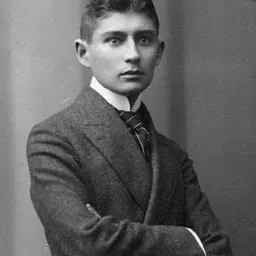





Related people
Same field, nearest in time


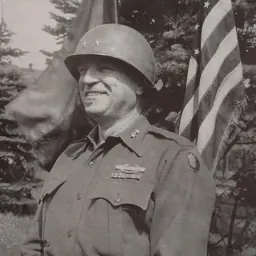


Contemporaries
People whose lives overlapped Sesto Pals's
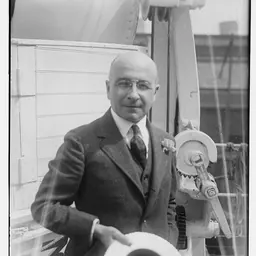



Frequently asked questions
Who was Sesto Pals?
Romanian mining engineer (1913-2002)
When was Sesto Pals born?
Sesto Pals was born on 18 September 1913 in Odesa.
When did Sesto Pals die?
Sesto Pals died on 27 October 2002 in Tel Aviv.
What was Sesto Pals's occupation?
Sesto Pals was a mining engineer, train driver, poet, philosopher, illustrator and writer.
What nationality was Sesto Pals?
Sesto Pals was Romanian and Israeli.
Sources & further reading
Cite this page
APA: Biography.guide. (2026). Sesto Pals. https://biography.guide/sesto-pals/
MLA: "Sesto Pals." Biography.guide, https://biography.guide/sesto-pals/.
Chicago: "Sesto Pals." Biography.guide. https://biography.guide/sesto-pals/.
Data last updated: 2026-09-20 · Spot an error? Report a correction.
Page generated 2026-09-27 05:00 UTC